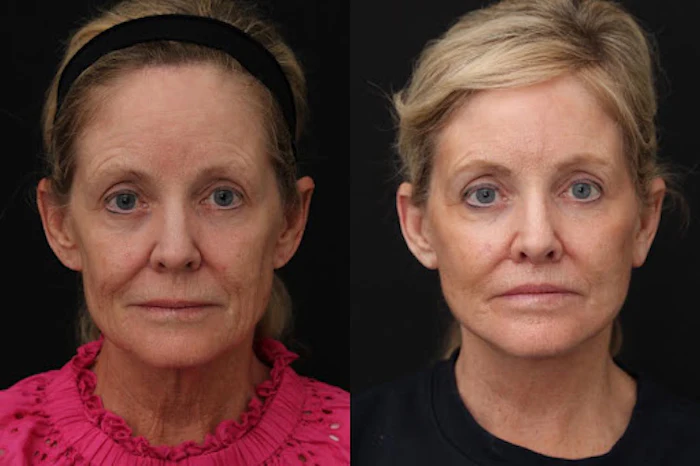
Aging before and the post-GLP1 patient population share many similarities. These include bone loss, gravitational muscle descent, volume loss, and loss of skin tone, elasticity, and clarity. Recent statistics show that 20% of women and 17% of men ages 50 to 64 take GLP-1. This represents millions of patients.
Through decades of research, Dr. Chernoff is proposing a new treatment paradigm for these patients. In the past, physicians have offered topical lotions and potions, injectables, chemical peels, lasers, and energy devices to address problems associated with reduced envelope contents, shrinking, and skin that lacks the elasticity to shrink-wrap these volume changes effectively.
Meanwhile, these patients' metabolism and, in most cases, their overall health have been suboptimal. Dr. Chernoff has spent the past decade researching effective ways to optimize patients’ systemic metabolism. Systemic optimization begins with diet, exercise, sleep, micronutrients, peptides, and hormones. 
Dr. Chernoff also offers Therapeutic Plasma Exchange (TPE), a scientifically proven method for improving patients’ metabolism. In a 2-hour process, this system filters the patient's red blood cells from the plasma. The plasma contains inflammatory and immunosuppressive blood components that contribute to the patient's poor health. In that same sitting, the plasma is replaced with pure albumin. Studies have shown improvement in all aging biomarkers after TPE.
Another simple way to optimize metabolism is through oral and topical Nitric Oxide (NO). This has also been recognized as a form of dermal vascular priming or optimizing the soil before planting the seeds. Oral Nitric Oxide supplementation increases plasma nitric oxide concentration and increases microvascular perfusion. This improves cutaneous blood flow and dermal perfusion. Topical Nitric Oxide Serum increases dermal blood flow significantly. Topical Nitric Oxide Serum also acts as a vehicle for absorption of any other product a patient chooses.
Numerous studies have shown the benefit of topically applied human placental mesenchymal-derived exosomes. These improvements include skin tone, quality, and clarity. Exosomes are small particles that carry cellular messages and contain information that improves wound healing, tissue regeneration, and skin rejuvenation.

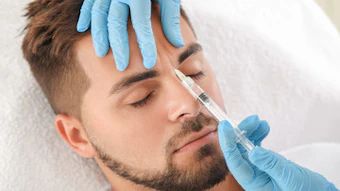
Aging patients and post-GLP-1 patients also lose a fine layer of fat located beneath the dermis called Dermal White Adipose Tissue (DWAT). Dr. Chernoff has perfected a method of replenishing the DWAT layer with an injectable fat allograft scaffold. This human allograft fat behaves in a similar manner to normal fat transfer in a patient. After injection, most injected allografts develop a blood supply, allowing the patient’s own fat to integrate and, over time, add volume.
Other bioregenerative injectables, such as Hyperdilute CaHA and PLLA, have been shown to regenerate collagen, elastin, and components of the extracellular matrix (ECM). These non-surgical injectables can also benefit the regenerative capacity for tissue replenishment. 
The fields of cellular medicine, regenerative medicine, and stem cell therapy continue to grow exponentially. This sequentially organized multi-modality skin rejuvenation protocol is biologically superior to conventional single-modality interventions.
These five components — systemic optimization, nitric oxide priming, exosome applications using DermoElectroPoration-assisted delivery, and injectable biologic scaffolding — collectively address the full spectrum of cutaneous aging pathophysiology in a synergistic, non-competing sequence. More importantly, they provide both non-surgical volumization and skin quality improvement for these patient populations.