Scar revision therapy and technology has continually advanced over the years, changing in lockstep with the medical skincare industry’s evolving devices and field research.
This is made possible due the the fields growing market demand: According to the The 2024 Global Survey on Aesthetic and Cosmetic Procedures[1], scar revision was the third most common procedure next to eyelid surgery and liposuction for adults and the second most common surgical procedure in men.
Related: Fotona TimeWalker Dual Wavelength Laser
As a result, scar revision has evolved well beyond simply resurfacing the skin. Today's treatment plans are increasingly personalized, combining multiple modalities, varying depths of energy and individualized recovery timelines based on each patient's scar type and skin quality.
One industry practice that is currently changing is the shift from alternating distinct laser modalities to an intergrated dual-laser approach.
Fractional ablative lasers, such as CO₂ and Er:YAG, for example, were commonly used to precisely vaporize fibrotic tissue, while fractional non-ablative lasers promoted dermal remodeling through controlled coagulation. Similarly, vascular lasers, like the pulsed dye laser (PDL) and the long-pulsed Nd:YAG, were added separately to address erythema and scar-associated hypervascularity[2].
Today, more physicians are opting to dual-wavelength systems that simultaneously uses lasers in tandem for ultra-deep resurfacing, as its been found that the synergy can result in increased effectiveness as well as safety and flexibility[3].
Related: Low Frequency Nd:YAG Reduces Post-Injection Bruising Time
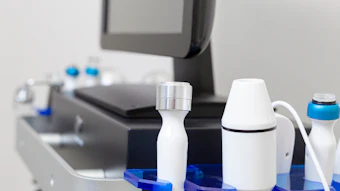
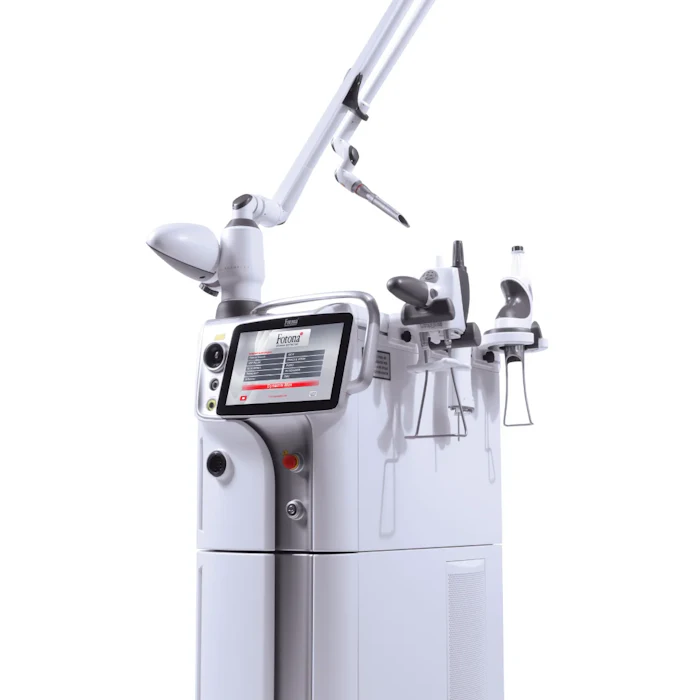
World-leading medical and industrial laser manufacturing company, Fotona, for example, has a device called the Fotona Dynamis Max, which is an advanced, multi-application dual-wavelength laser platform. It combines the Er: YAG wavelength, which targets and absorbs water at 2940 nanometers, with the Nd:YAG wavelength, which primarily targets hemoglobin and melanin at 1064 nanometers. 
As a result, they treat both the superficial and deep skin layers in one session, improving results, maximizing client specificity and minimizing thermal injury.
"Because every scar is different, successful treatment requires a personalized approach. The versatility of the Fotona Dynamis Max allows physicians to address different scar types and depths while tailoring treatment to each patient’s unique needs. Ultimately, success is not measured by the technology itself, but by the positive impact it can have on a patient’s confidence, comfort, and quality of life," Aimee Desrosiers, the Global Chief Marketing Officer for Fotona, says to MedEsthetics.
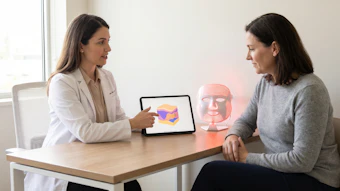
In this expert Q&A, MedEsthetics talks with board-certified dermatologist Dr. Doris Day to discuss how she approaches scar revision, and how platforms like the Fotona Dynamis Max fit into today's increasingly customized treatment strategies.
How are you using the Dynamis Max clinically to treat scarring? What does patient selection and a typical treatment course look like?
The Fotona Dynamis Max is my most versatile laser. It is a highly customizable platform for treating a broad range of scars. Each treatment is customized to the patient's unique needs based on the type, depth, color and age of the scar, as well as the patient’s skin type, treatment history and tolerance for downtime.
Scars are three-dimensional, so I evaluate what is happening both at the surface of the skin and within the deeper dermal layers. I begin by identifying whether the patient has rolling, boxcar, ice-pick, surgical, traumatic, hypertrophic or mixed scarring. I also assess the degree of tethering, redness or pigmentation, whether active acne or inflammation is still present, and the overall quality of the skin in general. In some cases, I treat not only the scar but also a broad area of skin around it, and sometimes even the entire face to ensure I address the face as a single aesthetic unit, not just individual scars.
For certain atrophic scars, the Fotona Dynamis Max allows me to use Nd:Yag energy to address deeper dermal tissue, followed by fractional resurfacing to precisely improve surface irregularities and soften the visible edges of the scar. For scars that are deeply tethered or very narrow and deep, treatment with the Fotona Dynamis Max may be part of a broader plan that includes subcision, focal scar treatments, injectables or other complementary procedures.
The ideal patient understands that scar revision is a process. The goal is to erase a scar completely when possible, and otherwise help make it smoother, softer and less noticeable.
Can you speak to the dual-wavelength approach, Nd:YAG for deep tissue and Er:YAG for precision surface resurfacing, and why that combination matters for scar treatment?
I explain to patients that results from scar treatment with the Fotona Dynamis Max are typically gradual and progressive. Patients usually notice smoother skin, softer scar edges, less visible shadowing and a more even overall texture, and even complete disappearance of some scars. Collagen remodeling continues for weeks to months after treatment, so results should not be evaluated immediately. Improvement continues even after the skin appears fully healed.
Downtime depends on the depth, density and intensity of the Fotona Dynamis Max treatment. Following a lighter fractional Er procedure, patients may experience redness, mild swelling, dryness or a sandpaper-like texture for several days. With a more intensive resurfacing treatment, patients may experience pinpoint crusting, bronzing or peeling for approximately five to seven days, with some residual pinkness potentially lasting longer. Recovery can vary based on treatment settings, the area treated and the individual patient’s healing response.
A more aggressive treatment may provide greater improvement per session, but it will generally involve more downtime. I discuss that balance with each patient and customize the Fotona Dynamis Max treatment according to the patient’s skin, schedule and treatment goals. Consistent sun protection and appropriate post-treatment skincare are also essential, particularly for patients who may be prone to post-inflammatory pigmentation. I also apply a customized cocktail of growth factors and stem cells, and sometimes topical Sculptra over the treated areas for added benefit. And we create a home-care routine to expedite healing and optimize results.
What results and downtime should patients realistically expect?
I explain to patients that results from scar treatment with the Fotona Dynamis Max are typically gradual and progressive. I also apply a customized cocktail of growth factors and stem cells, and sometimes topical Sculptra over the treated areas for added benefit. And we create a home-care routine to expedite healing and optimize results.
Patients usually notice smoother skin, softer scar edges, less visible shadowing and a more even overall texture, and even complete resolution of certain scars in many cases. Collagen remodeling continues for weeks to months after treatment, so results should not be evaluated immediately. Improvement may continue even after the skin appears fully healed.
Downtime depends on the depth, density and intensity of the Fotona Dynamis Max treatment. Following a lighter fractional Er procedure, patients may experience redness, mild swelling, dryness or a sandpaper-like texture for several days. With a more intensive resurfacing treatment, patients may experience pinpoint crusting, bronzing or peeling for approximately five to seven days, with some residual pinkness potentially lasting longer. Recovery can vary based on treatment settings, the area treated and the individual patient’s healing response. A more aggressive treatment may provide greater improvement per session, but it will generally involve more downtime. I discuss that balance with each patient and customize the Fotona Dynamis Max treatment according to the patient’s skin, schedule and treatment goals.

Can you speak to how laser resurfacing compares to or complements microneedling for scar texture?
Microneedling and treatment with the Fotona Dynamis Max can both be valuable for improving scar texture, but they work differently and are not necessarily interchangeable. Microneedling creates controlled mechanical channels in the skin and can be an effective option for broad, mild-to-moderate atrophic scarring. It may also be appropriate for patients who prefer a more conservative procedure with relatively limited downtime. The Fotona Dynamis Max provides a different level of customization because I can control the wavelength, depth, density and distribution of energy.
I can use Nd energy to address deeper dermal tissue and Er energy to precisely resurface areas of uneven texture. That dual-wavelength approach may be especially helpful when a patient has both deeper scar architecture and visible surface irregularities.
For some patients, I may alternate Fotona Dynamis Max treatments with microneedling or use both modalities as part of a staged treatment plan. The best approach depends on the scar type, skin tone, previous treatments and the amount of downtime the patient is willing to accept.
What types of scars respond best to this treatment?
Rolling scars and shallow-to-moderate boxcar scars may be good candidates for treatment with the Fotona Dynamis Max because resurfacing can help soften their edges and reduce the shadowing that makes them more visible. Mixed atrophic acne scars and mature surgical or traumatic scars with uneven surface texture may also respond well to a customized Dynamis™ Max treatment plan. Scar color and vascularity also need to be considered. A scar that remains red may require a different combination of wavelengths or settings than a mature scar that is primarily associated with uneven texture. Very deep ice-pick scars and firmly tethered rolling scars may not respond adequately to laser resurfacing alone.
These scars may first require a focal procedure, such as subcision or trichloroacetic acid-cross technique, followed by Fotona Dynamis Max resurfacing to blend the treated scar with the surrounding skin. Raised hypertrophic scars and keloids require a different and very carefully selected approach. Aggressive resurfacing is not appropriate for every raised scar or for every patient with a history of abnormal scar formation.
How many sessions does a typical scar revision course involve, and how are they spaced out?
A typical scar revision plan using the Fotona Dynamis Max may involve approximately four to six treatment sessions, often spaced about four to six weeks apart. However, the exact number and timing of treatments depend on the type and severity of the scars, the intensity of each treatment and whether the Fotona Dynamis Max is being combined with other procedures.
A patient with limited or relatively superficial scarring may require fewer sessions. Someone with deeper, tethered or mixed scars may need a longer, staged treatment course. I reassess the patient between sessions because collagen remodeling continues after the skin appears healed. Treating too frequently does not necessarily create a better result. The skin needs enough time to recover and respond before the next Fotona Dynamis Max treatment is performed.
The most important part of successful scar revision is making the correct diagnosis. “Acne scarring” is not one single condition. Two patients who appear to have similar scarring may need very different treatment plans.
Before beginning treatment with the Fotona Dynamis Max, I also make sure that active acne or inflammation is adequately controlled. We do not want to treat existing scars while new ones are continuing to form.
Consistent skincare, sun protection and adherence to post-treatment instructions are also essential parts of achieving a successful outcome. Treatments should not be done in areas that have had recent sun exposure or sunburn. The versatility of the Fotona Dynamis Max allows me to customize treatment across multiple tissue depths, but the technology is only one part of the process.
The best outcomes come from selecting the right patient, identifying each scar type and creating a thoughtful treatment strategy rather than relying on a single procedure.
Ultimately, the goal is to help the scars become less visible, improve the overall texture and support a natural-looking result that helps the patient feel more confident in their skin.
As scar revision continues to evolve, experts increasingly agree that successful outcomes depend less on finding a single "best" treatment and more on matching the right technologies to the right scar. Whether that involves energy-based devices, microneedling, injectables or surgical techniques, individualized treatment planning remains the cornerstone of modern scar management—a trend that will likely continue shaping aesthetic practices in the years ahead.
Resources:
- https://www.americanmedspa.org/news/isaps-releases-2024-global-survey-results-ranks-surgical-and-nonsurgical-procedure-popularity/
- https://pmc.ncbi.nlm.nih.gov/articles/PMC12729350/