Why Fiji, Why Now
Debra Sadranu, Managing Director of Nama Fiji and Spa Academy Fiji, was central to bringing the Congress to Fiji and sees a substantial infrastructure already in place.
“With over 400 hotels and resorts in Fiji, with every location offering beach side massage through to stunning and extensive spa facilities, we have immense opportunity to create spa wellness and culturally integrated spa services for our inbound tourism,” she says.
Related: Sea Grapes: The Luxe Ingredient Revolutionizing Spa Treatments
Sadranu believes the Congress helped educate resorts about “the opportunity and importance of marketing our country as a spa destination” and the need for “international standards and benchmarks to ensure we are competitive.”
Her academy, which opened in 1998, has guaranteed employment for its graduates. Sadranu says CIDESCO “equips our graduates with International standards elevating our spa services to expectations of our tourists.”
Bringing its 80th World Congress to Fiji was significant for both CIDESCO and the country, highlighting Fiji’s growing potential as a destination for wellness and medical aesthetics.
Fiji has the hospitality infrastructure, natural resources and cultural traditions to support that growth. The Congress showed how traditional practices can exist alongside international standards, new technologies and increasingly sophisticated approaches to aesthetics.
Professional Standards and Fiji’s Global Opportunity
Mary O’Donoghue, VP of CIDESCO, says Fiji was an ideal location for the anniversary Congress because of its combination of hospitality, wellness and professional development.
“Hosting this milestone congress confirms Fiji’s standing in the international spa and wellness industry,” she says. It also gave the country “a global platform to demonstrate its potential as a leader in wellness tourism across the Pacific region and beyond.”
What stood out most to O’Donoghue was “the authentic connection between wellness, culture, tradition and hospitality.”
She sees education as central to the industry's future: “Professional education is fundamental to the future of the spa industry, high standards, client confidence and career development all depend on strong training and recognized qualifications.”
The Congress, she says, reinforced “the importance of education, sustainability, innovation and international collaboration,” along with the industry's growing focus on “transformative health and longevity.”
AI, Education and the Human Element
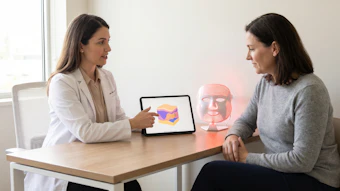
Julie Newman of Lomani Spa sees significant potential for AI, but says it cannot replace “human touch, compassion, camaraderie and loyalty.”
She believes the industry needs more education in “professional skin analysis with trained skin professionals,” along with treatments that support “skin barrier function, overall wellness, longevity.”
Related: Haut.AI CEO on AI, Skin Intelligence, and the Next Phase of Skincare Personalization
“It is an exciting time to still be in skin,” Newman says. “We are swinging back full circle to hands on, in person connection.”
As technology and online education expand, Sheila Curran, Owner, Manager and Principal & Director of Coogan Bergin Beauty Clinic & College in Dublin, believes practical training cannot be lost.
Curran trained as a CIDESCO therapist more than 40 years ago and runs a CIDESCO-accredited college.
“The real value of ‘Community’ is face-to-face,” she says. “It cannot be replicated despite technology.”
She is particularly concerned about the move toward online practical training.
“Some students are being trained almost entirely online and with minimal in-person supervision,” Curran says. “Giving a student a latex head to practice on for massage is just unacceptable. It doesn't breathe, it doesn't react to touch, heat or cold.”
Curran supports modular theory education because it can make learning more accessible, but believes practical training must remain hands-on and supervised.
Technology With a Human Element
AI was another emerging theme.
Carla Marie Schellink of Impilo Plastic Surgery and Medical Spain Panama was interested in a “5 senses” AI-driven relaxation concept using “sound, scent, touch, sight, and even taste cues” to bring a more holistic, sensory dimension to medical aesthetic procedures.
She also sees an opportunity to bring cultural identity into aesthetics, saying she is exploring how to incorporate “more authentic Panamanian ingredients” into her skincare line.
For Schellink, the goal is “blending real medical results with a more holistic, culturally grounded experience.”
Beyond the Surface
Dr. Linley Leuthard, who teaches Natural Facial Enhancement, saw a similar convergence.
“What struck me as I listened to one speaker after another” was that “we were all singing off the same song sheet” around “nutrition, getting good sleep, de-stressing, supplements, exercising regularly and more,” she says.
Leuthard also sees opportunity in natural approaches to aging.
“Providing natural alternatives to anti-aging and aging with the anti-inflammatory lifestyle can help guide people toward natural options for treatment and aging gracefully,” she says.
From Injectables to Biology
Dr. Gail Pearson, a New Zealand-trained medical specialist and specialist anesthetist with nearly 30 years of clinical experience, arrived expecting the aesthetics conversation to focus largely on injectables.
“What I found was a highly professional community with a genuine understanding of the science beneath the skin, and an enormous appetite to learn more,” Dr. Pearson says.
She was particularly struck by the interest in cellular biology, oxidative stress, inflammation and the biological processes that influence skin health and aging.
“My biggest takeaway was that the industry is already looking beyond the surface,” she says. “These professionals recognize that what they do externally can be complemented by supporting the biology from within.”
Dr. Pearson says she was also surprised by how receptive the audience was to complex cellular science, including “oxidative stress, cellular signaling and endogenous defense pathways.”
She sees “the biggest opportunity at the intersection of beauty, science and healthy ageing,” combining external treatments with a deeper understanding of cellular health, nutrition, lifestyle and biological repair.
Additional Perspectives From the Congress
Fantasha Lockington, CEO of the Fiji Hotel & Tourism Association, says she came away recognizing “how really proud we should be of the role that tourism has played in launching the spa industry to where it is now.”
She was struck by “the fusion of authenticity and certification,” where “local traditions like our bobo massage can sit alongside CIDESCO global standards.”
Lockington sees room to expand the experience beyond the resort.
“Visitors can move seamlessly from a luxury resort spa to a village-based wellness retreat,” she says, with experiences ranging from “barefoot massages by the ocean to structured wellness programs.”
She believes CIDESCO’s presence provides an important international benchmark for “skill, safety, and professionalism” and could help elevate spa offerings into “a key reason travelers choose Fiji as a holiday destination.”
Related: Exploring Daily Facial Massage at IFSCC 2023
Margaret Walsh, a director and motivation and leadership specialist from New Zealand, came away focused on how professionals can turn new information into better practice.
“Surrounded by like-minded skin professionals, I most certainly gain new knowledge, discover emerging trends and treatment approaches, share ideas and experiences, and build valuable professional connections,” Walsh says.
For her, the value of a conference is what happens afterward: “turning fresh ideas into better consultations, stronger client results, more confident teams and new opportunities for business growth.”
The New Aesthetic Conversation
I spoke at the Congress on “Driving Clients to Your Business Through Media Campaigns,” sharing insights from nearly 40 years of building visibility and credibility for wellness, spa and beauty companies.
But the conversations throughout the Congress pointed to a larger shift: medical aesthetics is becoming increasingly connected to overall health, biology, lifestyle and longevity.

Cellular health. Healthy aging. Skin barrier function. Nutrition. Lifestyle. Traditional practices. AI. Professional education. Human touch.
As Dr. Pearson puts it, “The future, in my view, is a more integrated approach where beauty professionals understand both the surface of the skin and the biology beneath it.”
Fiji provided an appropriate setting for that conversation: a destination where traditional wellness practices, natural resources and modern professional standards are increasingly meeting.
The future of aesthetics may be less about doing more to the face and more about understanding the person behind it.