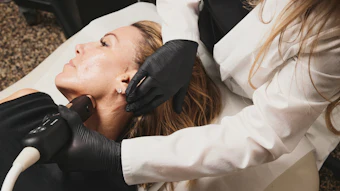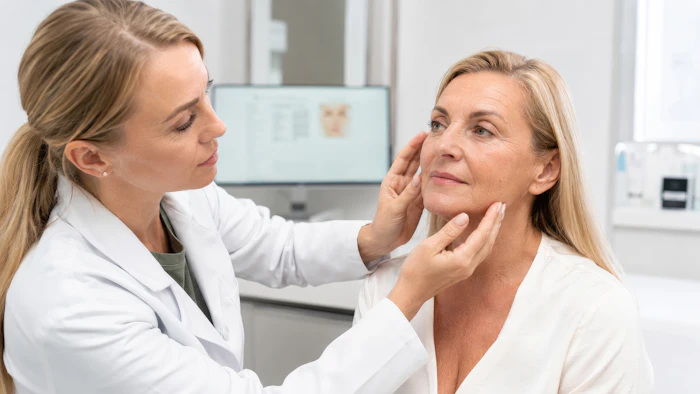
Medical aesthetics has spent years expanding what can happen during an appointment.
The treatment landscape has become increasingly sophisticated. New energy-based devices, injectable technologies, regenerative approaches, combination treatments and more precise protocols have expanded what practitioners can address and how they can address it. Much of the industry's innovation has understandably concentrated on optimizing the intervention itself.
Related: The Future of Aesthetics May Be Less About Correction and More About Resilience
Yet the more sophisticated individual interventions become, the more visible another question becomes: what connects one intervention to the next?
A procedure may occupy an hour on the calendar, but its biological context extends well beyond that hour. Skin enters treatment with a history. Response and recovery continue after the patient leaves. Results emerge over time. Home skincare interacts with a changing cutaneous environment. Eventually, another treatment decision is made on tissue that is no longer biologically identical to the tissue that entered the previous appointment.
The clinical encounter may be discrete. Its biological context is cumulative.
This creates an increasingly important tension in medical aesthetics. The field has become highly sophisticated at optimizing individual interventions, while the biology on which those interventions act unfolds continuously over time. The less developed question is whether the reasoning connecting those interventions remains equally longitudinal.
The real white space may lie in that gap.
Continuity Is Already Entering the Clinical Conversation
It would be inaccurate to suggest that aesthetic medicine has overlooked continuity altogether.
For example, the relationship between procedural treatment and topical skincare is becoming more explicitly defined across the treatment pathway. A 2026 international expert consensus on integrated skincare evaluated 44 active ingredients across four categories of aesthetic procedures and four distinct periods: pretreatment, treatment day, short-term aftercare and later follow up.[1]
The recommendations themselves are useful, but the architecture of the consensus may be more revealing.
Dividing skincare recommendations by treatment phase recognizes that clinical relevance changes over time. An ingredient considered appropriate before a procedure may be inappropriate during early recovery and relevant again later. The same skin moves through different biological states, and the role of surrounding care changes accordingly.
This is more than a refinement of aftercare.
It reflects a broader shift away from understanding the procedure as a self-contained event. Once timing changes the clinical meaning of what surrounds an intervention, the appointment becomes a less sufficient unit for understanding the totality of care.
The question, therefore, is no longer whether continuity exists as a clinical idea.
It is what happens when increasingly longitudinal clinical thinking operates through a model of care still delivered as a series of discrete encounters.
Continuous Biology, Episodic Encounters
There is nothing inherently problematic about episodic care. Medical services require appointments, defined interventions, documentation and clear boundaries of responsibility. Aesthetic medicine is no exception.
But biology does not organize itself according to those boundaries.
The effects of resurfacing, microneedling, and other remodeling procedures continue after treatment through inflammatory, reparative, and remodeling processes. Barrier disruption and recovery unfold over time. Pigmentary responses may emerge after the procedure rather than during it. The visible endpoint itself may take weeks or months to become apparent.
The next aesthetic encounter, therefore, does not begin on untouched ground.
It occurs within tissue carrying the effects of previous interventions alongside environmental exposure, home care, intrinsic aging and other biological influences. In longitudinal aesthetic care, what came before is not simply historical information. It forms part of the biological context in which the next intervention occurs.
This distinction becomes more consequential as aesthetic treatment becomes increasingly multimodal. A patient may move between injectables, energy-based procedures, resurfacing, microneedling and topical skincare over a period of years. Each modality can be considered individually, yet the patient experiences their cumulative effects within the same biological system.
The sophistication of an individual treatment and the coherence of a treatment history are therefore different questions.
A series of technically appropriate interventions does not automatically constitute a longitudinal strategy.
Continuity Is Not the Same as Frequency
The language of continuity can easily become confused with the language of engagement.
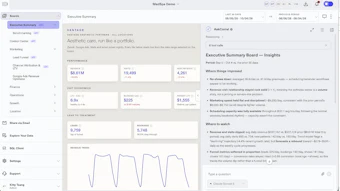
Aesthetic businesses increasingly have tools for maintaining contact beyond the treatment room: automated communication, memberships, reminders, loyalty programs, follow-up systems and increasingly sophisticated customer relationship technologies. These systems can increase the frequency of interaction, but frequency and continuity describe different dimensions of the relationship.
A patient seen infrequently may still experience a coherent progression of care. Conversely, frequent communication can remain fragmented if each interaction exists largely on its own.
The distinction is not primarily about the number of touchpoints. It is about whether the clinical rationale remains connected across those touchpoints, even when substantial time separates them.
This distinction complicates the familiar idea of the patient journey.
Within business strategy, the patient journey is often understood through movement across acquisition, consultation, conversion, repeat purchasing and retention. As aesthetic businesses gain greater visibility into how patients move across treatment and product categories, the distinction between commercial continuity and clinical continuity becomes increasingly important.
A sequence of purchases can describe what happened next. It does not necessarily explain why the next clinical decision made sense.
Knowing that a patient moved from one treatment category to another describes a sequence. It does not necessarily explain whether the second decision was meaningfully informed by the first.
As the number of available interventions continues to expand, the distinction between a sequence of treatments and a connected rationale for treatment becomes increasingly significant.
Skincare Makes the Structural Tension Visible
Skincare provides a particularly clear illustration because its relevance does not begin or end at the clinic door.
Pretreatment preparation, the immediate procedural period, early recovery and longer-term maintenance can involve different biological priorities. The 2026 international consensus reflects this explicitly: ingredients such as retinoids and several acids were considered inappropriate at
certain peri-procedural stages but relevant again during later follow-up, while several ingredients associated with barrier support and tolerability had broader applicability across treatment periods.[1]
The significance is not that every patient requires a four-stage regimen.
It is that the appropriateness of skincare changes depending on its relationship to the intervention.
That relationship complicates the traditional division between professional treatment and home care. Operationally, the two can appear as separate categories: one is performed in the clinic, while the other occurs at home. Biologically, the distinction is less clear. Both interact with the same barrier, inflammatory environment, pigmentary response and remodeling tissue.
Seen this way, skincare does not merely fill the time between procedures. It reveals the limitations of treating the procedure itself as the sole organizing unit of aesthetic care.
The same tension extends beyond products. Recovery, previous response and changing skin condition all unfold across time rather than within a single appointment.
Continuity, then, is less about adding something new to aesthetic care than recognizing that the biological relationships among existing elements do not disappear simply because those elements are operationally separated.
When Continuity Resides in Professional Judgment
Longstanding knowledge of a patient can change the meaning of what is observed at a later appointment. Previous response can alter how a subsequent intervention is considered. Over time, treatment history becomes more than a chronology of procedures because professional judgment gives it context.
This suggests an important distinction between information that is retained and information that remains clinically consequential.
A treatment record can preserve what happened. It does not necessarily reveal how the meaning of that history has evolved.
Continuity can therefore exist powerfully at the level of individual professional judgment without necessarily existing to the same degree at the organizational level.
That distinction becomes more visible as aesthetic practices grow more complex. Patients may move between providers, modalities or locations. Treatment portfolios expand. Professional skincare may sit alongside injectables and devices. More information becomes available, but availability alone does not create coherence.
The underlying issue is not simply whether the history can be retrieved. It is whether the reasoning embedded within that history remains intelligible when the provider, modality or clinical context changes.
An increasingly complex treatment history can therefore remain either a connected clinical narrative or a series of well-documented episodes.
The difference lies less in how much information exists than in whether its significance travels forward.
The White Space Between Existing Capabilities
Medical aesthetics does not lack innovation.
The industry continues to develop new devices, injectable technologies, biological approaches, and increasingly sophisticated combination strategies. Its ability to expand intervention possibilities is one of its defining strengths.
Continuity presents a different kind of innovation problem because it is less visible.
It does not necessarily produce a new device, product category or treatment indication. It exists in the relationships between capabilities that are already present: treatment selection and previous response; procedural intervention and recovery; professional care and home skincare; the patient's current concern and the accumulated history of how the skin arrived there.
That may explain why continuity is easy to acknowledge but harder to recognize as white space. The components already exist.
What remains less resolved is not simply how those components connect operationally, but whether the clinical reasoning that connects them persists over time.
This does not mean every aesthetic patient belongs in a continuous program, nor that episodic treatment is inherently inferior. Some patients seek a single intervention. Others return infrequently. Continuity is not synonymous with permanence, dependency, or constant engagement.
A patient can receive episodic care while the reasoning surrounding that care remains longitudinal.
That distinction may be the more important one.
The fundamental tension is that aesthetic interventions are delivered as discrete events to biology that carries their history forward. As the intervention side of aesthetic medicine becomes increasingly sophisticated, the question of what connects those events becomes harder to ignore.
The next frontier may therefore not be another intervention added to the treatment menu. It may be a more coherent understanding of how the interventions already there remain connected across time.
The appointment ends. The biological story does not.
Reference
1. Bjerring P, Draelos ZD, Fabi SG, et al. international expert consensus on integrated skincare active ingredients for pretreatment and posttreatment use with medical aesthetic procedures to enhance skin benefits. Journal of Cosmetic Dermatology. 2026;25:e70880. doi:10.1111/jocd.70880.