The defining 2026 aesthetics trend is a shift toward inside-out, personalized, regenerative care—where subtle enhancement, whole-body wellness and biocompatible technology work together.
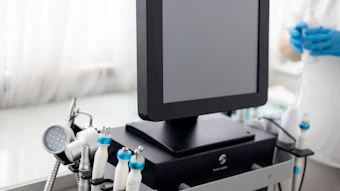
Courtesy of Mete-X at Adobe Stock
When 2025 first began, the year projected new innovation, potential FDA-reviews, with brands adopting other brands under M&A to combine two concepts, and research that, by the end of the year, debuted breakthroughs to expect in 2026. In the new year, one thing seems to be prominent in medical aesthetics as 2025 passes the baton: inside-out, 360 radiance. Skincare you eat and beauty that starts within—a gradual but lasting reflection. Technology and medicine are keeping up, and in 2026, personalization, one of 2025’s greatest focus points, will prioritize biocompatibility, longevity and whole-body wellness.
MedEsthetics wishes you a happy New Year; here’s what we anticipate will be trending in 2026.
Medspas as Hubs of Preventive and Optimized Wellness: Beyond Aesthetics
Anthony Brissett, MD, FACS, president of the American Academy of Facial Plastic and Reconstructive Surgery (AAFPRS), says patients increasingly recognize that true health starts from within, with internal wellness visibly reflected in outer appearance, positioning medical spas as leaders in preventive and regenerative care. Outside of medical spas, in traditional doctors offices and hospitals, laboratory test results are a fundamental component of diagnosis and disease monitoring; however, there are limitations in current testing methods, and patients rarely receive care that optimizes health, only maintaining “normal” levels [1].
In medspas, patients are receiving that optimized level care, whether it be hormone therapy, menopausal support or NAD therapy. Many patients look to medspas now for not only cosmetic enhancement, but to provide a regimen that is monitored and elevates their health and appearance in ways they may not receive in their typical healthcare system. GLP-1, a prescribed medication that may have extended access if TrumpRX fulfills its promises in 2026, are what has welcomed many patients to aesthetics altogether, and also wellness services.
Though it was reported in 2023 that these weight loss medications also benefit cardiovascular health [2], in addition to diabetic management and weight loss, it was when medspas started implementing the drug for weight loss that patients were introduced to the drug’s longevity aspects, including liver health and cellular optimization. Now medspas not only provide plans for weight loss with the drug, but also provide monitoring protocols as fit individuals use GLP-1 for aging concerns.
Providing GLP-1s showed to be a wise decision for revenue, too. According to Guidepoint Qsight, in 2024, GLP-1 sales accounted for an average of 15% of total monthly non-surgical revenue among practices offering these treatments. Patients receiving GLP-1 represented 14% of all visits at these practices during the same period. Demonstrating how GLP-1 acted as a driver for patient acquisition, approximately 40% of GLP-1 patients in 2024 were entirely new to the practice where they received their prescription [3].
Inside-out beauty is driving aesthetic care, with supplements, peptides and nutrition playing a growing role in skin health, recovery and whole-body wellness.Courtesy of KMPZZZ at Adobe StockPlastic Surgeon Johnny Franco, MD, FACS says, “You’re going to see more industry partners entering the aesthetic space with new medications and peptide combinations that are tailored to specific needs—not just weight loss, but also muscle preservation and other bio-enhancement goals.”
Supplements Will Shape Aesthetic and Surgical Practices
Supplements and their integration into pre-and-post-op regimens, but also as standalone support for external appearance, made waves in 2025 and will continue to in 2026 as well, as holistic, wellness-focused care accelerates, thanks to GLP-1’s impact. FDA oversight in this category is still limited, however, leaving medspa clinicians an important responsibility to carefully track supplements they recommend.
“I think in 2026 you’ll start to see real changes in how aesthetic providers treat patients, with a much more holistic approach. But if history has taught us anything—especially in plastic surgery—it’s that change tends to be incremental, and honestly, that’s appropriate,” Franco says.
Supplements are not only offering patients the inside-out care they’re looking for, addressing issues like libido and energy levels, but they are also being used in aesthetic practices to minimize downtime and make recovery comfortable—a goal for many clinicians whose patients have busy lives. Franco says minimizing downtime and reducing complications has always been important, and layering in nutrition, peptide integration, hyperbaric treatments and light therapies have become helpful components on optimizing patients for the onset of their goals.
Franco informs, however, that while some of the rapid recovery protocols and new wellness treatments are incredibly exciting and promising, “many of them are just now entering ongoing studies or are in the planning stages for trials launching in 2026. So 2026 will really be the tip of the iceberg.”
In 2026, adoption of these supplements will likely begin slowly and build momentum as study results emerge, Franco adds. A significant increase is expected by late 2026 and into 2027, he says—once the science is established and there is a clearer guidance on which treatments and combinations work best for specific procedures.
Wellness is clearly becoming a priority for younger patients, who know that skin health starts within: a 2025 McKinsey survey found that nearly 30% of Gen Zers and millennials in the United States report prioritizing wellness “a lot more” than a year ago, compared with up to 23% of older generations [4].
Reimagining Aesthetic Devices for Therapeutic and Rehabilitative Care
A sector of wellness, outside of supplements and medications that many did not anticipate to emerge in 2025, was the FDA approval and clearance of devices with minimally invasive technology for rehabilitation and recovery—applications beyond aesthetics. In October, BTL Aesthetics’ Emsculpt Neo, a non-invasive muscle-stimulation device, was used to help prepare Hungarian astronaut Tibor Kapu for his ISS mission by counteracting muscle loss associated with microgravity. The device supported his strength, endurance, balance and recovery as part of astronaut physical conditioning.
And recently, on Dec. 18, Cutera’s truFlex muscle-stimulation device received FDA clearance to expand beyond aesthetics into rehabilitative and therapeutic uses for arm and calf muscles. The approval enables applications such as preventing muscle atrophy, improving circulation and range of motion and supporting post-surgical and rehabilitation care.
"Rehabilitation and muscle wellness represent two of the most exciting growth areas in medical technology today,” said Taylor Harris, CEO of Cutera. These new implications, expected to expand further in 2025, create an unexpected pathway into aesthetics through wellness, potentially as impactful as GLP-1.
Aesthetic devices are expanding beyond beauty, gaining FDA clearance for therapeutic and rehabilitative applications that support muscle health, recovery and performance.Courtesy of Martin Stock Studio at Adobe Stock'Tweak'ments Over Dramatic Changes
Patients increasingly wish to enhance what they already have, rather than alter their appearance completely. In early 2025, Merz Aesthetics’ global Pillars of Confidence study, surveying 15,000 adults, indicates that 79% of respondents prefer treatments that enhance rather than alter and 49% of respondents worry about unnatural results [5]. The aesthetic industry calls this desire ‘tweak’ments, treatments that do not aim to correct but rather cultivate our body’s natural processes.
Keeping this in mind, the goals of younger patients and older patients look similar, Grace Peng, MD FACS told MedEsthetics in June: a fresher look without looking “done.” Celebrities are a driving force for influencing natural looking results, ones that sculpt without modifying. In 2025, celebrities became ambassadors for effective devices, including Kim Kardashian for Sofwave and Salma Hayek Pinault for Ultherapy prime.
Mechanisms That Mimic: Regenerative Approaches Transform Facial Aesthetics
‘Tweak’ments can be accomplished with many energy-based devices on the market, achieving goals like body contouring and face lifting, but what's offering subtle enhancements that are good for the skin and not just filling the face, are biostimulatory fillers—biocompatible with the patient's skin. Exosomes and secretomes are advancing each day in research and development, too, but science is still emerging in replicating the process of regeneration in the same way that it fabricates these cells. Brissett stresses that patients should know not all exosomes are created the same.
AAFPRS and Franco note that biostimulators like poly-L-lactic acid and calcium hydroxyapatite are increasingly paired with energy-based modalities like RF microneedling and ultrasound to stimulate collagen and elastin regeneration, producing natural, lasting improvements in texture, tone and firmness. Patients experiencing skin laxity and volume loss from GLP-1 use typically undergo these biostimulatory fillers, paired with these modalities. Brissett says this represents a shift from filling or tightening to reawakening the skin’s own regenerative capacity.
Biostimulatory fillers help address skin laxity and volume loss by stimulating natural collagen and elastin regeneration, avoiding the risks of overfilling.Courtesy of Yakobchuk Olena at Adobe Stock“In the past, we often tried to fix everything by simply adding more filler. Now, both providers and patients understand that just overfilling is not the answer. Because of the weight loss revolution, we’re seeing a lot of younger patients—people in their 20s and 30s—presenting with concerns we used to associate with patients in their 40s, 50s, and 60s,” Franco says.
Enhancing, Not Altering: Tech-Driven Precision in Facial Aesthetics
What’s helping make ‘tweak’ments that renew seamlessly without looking noticeable are digital tools, ones that predict placement before it's done and analyze the skin to visualize what it needs, requires or deserves. AI skin analysis, predictive visualization software and wearable recovery monitors improve precision, safety and satisfaction, Brissett says.
Imaging systems have been upgraded in 2025, allowing patients to preview potential outcomes on their face to imagine the style they want to accomplish surgically, especially in rhinoplasty and aging-face surgery, Brissett says. AI capabilities make discussions far more tangible, too, Franco adds. Whether in person or during virtual consultations these skin analyses visually show patients the types of results that are realistically achievable. Words like “subtle,” “natural” or “full” can mean very different things to different individuals, and by using 3D imaging and AI modeling to illustrate potential outcomes, patients gain a clear and accurate understanding of what is truly possible.
“Rather than dramatic alterations, we focus on enhancing facial balance, structural integrity, ethnic identity and skin quality and longevity. This patient-centered shift has elevated refinement and personalization across all three pillars: rejuvenation, rhinoplasty and reconstruction,” Brissett continues.
In 2026, the goals for many patients, and the practitioners mapping their treatment plan is nurturing a result—watering an end goal so that a natural-looking result can be achieved, rather than fabricating the end goal immediately. As technology keeps up with solutions that do not artificially change the face but are compatible with its natural course, 2026 is looking like an exciting year for medical aesthetics.
We’ll see you in 2026, a year of new innovations, technological breakthroughs and professional advancements.

 Inside-out beauty is driving aesthetic care, with supplements, peptides and nutrition playing a growing role in skin health, recovery and whole-body wellness.Courtesy of KMPZZZ at Adobe Stock
 Aesthetic devices are expanding beyond beauty, gaining FDA clearance for therapeutic and rehabilitative applications that support muscle health, recovery and performance.Courtesy of Martin Stock Studio at Adobe Stock
 Aesthetic devices are expanding beyond beauty, gaining FDA clearance for therapeutic and rehabilitative applications that support muscle health, recovery and performance.Courtesy of Martin Stock Studio at Adobe Stock
 Biostimulatory fillers help address skin laxity and volume loss by stimulating natural collagen and elastin regeneration, avoiding the risks of overfilling.Courtesy of Yakobchuk Olena at Adobe Stock