In 2026, Sustainability is a Performance Engine in Next-Gen Formulation Design
May 22nd, 2026
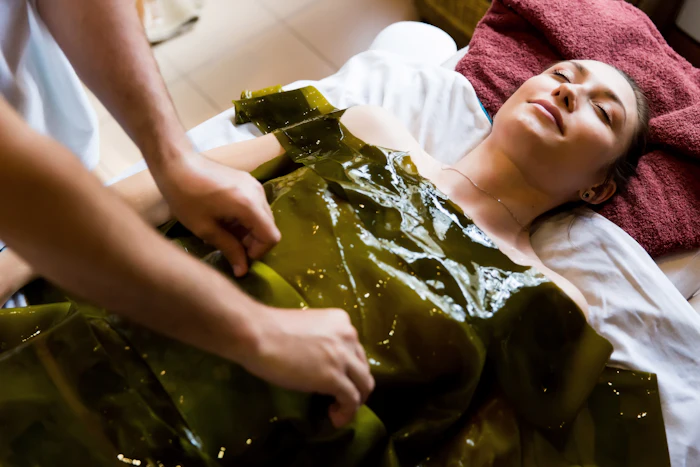
“Nature-inspired ingredients, particularly marine-derived actives like algae and kelp, are playing a critical role in advancing both sustainability and skin protection,” says Michelle Chavez of Accupac.
Сабина Аршинова at Adobe Stock
“As sustainability expectations accelerate, the industry is moving beyond surface-level claims toward formulation strategies that inherently conserve resources, elevate performance, and deliver measurable impact,” says Michelle Chavez, chief commercial officer at Accupac. “[W]e see this shift not as a constraint, but as a catalyst for more intelligent product design—where every input, from water to actives to packaging, is scrutinized for both efficacy and environmental consequence.”
Chavez notes, “Brands are increasingly embracing waterless and upcycled formulations not only to reduce environmental burden, but to also enhance product performance. Eliminating or minimizing water allows for highly concentrated systems that may deliver actives more efficiently, creates the opportunity to potentially reduce the preservative load, and could significantly lower shipping weight and packaging volume. At the same time, the rise of upcycled ingredients—derived from agricultural or industrial byproducts—introduces potent, story-rich actives that would otherwise go to waste. These materials are no longer compromises; they are often rich in antioxidants, vitamins, and bioactive compounds that rival or, in some cases, outperform conventional inputs.”
This article is only available to registered users.
Log In to View the Full Article
“As sustainability expectations accelerate, the industry is moving beyond surface-level claims toward formulation strategies that inherently conserve resources, elevate performance, and deliver measurable impact,” says Michelle Chavez, chief commercial officer at Accupac. “[W]e see this shift not as a constraint, but as a catalyst for more intelligent product design—where every input, from water to actives to packaging, is scrutinized for both efficacy and environmental consequence.”
Chavez notes, “Brands are increasingly embracing waterless and upcycled formulations not only to reduce environmental burden, but to also enhance product performance. Eliminating or minimizing water allows for highly concentrated systems that may deliver actives more efficiently, creates the opportunity to potentially reduce the preservative load, and could significantly lower shipping weight and packaging volume. At the same time, the rise of upcycled ingredients—derived from agricultural or industrial byproducts—introduces potent, story-rich actives that would otherwise go to waste. These materials are no longer compromises; they are often rich in antioxidants, vitamins, and bioactive compounds that rival or, in some cases, outperform conventional inputs.”
Through its innovation arm Cobalt Labs, Accupac is translating sustainability principles into scalable, high-performance concepts that balance environmental responsibility with elevated sensoriality, Chavez notes. The Dry Polish Sugar Scrub showcases a waterless exfoliation system using biodegradable sugar crystals and upcycled mineral exfoliants to gently refine and smooth skin, while the Second Skin Healing Balm features upcycled fermented apple peel extract in a concentrated, multi-functional format designed to address targeted skin concerns with minimal formulation complexity. Together, these systems reflect a less is more approach—reducing resource use and formulation steps while maximizing functional and sensory performance.
“Nature-inspired ingredients, particularly marine-derived actives like algae and kelp, are playing a critical role in advancing both sustainability and skin protection,” says Chavez. “These organisms are inherently resilient, thriving in high-stress environments such as UV exposure, salinity, and pollution. When translated into cosmetic applications, they can bring multifunctional benefits—hydration, barrier support, antioxidant defense—while often being sourced through low-impact cultivation methods. As environmental aggressors become a more prominent consumer concern, these bioactives offer a compelling intersection of efficacy and ecological alignment.
We are also seeing increased synergy between marine actives and fermentation technologies, unlocking enhanced bioavailability and stability. This allows formulators to create high-performance systems that help protect against environmental stressors while maintaining elegant textures and compatibility with concentrated or waterless formats.”
She continues, “At the same time, consumer demand for transparency and circularity is fundamentally reshaping how raw materials and packaging are selected. Today’s consumer expects clarity—not only on ingredient origin and function, but on lifecycle impact. This is driving brands to prioritize traceable supply chains, responsibly sourced inputs, and materials that can re-enter the production cycle rather than contribute to waste.”
Formulation and packaging are increasingly being designed as an integrated system, with concentrated delivery formats driving both usage efficiency and packaging reduction, Chavez explains. Products like the Moisturizing Serum-Infused Body Mist, developed by Cobalt Labs, illustrate how micro-dosed systems can lower product consumption while enabling smaller, lower-impact packaging footprints. Similarly, the Ultra Hydrating Dry Body Oil—made with upcycled plum oil recovered from juice production side streams—demonstrates how ingredient sourcing can actively reduce waste while still delivering a high-end sensorial experience.
“Ultimately, the industry is entering an era where sustainability is inseparable from performance,” says Chavez. “Consumers are no longer willing to trade efficacy for environmental responsibility—they expect both, and they expect proof.”
Ingredient firms have stepped up to the challenge with a new generation of materials offering superior product protection, sensoriality and more.
Elevating Natural Oils into Multi-Category Luxury Performance Actives
Vantage Personal Care’s recent Infinite Oil concept taps into the rising prominence of natural oils as luxury hero ingredients, driven by their visibility in viral, influencer-led beauty trends. As social media continues to spotlight high-performing, sensorially rich formulations, oils have emerged as must-have staples valued for their versatility, efficacy and elevated feel across skin, hair and nail care.
Vantage Personal Care's Elixir du Soleil concept formulation is a lightweight, fast-absorbing face serum designed to deliver hydration, smoothness and a radiant finish while helping prepare and protect the skin.LIGHTFIELD STUDIOS at Adobe Stock
To illustrate the power of these materials, Vantage has crafted a range of concept formulas:
Elixir du Soleil is a lightweight, fast-absorbing face serum designed to deliver hydration, smoothness and a radiant finish while helping prepare and protect the skin. The formula blends a selection of natural oils chosen for both performance and sensorial appeal: jojoba and grapeseed oils provide balanced, non-greasy hydration suitable even for sensitive skin, while olive squalane enhances spreadability with a dry, elegant after-feel. Cacay oil adds a cushioned texture and antioxidant benefits, creating a luxurious yet comfortable sun elixir that leaves skin soft, luminous and never sticky.
Princess Treatment Nail Infusion applies the skinification trend to nail care, delivering face-serum-like benefits to nails and cuticles through a blend of natural, sustainably sourced oils. The formula combines apricot oil for rich yet easily spreadable conditioning, jojoba oil for fast-absorbing, non-greasy nourishment, and cacay oil for a cushioned feel and nutrient-rich care. The result is a lightweight, pampering treatment designed to hydrate, smooth and enhance the appearance of nails and cuticles without leaving a heavy or oily residue.
Scalp & Hair Cleansing Oil is a pre-wash treatment designed to protect and condition the hair fiber—particularly for treated or damaged hair—before shampooing. Applied to a dry scalp, the formula combines natural extracts and jojoba esters to deliver antioxidant benefits that help reduce inflammation, while a blend of nourishing oils provides deep hydration and care for both scalp and strands. Jojoba oil ensures lightweight, non-greasy nourishment, while nutrient-rich cacay oil adds a luxurious, restorative touch, leaving hair better prepared for cleansing and more resilient overall.
Bioactive Performance Meets Low-Carbon Protection
BASF’s Uvinul T 150 X EcoBalanced marks BASF’s first UV filter using a biomass balance approach, significantly reducing product carbon footprint while maintaining proven UVB protection performance. halayalex at Adobe Stock
From Upcycled Seeds to Thicker Strands
BASF’s Aloversil is a natural-origin active developed to support the appearance of denser, fuller hair in men experiencing visible shedding. Derived from upcycled sea buckthorn seedcake, it leverages potent natural peptides to promote a healthier scalp environment. Clinical testing in a four-month, placebo-controlled study showed improved hair coverage and density, supported by instrumental data, while in vitro results indicate enhanced cellular communication and micro-vascularization linked to healthier-looking hair.
Low-Carbon SPF
BASF’s Uvinul T 150 X EcoBalanced marks BASF’s first UV filter using a biomass balance approach, significantly reducing product carbon footprint while maintaining proven UVB protection performance. Designed as a drop-in replacement for conventional filters like octocrylene, it requires no reformulation and retains full efficacy. Certified under REDcert² and produced using renewable feedstocks allocated via mass balance, it aligns high-performance sun care with verified sustainability standards.
Multifunctional, Low-Dose Protection Systems Built for Clean, High-Performance Formulation Design
Ashland is stepping up its push into next-generation cosmetic preservation with the launch of Ashland Effisin EM Natural Multifunctional, a 100% nature-derived antimicrobial booster designed to streamline formulation while maintaining high-performance protection.kinomaster at Adobe Stock
Readily Biodegradable Antimicrobial Boosting for Simplified, High-Performance Formulations
Ashland is stepping up its push into next-generation cosmetic preservation with the launch of Ashland Effisin EM Natural Multifunctional, a 100% nature-derived antimicrobial booster designed to streamline formulation while maintaining high-performance protection. Positioned as a solution for simplification without compromise, the ingredient reflects a growing industry shift toward multifunctional systems that reduce formulation complexity without sacrificing efficacy, safety or sensorial appeal.
Effisin EM is engineered to modernize preservation strategies by combining antimicrobial boosting, broad formulation compatibility and cost efficiency in a single water-soluble system. The ingredient delivers strong antifungal performance at ultra-low use levels (0.05-0.2%) and operates effectively across a wide pH range of 3 to 8, making it adaptable to both leave-on and rinse-off applications. This versatility allows formulators to reduce dependency on multi-component preservative blends while maintaining robust microbial control.
Importantly, the system is designed to integrate seamlessly into diverse product formats without disrupting aesthetics or texture, an increasingly critical requirement as brands push toward minimalist INCI lists and clean sensory profiles. Effisin EM also carries strong regulatory acceptance globally and is positioned as a practical alternative to conventional antimicrobial boosters, particularly in categories where compliance, safety and consumer perception intersect.
From a sustainability standpoint, Ashland highlights Effisin EM’s alignment with modern environmental expectations: it is fully food-ingredient based in toxicological profile, 100% readily biodegradable, and suitable for sensitive applications including oral care, baby care and dermatological products. This broad claim space signals a deliberate move into high-growth, trust-sensitive personal care categories where preservation efficacy and perceived gentleness must coexist.
With its combination of natural origin, multifunctional performance and cost-in-use efficiency, Effisin EM reflects a broader industry pivot toward consolidation in formulation architecture in which fewer ingredients are expected to do more. For formulators navigating tightening regulatory frameworks and increasing consumer scrutiny, Ashland’s latest launch positions itself as a pragmatic building block for next-generation preservation systems.
Mindera Euca from Symrise is a 100% plant-based multifunctional ingredient that elevates rinse-off personal care formulations by combining superior product protection with a rich, sensorial experience. Leveraging Symrise’s patented Mindera platform, it delivers broad-spectrum formulation stability across a wide pH range while enhancing foam quality, volume, and texture—even in sulfate-free systems. Beyond performance, it supports clean beauty and wellness trends, allowing brands to create indulgent, restorative cleansing rituals that appeal to consumers seeking natural, safe, and high-performing products. With its versatility and proven efficacy, Mindera Euca enables formulators to deliver everyday confidence and premium sensory experiences in rinse-off routines.
Arxada Targets Neutral pH Preservation Gap
Arxada has unveiled Geogard NEU, a patent-pending multifunctional blend engineered to deliver product protection at or near neutral pH—an area long considered a technical blind spot for formulators. Designed to perform at inclusion levels starting from just 0.03%, the ingredient is positioned for cost-sensitive, high-volume personal care formats, spanning rinse-off applications like shampoos and body washes to select leave-on products such as lotions and creams.
The launch directly addresses a persistent formulation challenge: maintaining robust product protection without relying on chemistries facing increasing regulatory and consumer pressure. Traditional organic acid systems often lose efficacy as formulations approach neutral pH, while many alternative multifunctional systems require significantly higher use levels, limiting their viability in mass-market applications.
Geogard NEU combines established multifunctional ingredients—already familiar to formulators for their antioxidant and skin conditioning roles—into a synergistic blend that extends functionality into product protection. Because the components come with existing safety and regulatory documentation, the system can streamline qualification and compliance processes, offering a pragmatic route for reformulation and innovation.
“Product protection is central to product quality and brand trust,” said Sabrina Behnke, Ph.D., director marketing and growth, personal care at Arxada. “With Geogard NEU, we offer a patent-pending solution that works at very low inclusion levels while aligning with evolving regulatory expectations and consumer preferences, and supporting efficient large-scale manufacturing.”
For developers, the ingredient brings a tightly defined value proposition: ultra-low use levels for cost efficiency, targeted performance at neutral pH, compatibility across rinse-off and select leave-on formats, and a powder format that simplifies handling and dosing. Its multifunctional profile also supports added formulation benefits beyond preservation.
Geogard NEU is expected to find traction in reformulation projects moving away from traditional neutral pH chemistries, systems transitioning from acidic preservation approaches, and cost-driven formulations where conventional multifunctionals—often used around 0.5%—are no longer economically feasible.
High-Performance Textures, Biodegradable Systems and Next-Gen Feel in One Ingredient Wave
Seppic's Solagum X+ introduces a distinct sensorial dimension, creating gels with customizable “smooth” or “frosted” textures that translate into a soft, comforting skin feel and a lightweight “nude” finish.Valerii Apetroaiei at Adobe Stock
Where Natural Performance Meets Next-Level Sensory Texture
Seppic's Solagum X+ is a 100% natural-origin cross-linked polysaccharide designed to bridge the gap between sensoriality and performance in natural formulation. As part of Seppic’s expanding natural polymer portfolio, the ingredient leverages patented, sustainable cross-linking technology to deliver high multifunctionality as a high-performance rheology modifier, texturizing agent and long-lasting moisturization booster.
With thickening power up to four times greater than conventional xanthan gum, it stabilizes emulsions even at low use levels and supports challenging systems such as high oil phases and sunscreen formulations. Beyond performance, Solagum X+ introduces a distinct sensorial dimension, creating gels with customizable “smooth” or “frosted” textures that translate into a soft, comforting skin feel and a lightweight “nude” finish.
Clinically validated for up to 24-hour hydration and fully biodegradable, it also aligns with clean beauty expectations while offering fast, cold-process compatibility for streamlined manufacturing—positioning it as a versatile tool for formulators seeking both efficacy and elevated consumer experience.
Sustainable Slip: Biodegradable Conditioning Power
BASF’s Dehyquart S18 is a biodegradable conditioning agent designed as a more sustainable alternative to traditional quats. With 78% renewable carbon content, it delivers effective conditioning performance while meeting rising environmental and formulation standards, including vegan and silicone-free concepts. Performance testing shows improved wet and dry combability, enhanced softness at low use levels and reliable frizz control, even in high humidity conditions.
Natural Thickening with 20x Viscosity Power
Solabia’s ViscoPure—which won Gold for Best Functional Ingredient at in-cosmetics Global 2026—is a 100% bio-based aqueous gelling system built on a patented synergy between konjac and xanthan gums, engineered to form a highly efficient 3D “honeycomb” network for advanced thickening and stabilization. It delivers exceptional performance at very low use levels, generating gels up to 20 times thicker than xanthan alone, while maintaining broad pH compatibility, strong electrolyte tolerance, and synthetic-like structure. Beyond viscosity, it functions as a powerful stabilizer and suspending agent for pigments and particles, including glitters, making it highly versatile across skin care, body care, makeup, and sun care. Sensory-wise, ViscoPure is designed to replace synthetic gellants with non-tacky, non-stringy textures that offer a fresh, quick-break application and a soft, comfortable after-feel, supporting cleaner, more natural formulation concepts without compromising texture sophistication.
Cold-Process, Sustainable Formulation with Natural-Origin Emulsification
Clariant has expanded the performance profile of Lysofix Liquid, a cold-process, natural-origin emulsifier based on lysophospholipids, with new efficacy data confirming cross-category benefits spanning skin care and hair care applications. Originally positioned as a multifunctional emulsifying system capable of forming fine, stable oil-in-water emulsions across a wide pH range (4-8) and high oil phase loads (up to 60%), the ingredient is now further differentiated by demonstrated biofunctional activity beyond formulation structuring.
In skin care, updated data show Lysofix Liquid delivers immediate hydration with moisturization lasting at least four hours, alongside measurable skin-conditioning benefits linked to barrier and extracellular matrix support. Reported increases in pro-collagen I synthesis (+25%) and tropoelastin production (+58%) suggest potential reinforcement of skin elasticity and bounce, while anti-inflammatory activity (-33% IL-8) and visible redness reduction (-26% erythema after two hours) position the system as particularly suitable for sensitive skin formats. The ingredient also enhances delivery efficiency of both lipophilic and hydrophilic actives, including CoQ10, caffeine, and beta-arbutin, by improving stratum corneum fluidity and increasing penetration into deeper skin layers—supporting efficacy at reduced dosage levels.
In hair care, Lysofix Liquid functions as a hair fortifier with demonstrated effects on follicular cell activity and fiber integrity. Testing indicates increased dermal papilla cell proliferation (Ki67 ×3), along with structural markers associated with stronger hair formation, including keratin-40 (×9) and keratin-71 (×3). On-fiber performance data further show improved hair quality metrics, including increased structural integrity (+11.5%), reduced porosity (-21%), and enhanced combability in both wet (-17%) and dry (-38%) conditions, supporting smoother, more manageable hair.
Beyond performance, Lysofix Liquid is positioned within a sustainability framework, derived from certified non-GMO lecithins and produced as a valorized by-product of the food industry. It is 100% natural-origin, readily biodegradable, and aligned with zero-deforestation sourcing commitments, reflecting broader industry demand for multifunctional ingredients that combine formulation efficiency, sensorial performance, and verified environmental credentials.
Silicone-Like Glide and Second-Skin Wear with Bio-Based Film Technology
Solabia’s OleoVeil Care—awarded Gold (Make-Up Bar) at in-cosmetics Global 2026—is a 100% bio-based film-forming agent engineered with a unique amphiphilic structure that creates a flexible, durable “second-skin” layer on the skin. It enhances adhesion and wear resistance while maintaining high water tolerance, helping formulations stay intact and comfortable throughout use. Designed to upgrade sensoriality in natural oil-based systems, it delivers a smooth, blurred finish with a noticeable silicone-like feel, improving glide and spreadability without relying on silicones. Easy to formulate in both hot and cold processes and compatible across makeup, skincare, sun care, and hair care, OleoVeil Care functions as a ready-to-use performance booster that elevates texture, finish, and longevity in modern cosmetic systems.
Cleanse Reinvented: High-Foam, Biodegradable and Sulfate-Free Systems Powering the Next Wave of Mild Surfactant Innovation
Clariant is strengthening its mild cleansing portfolio with the launch of Hostapon CT Solid, a salt-free sodium methyl cocoyl taurate surfactant designed to meet rising demand for gentler, skin-compatible cleansing systems—particularly in response to the continued growth of dry-skin positioning across shampoo and body care categories.Svitlanan at Adobe Stock
Sulfate-Free Foam Upgrade Boosts Lather, Viscosity and Biodegradable
Performance Eastman Chemical Company has introduced Kalidex, a biodegradable foam booster and thickener designed specifically for sulfate-free personal care formulations, addressing the ongoing challenge of maintaining rich cleansing performance while reducing surfactant load. The ingredient enhances foam structure and viscosity in products such as shampoos, body washes and facial cleansers, with testing demonstrating a 30–45% increase in foam height while enabling more efficient formulation strategies. Positioned as a multifunctional tool for performance optimization, Kalidex allows formulators to reduce total surfactant levels without compromising lather quality or sensory experience. Certified readily biodegradable under OECD 301B standards, the ingredient reflects growing demand for cleansing systems that balance material efficiency, sustainability and consumer expectations for rich foam and premium feel.
Salt-Free, High-RCI Mild Cleansing with Sustainable Foam Performance for Next-Gen Shampoos
Clariant is strengthening its mild cleansing portfolio with the launch of Hostapon CT Solid, a salt-free sodium methyl cocoyl taurate surfactant designed to meet rising demand for gentler, skin-compatible cleansing systems—particularly in response to the continued growth of dry-skin positioning across shampoo and body care categories.
With a high active content of 90%, Hostapon CT Solid is engineered to deliver dense, stable foam with strong oil resistance while maintaining low irritation potential, enabling formulators to develop high-performance cleansing systems without compromising mildness. The ingredient supports both clear and pearlescent formats and enhances sensorial appeal through a creamy, soft-foam profile that elevates rinse-off experiences, especially in premium shampoo applications. It also offers formulation flexibility through EO-free, salt-free composition, supporting cleaner label positioning and simplified system design.
Sustainability and sourcing credentials are central to its positioning, with an 80% Renewable Carbon Index and RSPO Mass Balance certification underscoring reduced reliance on fossil-based inputs and responsible palm sourcing practices. The ingredient is also aligned with vegan standards and carries a low EWG safety profile, reinforcing its role in formulations targeting increasingly strict environmental and consumer transparency expectations.
 Vantage Personal Care's Elixir du Soleil concept formulation is a lightweight, fast-absorbing face serum designed to deliver hydration, smoothness and a radiant finish while helping prepare and protect the skin.LIGHTFIELD STUDIOS at Adobe Stock
 BASF’s Uvinul T 150 X EcoBalanced marks BASF’s first UV filter using a biomass balance approach, significantly reducing product carbon footprint while maintaining proven UVB protection performance. halayalex at Adobe Stock
 BASF’s Uvinul T 150 X EcoBalanced marks BASF’s first UV filter using a biomass balance approach, significantly reducing product carbon footprint while maintaining proven UVB protection performance. halayalex at Adobe Stock
 Ashland is stepping up its push into next-generation cosmetic preservation with the launch of Ashland Effisin EM Natural Multifunctional, a 100% nature-derived antimicrobial booster designed to streamline formulation while maintaining high-performance protection.kinomaster at Adobe Stock
 Seppic's Solagum X+ introduces a distinct sensorial dimension, creating gels with customizable “smooth” or “frosted” textures that translate into a soft, comforting skin feel and a lightweight “nude” finish.Valerii Apetroaiei at Adobe Stock
 Clariant is strengthening its mild cleansing portfolio with the launch of Hostapon CT Solid, a salt-free sodium methyl cocoyl taurate surfactant designed to meet rising demand for gentler, skin-compatible cleansing systems—particularly in response to the continued growth of dry-skin positioning across shampoo and body care categories.Svitlanan at Adobe Stock