The aesthetics industry has always been shaped by cultural shifts, but few have transformed the conversation as profoundly as K-Beauty.
What began as a fascination with Korean skincare routines, innovative ingredients, and the pursuit of "glass skin" has evolved into something much bigger: a complete shift in how patients think about aesthetic treatments, aging, prevention, and skin health. Patients are becoming less interested in dramatic transformations and more focused on preserving skin quality, supporting collagen, and maintaining healthy skin over time. The result is a new era of aesthetics…one influenced as much by wellness and longevity as it is by beauty itself.
Related: K-Beauty Brand Dr.G Expands to U.S. With Clinically Driven Skincare
What began as a skincare movement has quietly become one of the most influential forces shaping the industry, changing not only the products patients use, but the treatments they seek and the outcomes they value.
Few aesthetic experts have had a front-row seat to that transformation quite like Nurse Jamie. Known for her work with some of the most photographed faces in entertainment, fashion, and media, including Kate Hudson, the Kardashian family, and Jessica Alba, Nurse Jamie has spent years observing how beauty standards evolve long before they become mainstream. What she’s seeing today isn’t simply another trend cycle. It’s a meaningful shift in patient priorities, driven by a growing appreciation for prevention, skin health, and results that appear effortless rather than obvious.
"It’s less about transformation and more about healthy looking skin," says Nurse Jamie.
At the center of this shift is daily maintenance, a culture and philosophy of prevention that Korean beauty embraced years ago: healthy skin isn’t something you repair, it’s something you protect.
Related: Alma Introduces Personalized Natural Healing Laser Treatment
The K-Beauty Effect
Long before skin quality became one of the most discussed topics in aesthetics, Korean beauty culture was built around the concept of maintenance. Daily sun protection, hydration, collagen support, gentle treatments, and consistency were prioritized over aggressive correction. While many Western beauty trends focused on covering, correcting, or reversing visible concerns, K-Beauty focused on preserving healthy skin before damage occurred.
That philosophy has become increasingly aspirational in North America, fueled by the global fascination with Korean beauty culture and the pursuit of luminous, healthy-looking skin. In many ways, patients embraced K-Beauty long before they realized they were embracing an entirely different philosophy of aging.
"K-Beauty is built around prevention," says Nurse Jamie. "In the US, we’ve traditionally been much more corrective, we’re more about fixing it once it’s broken. We wait until the damage appears and then try to reverse it. Korean beauty approached it differently from the beginning. The goal was always maintaining healthy skin before the concern develops."
That philosophy has quietly become one of the most influential forces in modern aesthetics. Patients who once focused primarily on wrinkles are now paying attention to skin texture, luminosity, pore visibility, hydration, and overall skin health. The popularity of terms like glass skin, skin cycling, skin longevity, and collagen banking reflects a broader movement away from perfection and toward optimization.
"The whole skin quality movement is really the K-Beauty philosophy catching on here. I think K-Beauty gave people permission to think differently about aging. Instead of asking, ‘How do I fix this?’ they’re asking, ‘How do I keep my skin looking healthy?’ That subtle shift has influenced everything from skincare routines to the technologies practitioners are bringing into their practices," says Nurse Jamie.

"What’s changed isn’t just the age of the patient, it’s their modern approach and long-term mindset," says Nurse Jamie. "They’re treating skin health as a lifestyle, not a one-time intervention, and that’s changing the way they approach aesthetics altogether."
The New Status Symbol
In many ways, healthy skin has become beauty’s ultimate fountain of youth.
In a world of high-definition cameras, social media, video calls, and constant visibility, patients are becoming increasingly aware that skin is always on display. While makeup trends come and go, healthy skin remains relevant regardless of age, style, or season.


The rise of the clean girl aesthetic, minimalist beauty routines, and natural-looking enhancements has only accelerated the movement. Rather than aspiring to look dramatically different, many patients are now pursuing what Nurse Jamie describes as undetectable beauty…results that are visible, but never obvious.
"I think great skin has quietly become the new status symbol," she says. "That effortless look only works when the skin underneath is genuinely healthy."
As aesthetics continues to intersect with wellness, patients are increasingly seeking treatments that support the quality and integrity of the skin itself. The conversation has expanded far beyond the antiquated term of antiaging and evolved into something more comprehensive: skin health, longevity, and confidence.
Rise of Prevention
One of the most significant shifts Nurse Jamie sees in practice is the growing interest in collagen banking.
Rather than waiting for visible signs of aging to appear, patients are investing earlier in treatments designed to support collagen and maintain skin resilience over time.
"Patients are treating collagen like a savings account," she says. "They’re building reserves now, so they have more to draw on later."
This preventative mindset has fueled demand for technologies that support skin quality while fitting into modern lifestyles. Rather than seeking dramatic interventions, many patients are choosing treatments that help maintain healthy skin year after year.
Technology Inspired by K-Beauty
As Korean beauty philosophies continue to influence global aesthetics, many of the treatment approaches gaining traction in North America today have long been embraced throughout Asia. One of the most notable examples is treatment stacking, the concept of addressing multiple layers of the skin through complementary technologies rather than relying on a singular modality.
"What’s happening in Korea right now is all about treating skin at multiple depths," says Nurse Jamie. "You’re not focusing on a single layer. You’re supporting the skin from deeper structures all the way to the surface."
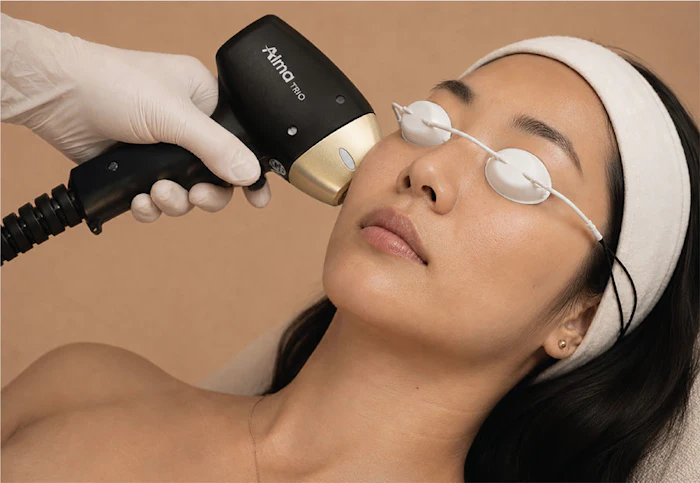
If K-Beauty philosophy is the foundation of today’s skin quality movement, Alma’s TitaniumLift, a treatment protocol originating in Korea, may be one of its most compelling clinical expressions in the aesthetic setting. The treatment has generated significant excitement throughout the industry, not simply because of where it came from, but because of how closely it aligns with what modern patients are seeking. Its arrival also reflects the growing virality among North American practices for Korean treatment philosophies that prioritize deep dermal heating and proactive skin maintenance over aggressive intervention.
"Having originated in Korea, it’s no surprise that this approach aligns with K-Beauty’s longstanding focus on skin quality," explains Nurse Jamie. "K-Beauty has always emphasized brightening, tightening and sculpting, which I personally refer to as BTS."

"One of the things I appreciate about Alma is that the technologies are designed around how we actually practice today," says Nurse Jamie. "TitaniumLift reflects the philosophy of improving the appearance of skin quality, while Alma Harmony allows me to customize treatments for everything from pigmentation and vascular concerns to improving the appearance of texture and tone, and supporting collagen stimulation."
One-Size-Fits-All Aesthetics
While trends influence patient interest, Nurse Jamie believes personalization remains one of the most important components.
As one of the industry’s most versatile aesthetic platforms, Alma Harmony allows practitioners to address a broad range of skin concerns through a single system. Instead of viewing pigmentation, redness, texture, and vascular concerns as separate conversations, Harmony allows practitioners to approach them as interconnected components of overall complexion health.
"Skin quality is rarely one issue," she explains. "It can be pigmentation, redness, texture, vascular concerns, or often several of those at once."
With technologies capable of addressing pigmented lesions, vascular concerns, skin rejuvenation, texture irregularities, and collagen stimulation, Alma Harmony allows practitioners to create customized treatment protocols tailored to individual patient needs. Rather than moving patients between multiple devices, practitioners can build comprehensive treatment plans from a single platform, combining technologies such as Dye-VL, ClearLift, and ClearSkin to address multiple dimensions of skin quality simultaneously.
"We’re past the era of one-size-fits-all aesthetics," says Nurse Jamie. "Patients expect treatments to be as personalized as their skincare routine. Harmony gives me the flexibility to create protocols around the individual, not the skin concern, and that’s a much more modern way to practice."
That personalization extends across Alma North America’s portfolio. Whether improving skin quality with Alma Harmony, embracing the Korean-inspired approach influencing TitaniumLift, or helping patients achieve laser hair reduction with Soprano, the common thread is creating technologies that support individualized care and fit naturally into modern aesthetic practices.
For nearly two decades, Soprano has helped define the laser hair reduction category around the world. Having treated more than 18 million people globally, it has become one of the most recognized and trusted technologies in aesthetics, a reflection of patients’ growing preference for treatments that combine efficacy, comfort, and convenience. Like the broader shift happening across aesthetics, Soprano reflects today’s skin-first mindset, where beauty is effortless and the best treatments become part of your lifestyle, not your schedule.
A New Definition of Beauty
Beauty standards will continue to evolve. Trends will come and go. Technologies will advance.
What appears to be lasting, however, is a broader shift in how patients define beauty itself…not as perfection, but as health; not as transformation, but as maintenance; and not as a single treatment, but as a long-term skin health roadmap.
"We’re moving toward undetectable beauty," says Nurse Jamie. "The goal isn’t for people to know you’ve had something done. The goal is for them to think you look effortlessly beautiful and never quite know why."
In many ways, K-Beauty didn’t simply introduce a new category of products or treatments. It changed the conversation entirely. And as aesthetics continues to evolve, that influence can be seen everywhere; from the products patients use at home to the technologies aesthetic practitioners use in treatment rooms every day.
For Nurse Jamie, that’s not a trend. It’s the new benchmark.