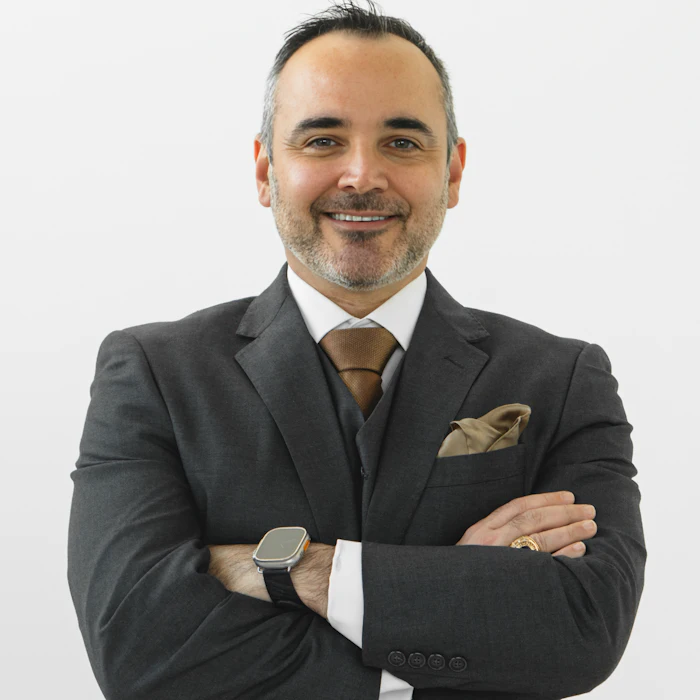
I didn't get into aesthetics because I loved Botox. I got into it because I spent years in the Army learning how to build teams that perform under pressure — and I realized those same principles were missing from most medical practices.
When people hear "Army officer turned med spa owner," they usually assume I'm going to talk about discipline or following orders. That's not what this is about. The Army taught me something more useful than rigid hierarchy: it taught me how to build a culture where every person on the team thinks and acts like a leader, regardless of their title.
That's what I want to share here — three Army-tested frameworks that changed how I run Erasable Med Spa, and how they can change the way you run yours.
Leaders Eat Last — And It's Not a Metaphor
In the Army, officers eat after their soldiers. It's one of those traditions that sounds ceremonial until you understand what it actually communicates: your people come first. Their needs, their development, their success — that's your job before your own comfort.
I carried this into Erasable from day one. When a provider has a problem with a patient interaction, I don't ask "what happened?" from behind a desk. I get on the floor. When the front desk team is slammed, I've answered phones. Not because I'm trying to be a hero — because the team needs to see, repeatedly, that nobody is above the work.
This matters more than most practice owners realize. The aesthetics industry has a turnover problem. Injectors leave. Coordinators burn out. Front desk staff cycle through. And in my experience, the number one reason is the same one I saw soldiers leave the service over: they didn't feel like their leadership gave a damn about them.
If your team doesn't believe you'll go to bat for them, they won't go to bat for your patients. It's that simple.
Commander's Intent: Stop Managing, Start Aligning
The Army has a concept called Commander's Intent. It's the two or three sentences at the top of every operations order that describe what success looks like — not how to get there, but what "right" looks like when you arrive.
Here's why that matters: in combat, plans fall apart within minutes of first contact. Radio communication breaks down. Timelines shift. Squads get separated. If soldiers only know the step-by-step plan, they freeze the moment something goes sideways. But if they understand the intent — the purpose behind the mission — they can adapt, improvise, and still achieve the objective.
I use Commander's Intent at Erasable every single day. My providers don't follow scripts. My coordinators don't read from playbooks. Instead, every person on the team knows three things: what our standard of care looks like, what the patient experience should feel like, and what we won't compromise on.
When a new patient walks in nervous about their first filler appointment, my front desk coordinator doesn't need to call me. She already knows the intent: make this person feel safe, informed, and unhurried. She can decide on her own to offer a tour of the treatment room, introduce the provider early, or simply spend an extra five minutes talking through the process. She doesn't need permission because she has clarity.
This is what I call an "azimuth check" — another Army term. An azimuth is a compass direction. In the field, you stop periodically to check your azimuth and make sure you're still headed the right way. In the practice, I check in with my team regularly — not to micromanage, but to ask: are we still pointed at the right objective? Do you have what you need? What's getting in your way?
Most practice owners I meet are drowning in operational decisions that their teams should be making without them. The fix isn't more SOPs. It's clearer intent.
Roles, Responsibilities, and Force Multipliers
The Army is obsessive about knowing who does what. Not in a bureaucratic way — in a survival way. When you're on a patrol and contact happens, there's zero time for "who's supposed to do that?" Every person has a defined role, and they own it completely.
In a med spa, the stakes aren't life and death. But the principle translates directly. Every role in your practice — provider, coordinator, front desk, practice manager — should come with clear ownership, not just a job description that collects dust in an HR folder.
At Erasable, I think of every team member as a potential "force multiplier." That's the Army term for an asset that dramatically increases a unit's effectiveness beyond its size. A good coordinator isn't just scheduling appointments — she's reading patients, identifying upsell opportunities based on their concerns, and catching post-procedure anxiety before it turns into a bad review. A practice manager isn't just balancing the books — she's watching patient flow, identifying bottlenecks, and freeing up providers to do what only they can do.
Here's the thing most owners get wrong: they hire people for a role but never actually give them ownership of that role. They hover, second-guess, or quietly redo things instead of coaching. In the Army, if I didn't trust my platoon sergeant, that was my failure, not his. Either I trained him wrong, or I hired him wrong. Either way, the fix was on me.
When you treat your team like replaceable parts, you get people who act like replaceable parts. When you give them real ownership and the training to back it up, you get force multipliers.
Train to Win: See One, Do One, Teach One
The Army doesn't believe in "figure it out." The training model is structured, progressive, and relentless: see one, do one, teach one.
You watch someone perform the task. Then you perform it yourself, supervised. Then you teach it to the next person. By the time you've taught it, you own it — not just the mechanics, but the reasoning behind it.
I brought this model into our clinical training at Erasable, but also into non-clinical operations. When we onboard a new front desk team member, they don't just shadow for a week and then get thrown into the deep end. They watch our best coordinator handle patient intake. Then they do it themselves while that coordinator observes and gives real-time feedback. Then, within their first month, they train the next new hire on whatever they've mastered.
That last step — the teaching — is where the real transformation happens. When you ask someone to teach, you're telling them: you're not just an employee, you're a leader on this team. That message changes how people show up to work.
Too many med spas treat training as an expense or an interruption. In the Army, training is the main thing. Everything else — the missions, the deployments, the operations — is just a test of how well you trained. If your team isn't performing, the first question should be: did I train them for this specific situation? If the answer is no, that's not their failure.
The Real Lesson
The aesthetics industry talks a lot about technology, new devices, and treatment trends. All of that matters. But I've watched practices with fewer resources and great teams outperform practices with the flashiest credentials and a revolving door of staff.
The difference is always culture. And culture doesn't happen by accident. It's built through how you lead, how you communicate expectations, how you develop people, and whether you actually mean it when you say "we're a team."
The Army taught me that a small group of well-led, well-trained people who understand the mission will outperform a larger, better-resourced group without those things every single time. That was true in Iraq, and it's true in Tampa.
If you want to grow your practice, stop looking for the next device or the next marketing hack. Look at your team. Ask yourself: do they know the mission? Do they own their roles? Are they trained to win? And do they believe — actually believe — that you have their backs?
If the answer to any of those is no, that's where you start.