The the aesthetic and wellness practice market has increasing grown a demand for tailored transition solutions as the influx of private equity (PE), has changed how practice transitions happen.
Driven by the increased consumer demand for non-invasive cosmetic procedures and the desire of existing owners to exit the market, there has never been a more important time for medical aesthetic practices to understand what drives value and how to become more attractive to potential partners or buyers.
Related: Inside the Mind of an MSO: What Practice Owners Need to Know Before Selling
It's why LuxMed Transition Strategies, a firm specializing in practice transitions for medical aesthetics, aesthetic surgery and wellness clinics, launched in 2025 –– as a response to a rising need from medical professionals in adjacent industries for expert guidance in managing multifaceted practice transitions.
As an affiliate company of Professional Transition Strategies (PTS), the top dental practice brokerage, LuxMed leverages decades of experience and hundreds of successful practice transitions to offer innovative, customized solutions for practice owners in the rapidly growing aesthetics and wellness industries.
After solidifying its position as the trusted partner for dental entrepreneurs seeking strategic and creative transition solutions, doctors from analogous fields sought out PTS for the same level of expertise and support. With market consolidation now accelerating, LuxMed is poised to be the premier resource for practice owners seeking to maximize value and successfully navigate their transitions.
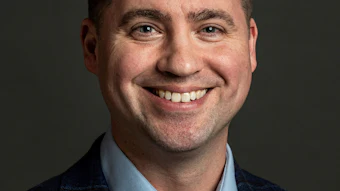
To learn what owners should know about preparing for a successful transition, MedEsthetics spoke with Chris Hubble, president and CEO of LuxMed Transition Strategies, about the market forces driving change, the factors that influence practice value and the strategies owners can implement now to protect their options later.
ME: Private equity and a medical support organizationsn MSOs have fundamentally changed the landscape for aesthetic practice owners. What are the biggest shifts you're seeing in today's transition market compared to even five years ago?
I think five years ago, you had seen consolidation in other healthcare verticals, right? You've seen it in dental for the last 10 or 15 years. You've seen it in vet. You've seen it in construction. You've seen it even in medical, in the sense of medical being like ortho, hospital, and physician groups, which is where I came from.
But for whatever reason, these verticals, they don't talk to each other. So, it's always a surprise when it gets to their vertical. It's the knowledge that has to happen, and the education that has to happen around what consolidation means for a practice owner or a multi-location practice, a single-location practice. What does that mean?
I think that's really been the big shift in the last five years in dermatology. People understand what it means to sell, what it means to partner with private equity or join an MSO. It doesn't always — an MSO doesn't always have to be private equity, right?
So, I think it's more about just understanding what is happening and how it can benefit a practice owner, whether looking to retire — not most ideal situation — or someone that's younger that is like, “Oh wow, I've started this business and I went to school to do medical, and now I'm spending 90% of my time doing business-oriented stuff.”
I think probably in the last five years, it's a lot of education and just a lot of knowledge. There's more people that have transacted, and so there's more people to talk to about what does it actually mean and how is it going to affect me or my staff.
From a private equity standpoint, I tell people this a lot: bad news travels faster than good news, and we see it in every industry.
If there is a private equity group that is taking away clinical autonomy — more importantly than most importantly above anything else — if they're removing clinical autonomy away from providers, that's usually when things go really bad.
If they're dictating how long you can treat a patient for, how long you can see a patient, how many treatments you need to do in a given day, those are the things that really you start to see a lot of problems.
So, it's really being able to do — they're digging into you. You need to be digging into them just as much because you really need to understand who you're partnering with at the end of the day.
ME: Many practice owners assume they won't need to think about an exit strategy until they're ready to retire. What's the biggest misconception you encounter, and when should owners actually begin preparing for a transition?
That's a really — I think that's a big thing that a lot of owners need to think about.
If you're waiting until, “Hey, I want to retire in 12 months, 18 months,” you've missed the boat. The value of your business has dramatically decreased because what they're buying is typically goodwill, which is what you've been building over those decades, multiple decades, while you've been building that practice with multiple providers.
Maybe you're still a solo provider, and so you really need to think about it probably five to 10 years before retirement.
I mean, even our average age seller is 43 years old, right? And so we find a lot of doctors, nurses that are either in the derm space or own a med spa, and they say, “Hey, I built this business. I don't really know what I'm doing, and I'd rather partner with somebody to help me grow faster and do things better, and allow me go back to doing what I love, which is taking care of patients.”
And so, it really is going to depend on every other individual. But I think there's a lot of opportunity out there, and it's something that you have to think about, just like you would your own personal financials.
You've got to think about, “Okay, if I'm going to retire at 65, I need X amount of money from there.” You need to have that plan in place.
And we tell people all the time, you should be thinking about things as if you are going to sell, even if you never intend to sell. But think about it in the same way, then you'll be in the best shape possible if you decide to ever transact.
ME: Whether an owner is considering a sale, merger or partnership with an MSO, what factors have the biggest impact on a practice's valuation today beyond revenue alone?
Beyond revenue, I would say the big one is key man risk. And that is if you are the sole provider of that practice and you are providing north of 50%, 60% of the overall production within that given practice, if something happens to you as an individual — you break your hand, you know, God forbid, you get hit by a bus — that revenue goes away tomorrow, and so that's a huge risk.
If you can spread that out amongst, call it four or five providers, then all of a sudden, if something happens to one of them, or if one decides to quit, the impact to the P&L is not nearly as bad.
And then also, what type of service lines can impact your value? So, whether you're doing Mohs surgeries, are you accepting insurance, are you not accepting insurance, are you 100% fee-for-service, are you a cosmetic dermatologist, what kind of derm procedures are you doing? Do you have a med spa? Do you not have a med spa?
A lot of those things can definitely impact your overall value.
My old partner in my old business used to say — because I came from dental — he used to say, “If you've seen one dental practice, you've seen one dental practice,” and it's the exact same in medical, right?
If you've seen one dermatology practice or one medspa, you've seen one dermatology practice because they're all very unique. There are a lot of nuances between each of them.
But key man risk and the types of service lines that you're offering have a big impact above just the revenue line.
ME: Not every practice owner wants to sell outright. What transition models are becoming more popular, and how can owners determine which path best aligns with their long-term goals?
I think this is a huge question that people need to think about because there are now different models out there.
It used to be, “Hey, we buy at 100%.” Now there are joint venture models where you get to retain practice-level equity. There are minority ownership stakes; people are buying minority, and they still have the HoldCo deals where they're buying 100% and allowing you to roll equity into the holding company.
But it really is going to be what is best for you and what you think you can accomplish. It's more than just, “Hey, somebody submits an offer to you and says, ‘Hey, I'll give you $5 million or $10 million or $20 million.’” What are all the nuances behind that? What does the structure look like? Where does your equity sit?
Some people will say, “Hey, I want my equity to sit what they call pari passu, which is equal to where the investor is sitting.”
Some investors will say, “I'm not going to give you that level of equity. I'm going to give you two shares down, so you actually don't get to invest alongside,” as they call it.
So, there are a lot of nuances that are very important to understand if you decide to have a transaction. Not every structure is right for everybody. Some people have more belief in themselves and they want to retain more practice-level equity and get distributions and those types of things. Others say, “Look, I'd rather roll my money to HoldCo and take a second bite of the apple, or equity arbitrage, in three to five years.”
It's really going to be an individual decision. But what I would say is that everybody needs to evaluate as many options as possible. And what I tell a lot of our sellers is, as we go through the process, you're going to find out more about what you don't want than what you actually want, and I think it's better to eliminate those things very quickly if you can.
ME: How does LuxMed help practice owners navigate the valuation and transaction process?
The way we look at it is, we want to be able to — and I've always kind of operated my whole professional life this way — I want to make as many data-driven decisions as possible versus emotional decisions.
You might get an offer for $5 million. Okay, great. Should it be $3 million or should it be $15 million? I don't know.
So, getting and understanding what the value is of your business is super critical.
We provide everything from getting the valuation done, understanding what it would look like if you went to market, and then helping you all the way through that process, all the way to a close.
And really helping you take — these people still have full-time jobs, right? They still have to run a business. They still have to own the business. They still have to see patients potentially.
They're working 40, 60, 80 hours a week. Well, all of a sudden, you get into this process, you could be spending another 80 hours a week trying to do all of these things. That's where an advisor comes in to reduce some of that workload, and we help them through that process while trying to maximize their value.
You should always compare to doing nothing. If you outperform an offer by doing nothing, or by partnering with somebody, can it help you grow faster? And if that's the case, then I would say you need to consider looking at this deal because you can grow faster with a partner than without. But you should always compare it to doing nothing.
ME: Looking ahead, where do you see the medical aesthetics transition market heading over the next three to five years, and what should practice owners be doing now to stay ahead of those changes?
We're just — especially on the medical aesthetics side — derm is a little further along from a consolidation standpoint, but medical aesthetics in general is probably somewhere around 11% to 12% consolidated across the industry.
So, we are in the very beginning stages of consolidation, and it is only going to continue to consolidate.
The consolidation wave is going to continue to continue to grow and grow faster, and it's not necessarily a bad thing.But you want to be able to prepare yourself to be either part of that wave, or you may miss the wave.
Dental, I would say, is probably 10 to 15 years ahead of medical aesthetics specifically. Dental is probably close to 40% to 50% consolidated, and so we've got a long ways to go over the next four to five years.
There are a lot of groups out there that are continuing to look to acquire, looking for the right partners, whether it's a solo practitioner or a big platform-size deal.
There are a lot of good things on the horizon from a consolidation standpoint. But as long as people are doing it with the best intentions to support business owners and not taking away any sort of medical decision-making.
Why should practice owners understand their valuation, even if they don’t plan to sell?
For people that just kind of want to understand where they stand, right? What is the value of this thing that I built that I had no idea I was going to build? Usually that's the case. I didn't know I was going to own five locations or I was going to have 10 employees. You don't really come out of med school thinking that. So, understanding where you stand is very important, even if you don't ever want to transact. Sometimes it's good just to go through the process and say, “Okay, this is what it would look like if I decided to do it.” And maybe it's three years from now, or maybe you go through that process and you say, “Wow, I had no idea this is actually way more exciting than I would have ever thought.” And then they decide to do something. We've had both of those scenarios.
For us, we want people to have the information to make data-driven decisions, and they're not just doing something because somebody gave them an offer and said, “Hey, this is what we think you're worth.”
We always say that if you're letting a buyer dictate your value, you're always going to be undervalued. You're pretty much at fundamental odds with the person across the table from you, and so having an advisor really helps level the playing field because the business that you built is usually your most valuable thing you own, even above and beyond your home.
It's really making sure you're taking care of that baby, and you're finding the right partner, and you're understanding what is really going on within your business.
And it makes — even if you decide never to transact, and you get a valuation done — you can say, “Okay, here are the areas that I can focus on that is going to end up making you more money as the owner, anyways.” So it's a win-win.
We don't charge for valuations because we think everybody should. It's your data, it's your knowledge. You should be able to have it. You shouldn't have to pay somebody $20,000 to tell you what your business is worth.