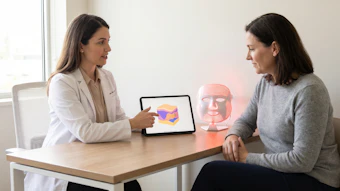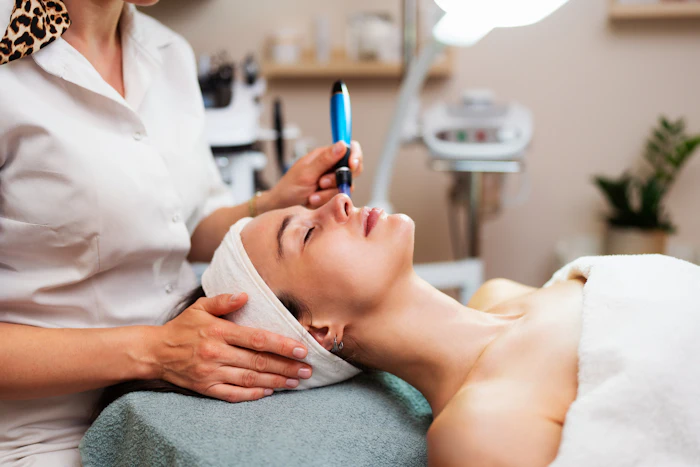
For years, facial rejuvenation was often measured by how much could be tightened, filled or lifted. Today, however, aesthetic medicine is moving in a different direction. Patients still want firmer skin, sharper jawlines and a more youthful appearance, but increasingly they want those improvements without surgery and without looking like they had work done.
That shift is driving the next generation of lifting treatments, where energy-based devices, biostimulators, regenerative therapies and carefully sequenced combination treatments are taking center stage. Rather than relying on a single procedure, providers are increasingly addressing aging across multiple layers of the face, focusing on collagen production, tissue quality and long-term maintenance.
Related: The Next Generation of Aesthetic Surgery
“Patients today are generally more informed, more selective, and more focused on natural-looking outcomes than previous generations,” said Shay Moinuddin, RN, clinic director at The Few Institute for Aesthetic Plastic Surgery. “Undetectable results have become the gold standard as opposed to over-filled or over-operated faces.”
That demand for subtle enhancement is influencing everything from treatment selection to technology development.
A Move Away From Overfilling
One of the biggest shifts in facial rejuvenation is the industry’s movement away from volume replacement alone and toward rebuilding the skin’s underlying support structures.
“Patients are focused on prevention and improving their skin quality at earlier ages, in an effort to avoid major cosmetic procedures in the future,” Moinuddin said.
At LEA Plastic Surgery & Aesthetic Lab, founder Goretti Ho Taghva, MD, FACS, has seen a similar evolution. “The pillow face era did a lot of damage, and patients watched it unfold in real time on social media,” she said. “They’re not coming in to be transformed. They’re coming in to be restored.”
What’s more, today’s patients are specifically seeking treatments that preserve identity while improving appearance. “The ask is almost always: make me look like myself, but better,” Ho Taghva continues.
That emphasis on natural outcomes has fueled interest in biostimulators such as Sculptra and Radiesse, which encourage the body to generate its own collagen rather than simply adding volume. “In my opinion the greatest impact on facial rejuvenation outcomes has arguably come from biostimulatory injectables,” Moinuddin adds. “This shows the shift in patients wanting less ‘filling’ and more ‘rebuilding.’”
Ho Taghva agrees. “They’ve reframed the conversation from volume replacement to structural rebuilding, which is conceptually more honest,” she said. “The problem with the filler-dominant era was that we were adding volume to faces that didn’t need more volume—they just needed better architecture."
At SkinSpirit, Brianna Guttoso, PA, has also seen increasing interest in collagen-building procedures.“Biostimulators and regenerative treatments have become increasingly valuable because they focus on restoring the skin’s underlying support system rather than simply replacing volume,” she said. “These treatments stimulate the body’s natural collagen production, helping improve skin quality, firmness, and structural integrity over time.”
Related: Skinspirit Launches a High-Performance, No-Downtime Laser Treatment
Energy Devices Come of Age
While injectables continue to evolve, energy-based technologies remain a critical part of the non-surgical lifting conversation.
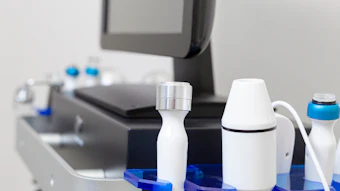
Radiofrequency, ultrasound and laser technologies have all improved significantly in recent years, allowing providers to target skin laxity with greater precision and comfort.
“One of the most significant advancements has been our ability to deliver energy more precisely and consistently while improving patient comfort,” said Dendy Engelman, MD, FACS of Shafer Clinic Fifth Avenue. “Today’s radiofrequency technologies are designed to stimulate collagen remodeling more efficiently, allowing us to address skin laxity and improve firmness with natural-looking results and little to no downtime.”
Related: Aesthetic Laser and Energy Devices Global Market Trends
Patients are responding enthusiastically. “We’re seeing growing interest from both younger patients who want to be proactive about collagen preservation and patients experiencing early to moderate signs of aging,” Engelman said. “Many patients want visible improvement but are not ready for surgery.”
Moinuddin has seen particular demand for ultrasound-based tightening. “Sofwave has become one of the most requested treatments because it addresses mild to moderate skin laxity without surgery,” he said. “It can be used on the face, neck and body, has an incredible safety profile and can be used on all skin types.”
Ho Taghva, agrees, saying that improvements in technology have helped restore credibility to the category. “I’ve been working with Thermage and Ultherapy for 15 years,” she said. “The technology itself has meaningfully improved. Energy settings have been fine-tuned to be more efficient and targeted, treatments are significantly more comfortable and tolerable than they were a decade ago.”
Still, experts caution against overselling outcomes. Steven Pearlman, MD, FACS, owner/facial plastic surgeon at Pearlman Aesthetic Surgery, said providers must remain realistic when discussing device-based treatments.
“There will be some improvement in non-surgical devices but I do not see any approaching the improvement you can get from an actual facelift,” he said.
Combination therapy becomes the gold standard
Perhaps the most significant trend shaping facial rejuvenation is the move away from single-treatment solutions. Experts increasingly describe aging as a multifactorial process involving skin quality, volume loss, collagen depletion, structural changes and tissue descent. Addressing only one component rarely produces optimal outcomes.
“Facial aging is a multifactorial process and therefore no single treatment can effectively address all of its components,” Moinuddin said.Moinuddin's approach combines ultrasound lifting, conservative filler placement, neuromodulators and skin resurfacing therapies to address multiple layers of aging simultaneously.
“Combining treatments rather than piecemealing a treatment plan for patients often leads to higher patient satisfaction,” he said. It's a philosophy that Guttoso agrees with. “Combination therapy has become the gold standard in aesthetic medicine because aging affects multiple layers of the face simultaneously,” she said. “To achieve the most natural and comprehensive results, we need to address skin quality, collagen loss, volume changes, and structural support together."
In practice, that often means pairing energy-based treatments with injectables and regenerative therapies.
“While injectables can restore support, contour, and lift, skin treatments improve texture, tone, pigmentation, and overall skin health,” Guttoso said. “The combination creates outcomes that look more complete, balanced, and natural than either treatment could achieve alone.”
Ho Taghva follows a similarly layered approach, often combining Ultherapy, Sculptra, BBL Moxi and radiofrequency treatments to address deeper structures and surface quality simultaneously.“Deep tissue stimulation, structural collagen rebuilding, and surface skin quality all addressed in the same treatment arc,” she said.
Regenerative Aesthetics Enters The Spotlight
While devices and injectables continue to evolve, many experts believe regenerative medicine represents the most exciting frontier in facial rejuvenation.
Lara Devgan, MD, MPH, FACS, founder of Lara Devgan Scientific Beauty, believes regenerative aesthetics is changing how providers think about aging.“Regenerative aesthetics has become one of the most interesting frontiers in facial rejuvenation because it changes the conversation from simply moving, filling, or tightening tissue to improving the biologic quality of the tissue itself,” she said.
Rather than focusing solely on appearance, regenerative treatments seek to improve tissue health through collagen production, vascularity and cellular signaling. “Better collagen density, dermal thickness, hydration, tone and elasticity can create a face that looks fresher and more luminous without looking ‘done,’” Devgan said.
The category includes PRP, exosome-based therapies, growth factors and other emerging treatments designed to support the body’s own repair mechanisms. Still, experts urge caution. For instance, Shamsa Kanwal, MBBS, FCPS, a board-certified dermatologist, noted that enthusiasm should be balanced with evidence. “Regenerative options such as PRP can support skin quality, while exosome claims should be discussed carefully because the marketing is ahead of the strongest clinical evidence in many cases,” she said.
That measured approach reflects a broader trend in aesthetics: embracing innovation while maintaining realistic expectations.
The Importance of Patient Selection
Even as non-surgical technologies become more sophisticated, providers consistently stress that patient selection remains critical.
“Nothing you inject will lift a face,” Pearlman said. “Restoration of facial volume loss or volume enhancement can certainly make some patients appear more youthful, but they will not substitute for surgical rejuvenation.”
Kanwal noted that non-surgical treatments work best for patients with mild to moderate laxity. “I am very clear that non-surgical treatments can refresh and support the face, but they cannot stop aging or create the same result as surgery,” she said.
Ho Taghva believes the discussion should be less about choosing between surgery and non-surgical treatments and more about understanding when each is appropriate. “A facelift repositions tissue and removes excess, but it cannot surgically improve the texture or quality of the skin that remains,” she said. “For that, you need adjunctive tools. They’re not competing philosophies. They’re complementary ones.”
Looking toward the future
As facial rejuvenation continues to evolve, experts largely agree that the future will be defined by personalization, prevention and biologically driven therapies.“The future of aesthetics will continue to move toward personalization, regenerative medicine, and full-face assessment,” Guttoso said.
Engelman sees a growing emphasis on preserving skin quality and supporting collagen production before significant aging occurs.“The goal is not to dramatically change someone’s appearance, but to preserve skin quality, support collagen production, and help patients age in a healthy, natural-looking way,” she said.
For Devgan, the future lies at the intersection of aesthetics, regenerative medicine and longevity science.“The future of facial rejuvenation will not be one magic machine or one injectable,” she said. “It will be a more sophisticated understanding of when to regenerate, when to restore, when to operate, and when to leave well enough alone.”
That sentiment may best capture the direction of the industry. The next generation of lifting treatments is not about finding a replacement for surgery. Instead, it is about creating smarter, more individualized strategies that improve tissue quality, stimulate collagen and help patients maintain healthy, natural-looking results over time.