Medical aesthetic surgery has developed inescapable marketing language that medspas, surgeons, and wellness professionals worldwide have seamlessly adopted in one variation or another.
“Zero-to-little,” “instant healing,” and “gentle on the body” are just a few of the taglines that have grown in popularity to promote a procedure. In fact, you may have found yourself or your practice selling procedures the same way.
Related: Skinspirit Launches a High-Performance, No-Downtime Laser Treatment
This language reflects a current trend in the aesthetics industry: According to a 2025 study by Fortune Business Insights, more than 64% of aesthetic patients now prefer procedures with shorter recovery periods and lower surgical risks compared to traditional cosmetic surgery[1].
The study goes on to explain that this trend in patient behavior is fueled by a growing preference for minimally invasive cosmetic treatments, with energy-based, non-invasive skin tightening emerging as the fastest-growing category in aesthetic medicine[2].
As a result, device and product companies have swarmed at the opportunity. Today, you can find everything from regenerative microneedling recovery serums and collagen-infused wraps to “no-downtime laser treatments.”
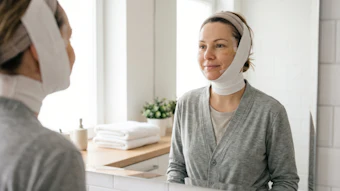
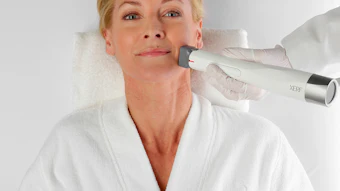
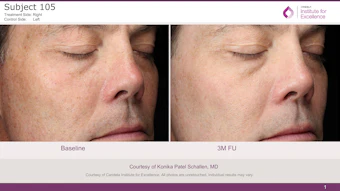
SkinSpirit, for example, debuted its Laser Facial in March of this year, offering clearer, brighter skin and reduced redness with no downtime[3,4]. Similarly, Induction Therapies launched its professional-grade post-microneedling recovery complex, which features a dual-regenerative formula that combines 5% Salmon PDRN with plant exosomes as a clinically focused recovery option [5]. Even Kim Kardashian’s Skims line released a chin wrap. Described as its “first-ever face innovation,” the chin wrap features collagen yarns for jaw support that can help with swelling [6].
Related: Adipose-derived Exosomes Improve Wound Healing
To unpack what recovery really looks like—and separate meaningful interventions from the latest wellness trends—MedEsthetics spoke with Dr. Anthony Admire, board-certified plastic surgeon, facial rejuvenation specialist, and founder of AdmireMD Plastic Surgery + Skin Clinic.
What does downtime actually look like after a facelift or neck lift?
I think it’s important to distinguish between medical recovery and social downtime. Most of my patients are up, walking, showering, and functioning fairly normally within the first 2-3 days after an extended deep plane facelift with a deep structural neck lift. But that doesn’t necessarily mean they’re ready for dinner with friends, an important event, a major trip, or vacation. For most of my facelift and neck lift patients, I tell them to plan on roughly 10–14 days of true social downtime. Swelling and bruising are typically most noticeable during the first week and improve significantly during the second. By two weeks, many patients are comfortable being out socially, often with a little makeup. That said, subtle swelling, particularly through the cheeks, jawline, and neck, can persist for several weeks or even a few months as the tissues continue to settle. Any laser resurfacing done during surgery can increase the downtime and recovery time.
What can a patient expect to feel or look like in the first week versus the first month?
The first week is really the inflammatory phase of healing. Patients can expect swelling, bruising, tightness, numbness, and sometimes an uneven or slightly distorted appearance simply because different areas swell and resolve at different rates. Interestingly, most facelift patients describe the recovery as more uncomfortable than painful. Tightness and pressure are generally more noticeable than significant pain. My patients might have some difficulty with swallowing, chewing, or speaking for the first few days if a deep structural necklift is performed with the facelift. At one month, it’s a very different picture. Most visible bruising is gone, swelling has improved substantially, and patients are beginning to appreciate their new jawline, neck, and facial contours. They generally look refreshed rather than “postoperative.” There can still be some residual swelling, firmness, and numbness, however, and the final result continues to refine for months.
What’s the biggest thing patients underestimate about recovery going into surgery?
I think patients underestimate the patience required during recovery. We live in an era of immediate results, but surgery still follows biology. Recovery is also not perfectly linear. A patient may look great one morning and notice more swelling that evening. One side may resolve faster than the other. The neck can feel tight, areas can feel firm or numb, and patients can become hyperfocused on very small changes because they’re looking at themselves every day. I tell patients that the first few weeks are a journey, not the final result. Understanding that before surgery and having realistic expectations makes the recovery experience dramatically easier. Also, younger, fitter patients will heal faster than older patients with maybe 1 or 2 minor health issues. Also, thinner faces will generally heal faster, due to less subcutaneous fat that traps swelling. I try to dissolve all HA filler preoperatively at least 2 weeks in advance. Less residual filler, even if it was placed many years ago, will decrease the amount of post-operative edema.
What role does skin care and skin health play in how well someone recovers?
Skin health is incredibly important. A facelift repositions the deeper facial tissues and restores anatomy, but it doesn't fundamentally change the quality of the skin itself. Healthy, well-hydrated skin with a strong barrier generally tolerates surgery better and gives us a better canvas for healing. This is why I think of facial rejuvenation as more than simply performing a facelift. In my practice, we increasingly focus on surgery plus skin optimization. My aestheticians and laser techs start the pre-surgical treatment process 2 months before the facelift, and we continue skin optimization treatments for the patient's lifetime. Once the incisions and skin are sufficiently healed, a thoughtful postoperative skin-care program can help improve texture, pigmentation, redness, and overall skin quality. Ultimately, the best surgical result is one where the underlying facial architecture and the overlying skin both look healthy and rejuvenated.
What tools or treatments do you recommend during recovery, and how do they actually help?
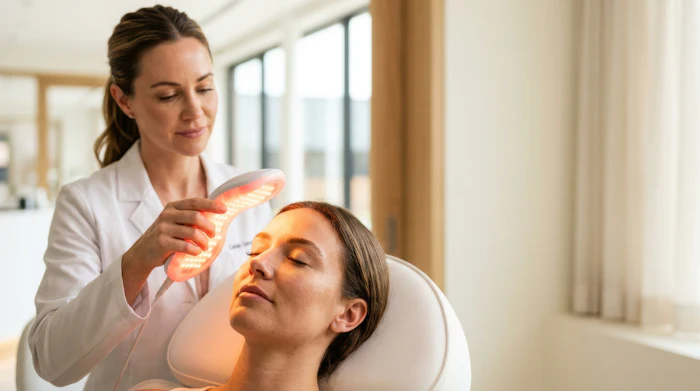
Early on, I keep things relatively simple: elevation, gentle walking, appropriate compression when indicated, hydration, good nutrition, and meticulous incision care. As healing progresses, I like incorporating modalities that address specific postoperative issues rather than simply adding treatments for the sake of doing more. LED/red light therapy, for example, can help with inflammation and healing. Later, depending on the patient, we may incorporate treatments such as BBL for persistent redness, microneedling for scar maturation and texture, or other energy-based treatments when appropriate. I’m also very interested in regenerative skin care, including growth-factor and exosome-based topical products. The key is timing. There is a recovery point when these treatments can be beneficial, but aggressive treatment too early can actually be counterproductive.
Red light therapy comes up a lot in wellness content right now. Is that something you’d recommend, or is it more hype than help?
I do recommend it. There is certainly a lot of marketing surrounding red light therapy right now, but photobiomodulation itself is not simply hype. Appropriate red and near-infrared wavelengths can influence cellular activity and mitochondrial function and may help modulate inflammation and support tissue repair. I particularly like LED therapy following facial surgery because it is noninvasive and generally very well tolerated. The caveat is that not every red light device is equivalent. Wavelength, irradiance, treatment time and consistency all matter. A device producing a red glow isn't necessarily delivering a meaningful therapeutic dose.
Are there natural, low-tech ways to support recovery that people overlook?
Absolutely, and some of the most effective things are also the least exciting. Walking, hydration, adequate protein, good nutrition, sleep and avoiding alcohol and nicotine can have a tremendous impact on recovery. Gentle walking is one of my favorites. It improves circulation, helps reduce the risk of blood clots and gets patients back into a normal rhythm without stressing the surgical result. Protein is another one patients sometimes overlook. Healing is metabolically demanding, and the body needs adequate protein and calories to repair tissue. Recovery is not the time for extreme dieting or caloric restriction.
What downtime trends are you seeing patients try right now?
There has definitely been a shift toward trying to “optimize” recovery. Patients ask about red light therapy, hyperbaric oxygen, lymphatic massage, peptides, exosomes, IV therapy, supplements, cold therapy and various recovery devices. I think some of that is positive because patients are becoming more engaged in their recovery. But there is also a tendency to assume that more intervention equals faster healing, and that simply isn't always true.
Which of those trends do you think are genuinely worth doing?
I’m most interested in interventions that have a reasonable biologic rationale, are low risk and don't interfere with the normal healing process. For facial surgery, I think properly administered LED/red light therapy can be very useful. Gentle lymphatic techniques may also be helpful in appropriately selected patients once the surgeon feels the tissues are ready. But I would put the fundamentals ahead of almost every recovery trend: sleep, hydration, protein, nutrition, walking, sun protection and following your surgeon's postoperative protocol. Those things aren't glamorous, but they matter tremendously.
Are there any recovery trends, products, or rituals that you’d steer patients away from?
Anything overly aggressive early in the healing process concerns me. I don't want patients aggressively massaging newly repositioned tissues, applying excessive heat or cold, starting intense exercise prematurely, or using a long list of supplements without discussing them with their surgeon. “Natural” also doesn't automatically mean safe. Certain supplements and herbal products can affect bleeding, blood pressure or medication metabolism.
I also caution patients against trying every recovery trend they see on social media. After a sophisticated facial procedure, the goal isn't to manipulate the tissues constantly. Sometimes the most important part of recovery is simply allowing the body to heal.
Is there anything else you’d want readers to know that we haven’t covered?
Some inflammation and swelling are normal parts of tissue healing. The goal should be to support and optimize the biology of recovery and not fight every aspect of it. I also tell patients not to judge a facelift at two weeks, or even at one month. Facial rejuvenation continues to evolve for months as swelling resolves, tissues soften, sensation returns and scars mature. Ultimately, great recovery starts before the operation. Choosing the right procedure, optimizing skin and overall health, having realistic expectations and following a thoughtful postoperative protocol are far more important than any single device, supplement or wellness trend.
References:
- https://www.fortunebusinessinsights.com/aesthetic-medicine-market-116387
- https://www.delveinsight.com/report-store/energy-based-aesthetic-devices-market
- https://www.powershealth.org/about-us/newsroom/health-library/2026/01/02/cosmetic-surgery-chains-use-misleading-ads-to-market-risky-procedures-experts-say
- https://www.medestheticsmag.com/companies/article/22963623/skinspirit-58415-skinspirit-launches-30minute-laser-facial-for-instant-glow-and-collagen-boost
- https://www.medestheticsmag.com/home/article/22967416/induction-therapies-induction-therapies-unveils-dualregenerative-formula-for-skin-recovery
- https://www.medestheticsmag.com/home/article/22947380/collagen-wraps-cant-compete-with-clinical-treatmentsbut-skims-may-still-change-recovery-healing-culture