On April 14, 2026, 20-year-old viral streamer and social media influencer, “Clavicular”, was carried out of a Miami mall and hospitalized after appearing incoherent while filming content for his thousands of subscribers.
It was later reported that Miami Fire officials were responding to a suspected overdose.
“Just got home, that was brutal,” Clavicular said in a social media post. “All of the substances are just a cope trying to feel neurotypical while being in public, but obviously that isn’t a real solution. The worst part of tonight was my face descending from the life support mask.”
Related: Editor's Eye: Aesthetics Through The Male Gaze
Born Braden Eric Peters, Clavicular is the face behind the viral “looksmaxxing” (maximizing physical attractiveness) trend that has taken gen-z males by storm. The word has now morphed into a movement and lifestyle, which consists of aesthetic hacks and promoting extreme looksmaxxing regimens. According to Clavicular, the routines are how he’s been able to achieve his 31-inch waist and sharp clavicles that span 19.5 inches (his own measurements, provided to the New York Times) and people believe him.
While he’s only been filming a little over a year, Clavicular and his looksmaxxing trend has transformed into a movement that has not only permeated the manosphere, but popular culture at large. According to data posted to X, 70,000 clips of Clavicular’s content have been viewed 2.2 billion times across short-form video platforms like TikTok and Instagram Reels between March and April alone. And on TikTok, videos with the hashtag #looksmax has gained over 4.6 billion views, influencing young men around the world at alarming rates.
Related: Gen Z in the Aesthetic World: Strategies for Attracting the Next Generation of Patients
Officials have not specified what substance Clavicular may or may not have taken before his collapse, but he's been vocal about his experimentation with chemicals, from taking meth to stay thin and starting testosterone therapy at 14, to consuming supplements on the daily to remain chiselled and focused. He’s even been open about his interest in unprescribed substances like peptides, lipodissolve, illegal steroids and has been accused of injecting his livestream guests with substances like aqualyx, which is used to reduce fat in the chin, thighs, or stomach. Some of the recommended regimens he promotes, for example, can be anything from encouraging followers to eat “boy kibble” — a recipe comprised nothing more than ground beef and rice for the purpose of low calories and high protein for “gains” — to telling his followers facial bone smashing with a hammer is the best way to get a chiselled jawline.
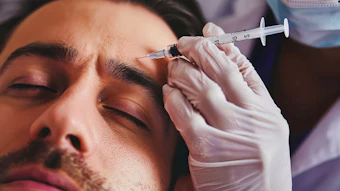
Appearance optimization is a staple of medical aesthetics and has been around long before Clavicular’s dangerous rendition of the practice. Non-surgical, tailored procedures, like injectables, laser therapies, and skin tightening have not only been years in development, but are continuing to rise in popularity, especially for men. According to the American Society of Plastic Surgeons, 1.4 million male cosmetic procedures were conducted last year. The number of males who have had Botox injections has also increased by more than 250% from 2000 till today.
While Clavicular coined looksmaxxing, his platform and message exposes a dangerous homogenation of internet-fueled body obsession and a booming aesthetics market now seeing younger, more impressionable male clients. After talking to experts in the industry, MedEsthetics explores how medspas and practitioners are reckoning with that influence, where ethical boundaries are being tested, and what happens when clinical care meets algorithm-driven extremes.
Related: ‘Brotox’ on the Rise: Male Injectable Appointments Increase by 76%
Medical Aesthetics Role in Looksmaxxing
Aesthetic medicine didn’t create looksmaxxing but it did lay the groundwork. From the normalization of injectables in the 1990s and the filler boom of early 2000s, to the emergence of social media and the influence of filters in 2010 and where society is currently with the male aesthetics surge, Clavicular, ultimately, is a byproduct of what has been a periodical shift for men and how they see themselves. Now, in the 2020s, as male demand rises, online communities are taking those benchmarks and stripping them of medical context, turning clinical outcomes into unrealistic optimization projects.
Dr. Diana Ponsky is a renowned double-board certified facial plastic surgeon in Cleveland, OH. When asked about the medical aesthetics role in the looksmaxxing movement, she admits that the industry is to partially blame. “I don’t know for certain, but I’m sure we contributed to some degree. We don’t invent beauty ideals or bring on trends—it’s the celebrities who bring on trends—but we do standardize them and amplify them. What social media did was turn these into checklists and create an audience where people think that is how they are supposed to look,” she says. Dr. Ponsky goes on to say, however, that the trend is not a true representation of medical aesthetics, but a distortion.
“They both influence each other. It’s like the chicken and the egg. People come in with online looks or online ideas, and the industry helps to promote that. They both chase each other around. Real aesthetics is more about facial balancing and restraint. Looksmaxxing pushes extremes” Dr. Ponsky continued.
 By SashaMagic via adobe stock
How Looksmaxxing Is Changing Male Patient Consultations
One major distortion variance is intent. Looksmaxxing, while touted as a means of self-improvement, functions as a highly prescriptive approach to wellness and self-care that involves constant comparison to other men. Looksmaxxers often assign "looks scores," and host “outmog” competitions that consists of who looks hotter in side-by-side appearances. Physicians across specialities are witnessing the ripple effects of Clavicular’s influence — not as an extension of medical aesthetics, but as a distortion of it.
“Looksmaxxing can raise the pressure to look sharper, younger, or more masculine in very specific ways,” says Dr. Sanjai Thankachen, a Medical Director at New Leaf Detox. “We commonly see that online trends can make normal features feel like flaws. For some male patients, issues like anxiety, low self-esteem, or social comparison are driving these trends. Social comparison means measuring yourself against other people. That can push patients to seek fast fixes before they have realistic expectations,” he continued.
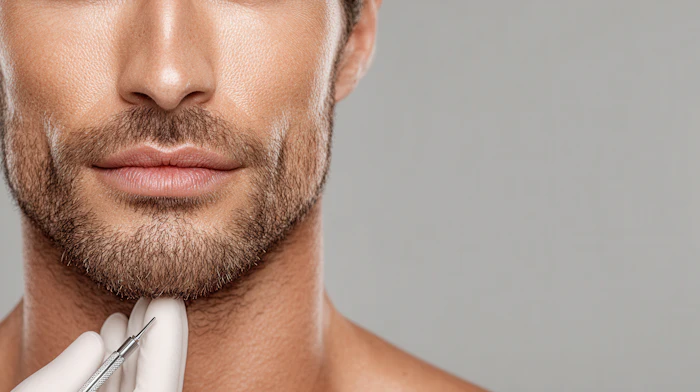
As a result, the types of patients coming into consultation have recently looked different across offices all over. "The patient has changed. Five years ago, men came in asking to look rested. Now they come in asking for a specific canthal tilt, a specific gonial angle, and a hunter eye," Dr. Frank Agullo, a double board-certified plastic surgeon, tells MedEsthetics. “Requests from looksmaxxing patients cluster together, typically chin and jaw implants, genioplasty, buccal fat removal, rhinoplasty that has been narrowed, lateral canthoplasty, as is often desired for the 'hunter eye', and hair restoration. The vocabulary is precise, the references are photo-based, and the patients are younger, in their early twenties. This is a completely different consultation than what plastic surgery was originally designed around,” he continued.
Dr. Olga Bachilo, a board-certified plastic surgeon and the founder of Houston's Glamour Plastic Surgery and Med Spa, is seeing the same. “Since 2022, there has been an increase in male requests for facial surgery in my practice. My most popular male procedures used to be male breast reduction and eyelid surgery, but now include rhinoplasty, chin augmentation and Botox to slim jawlines. These men have often done hours of research on the looksmaxxing forums and TikTok videos before they even enquire about an appointment and come with photos, words and expectations,” she says.
 By Prostock-studio via adobe stock
Where the Trend Helps and Where It Misses
The issue isn’t that more men are seeking aesthetic treatments, but in the motivations behind them. Practitioners are increasingly encountering patients who arrive not with subtle enhancement goals, but with digitally altered versions of themselves — faces pushed toward hyper-idealized, often unrealistic standards. That distinction especially matters when patients seeking refinement or proportional balance can't typically be treated within the scope of aesthetic medicine because they are chasing a transformation into something fundamentally different from who they are. This,is turn, presents a more complex clinical and ethical challenge.
“Aesthetic providers should pay attention to motivation,” Dr. Thankachen says. “It helps to ask what is driving the request, how long the concern has been there, and whether social media is amplifying it. A thoughtful first step is slowing the process down and screening for body image distress. Body image distress means persistent worry about perceived flaws,” he continues.
Dr. Nora Abaldawi, who is an award-winning cosmetic dentist and advanced facial aesthetician with a Master’s in Orthodontics from the University of Warwick, agrees. When talking to MedEsthetics, she says looksmaxxing content tends to compress risk in the patient’s mind. “Some men ask about combining multiple interventions, such as jawline filler plus under-chin fat reduction, while overlooking foundational issues like gum health, wear from grinding, or bite imbalance that can contribute to facial tension and an uneven look," she says. “Bringing the focus back to function helps. A stable bite, healthy gums, and careful management of clenching or TMJ symptoms often matter more to long-term appearance than any single aesthetic add-on,” she continues.
How Medspas Can Help These Patients
For medspas, this means expanding the consultation process beyond surface-level goals. Providers must assess intent as much as anatomy by identifying when a patient is pursuing improvement versus identity alteration. In some cases, that requires setting firm boundaries, having direct, transparent conversations, or even declining treatment altogether.
The most responsible practitioners understand that not every request should end in a procedure. Sometimes, the best outcome is a recalibrated expectation rather than picking up a scalpel.
“The culture increases the need for careful screening,” Dr. Abaldawi says. “When the goal is based on an online ideal that keeps shifting, it is easier to see unrealistic expectations, distress over minor asymmetries, or a fixation on perceived flaws that others would not notice. In those cases, a responsible approach is to slow the plan down, prioritize reversible and conservative steps, and be willing to say no to treatments that are unlikely to meet the patient’s expectations or could create harm. The most sustainable outcomes tend to come from subtle, staged improvements that protect oral health and facial balance, rather than trend-chasing changes designed to replicate a viral before-and-after.”

“I've changed my consultation,” says Dr. Bachilo. ”I focus more on why a patient wants a procedure rather than what he wants. It's not the same person who wants their nose to be less ugly or someone who wants the latest look of the month they saw online.The successful patients want their nose to blend in with their face or their chin to blend with their profile. So I look for that and talk about it if necessary. After eight years you get a sense of who's ready and who's not ready to make a permanent decision,” she continued.
“I ain’t gonna be doing any of that shit anymore,” the viral streamer said to his followers less than 24 hours after the incident. “I ain’t going to be doing any more substances for a little while, hopefully forever.”That same evening, however, Clavicular was seen at the grand opening for Bacara Club in Miami the night following his hospitlization, although undetermined if he was sober or not.
While it appears that his social sphere is collapsing in real time (the emergency scare led to his publicist calling quits because he reportedly will "not take his health seriously”), it's uncertain if the damage he's done to the youth and their quest for appearance optimization can be undone.
The real question isn’t whether Clavicular or the advent of men in wellness aesthetics came first —it’s whether an industry built on enhancement is prepared to push back when optimization turns into harm.
Resources:
- https://www.tejasaesthetics.com/post/new-2025-male-focused-aesthetic-trends-top-treatments-you-need-to-know
- https://www.medestheticsmag.com/treatments/article/22937211/the-rise-of-brotox-and-why-more-men-are-embracing-aesthetics
- https://www.medestheticsmag.com/business/article/22913749/4-growing-trends-in-mens-aesthetics
- https://www.medestheticsmag.com/research/injectables/article/22961175/brotox-on-the-rise-male-injectable-appointments-increase-by-76
- https://www.statista.com/statistics/287643/global-male-grooming-market-size/?srsltid=AfmBOorFgCcId-XPkAN5kqPbwG5QLJ6xuvYwoqVH8I0LYYWXEnSAY0VH
- https://www.fresha.com/blog/fresha-selfcare-report-2025