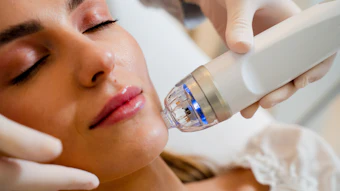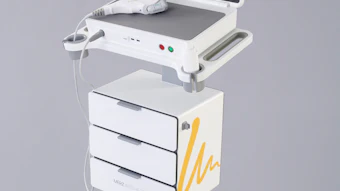
Strata Skin Sciences, an industry leader in excimer laser therapy, presented seven illustrative cases of targeted 308-nm excimer laser phototherapy for localized inflammatory and autoimmune skin diseases at the 2026 Fall Clinical Dermatology Conference, October 8-11, 2026, in Las Vegas.
For aesthetic practices treating patients with complex skin concerns, the targeted excimer laser phototherapy findings may offer another option when topical treatments fail.
Related: Strata Skin Sciences Acquires Ra Medical
Seven Conditions, Seven Patient Outcomes
The retrospective chart review included seven patients, each representing a different condition. Four had experienced inadequate responses to previous topical treatments, while three had received no prior therapy.
Reported outcomes included:
- Psoriasis: A man in his mid-40s achieved 100% clearance of scalp psoriasis after 25 sessions, following an inadequate response to corticosteroids. No relapse was reported at six months.
- Atopic dermatitis: A man in his 40s achieved 95% clearance on his hands after 18 sessions, following an inadequate response to corticosteroids. No relapse was reported at two years.
- Palmoplantar keratoderma: A woman in her 40s achieved greater than 90% clearance on her soles after 40 sessions, following minimal response to corticosteroids and emollients. No relapse was reported at one year.
- Vitiligo: A man in his mid-20s achieved 95% repigmentation of the face and neck after 20 sessions, following inadequate responses to corticosteroids and tacrolimus. No relapse was reported at one year.
- Post-inflammatory hypopigmentation: A woman in her early 20s achieved 90% repigmentation on the forearm after 10 sessions. The hypopigmentation was corticosteroid-induced, and no prior treatment had been attempted. No relapse was reported at two years.
- Alopecia areata: A man in his 60s experienced complete regrowth in treated beard and moustache areas after 20 sessions. No relapse was reported at one year.
- Mycosis fungoides: A man in his mid-30s experienced greater than 75% clearance of a thigh lesion after 15 sessions. Follow-up data were unavailable.
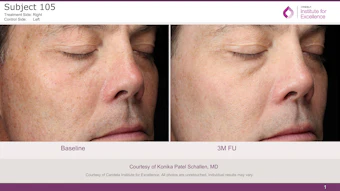
The reported outcomes varied by indication, with psoriasis showing the highest clearance percentage and alopecia areata showing complete regrowth in treated areas. Because each condition was represented by only one patient, the results cannot establish which indications are most likely to respond or how consistently similar outcomes might occur in clinical practice.
Treatment Protocol and Safety Observations
All patients received twice-weekly treatments. Researchers began at a fluence selected for the specific indication and increased the dose by 100 mJ/cm² per session until erythema, soreness or blistering occurred, continuing treatment toward maximal response.
Initial fluences ranged from 100 to 300 mJ/cm², depending on the condition. Treatment courses ranged from 10 sessions for post-inflammatory hypopigmentation to 40 sessions for palmoplantar keratoderma.
Mild erythema lasting one to two days followed dose escalation in all seven patients. It resolved spontaneously without interruption of treatment, and no other adverse events were reported.
Six patients had follow-up data extending from six months to two years, with no reported relapse during their respective follow-up periods. The mycosis fungoides case had no available follow-up data.
Clinical Context and Research Needs
The authors describe targeted 308-nm excimer laser phototherapy as a way to deliver high-fluence UVB light directly to affected skin while sparing uninvolved tissue. Its proposed mechanisms include localized T-cell apoptosis and stimulation of melanocyte migration and melanogenesis, which may be relevant to selected inflammatory, autoimmune and pigmentary conditions.
Although systemic therapies, including biologics and Janus kinase inhibitors, have expanded treatment options for some dermatologic diseases, the authors argue that targeted phototherapy remains worth examining, particularly for localized disease and sites that may be difficult to manage with topical treatments alone.
The findings should be interpreted as preliminary observations rather than comparative evidence. The study involved only seven patients, had no control group, and did not use standardized follow-up across all cases. Treatment parameters were tailored by indication, and the series does not establish optimal dosing protocols or comparative effectiveness.
Larger prospective studies are needed to validate these findings, establish consistent clinical endpoints, determine optimal treatment parameters and assess long-term durability across individual indications.
The research was supported by STRATA Skin Sciences. The authors reported no financial relationships with the company.
"We are pleased to have the opportunity to present our findings at Fall Clinical and highlight the impact excimer laser phototherapy can have in addressing skin diseases that can be challenging to treat with topical therapies alone," said Erica Jordan, CEO, STRATA Skin Sciences.
"These cases contribute to the ongoing conversation around personalized, evidence-based approaches to inflammatory and autoimmune skin diseases, while generating the data and insights needed to help providers deliver meaningful, even life-changing outcomes for their patients."