The “non-surgical butt lift” has become a catchall term for a growing range of aesthetic treatments, from injectable biostimulators and muscle stimulation to skin-tightening technologies and combination approaches.
The marketing shorthand, however, obscures an important distinction: these treatments are not interchangeable or is a substitute for surgical buttock augmentation or lifting.
Related: The $100,000 Butt Augmentation Explained
For providers, understanding what each procedure accomplishes is critical to patient outcomes and satisfaction.
MedEsthetics spoke with Dr. Joshua C. Kreithen, of Holcomb-Kreithen Plastic Surgery & MedSpa about the biggest misconceptions surrounding non-surgical buttock enhancement, including what today’s treatments can realistically achieve, the limits of injectable volume, the role of biostimulators and muscle stimulation, safety considerations, patient selection and when surgery needs to enter the conversation.
Let’s start with the biggest misconception: What exactly does “non-surgical butt lift” mean today, and what can these treatments realistically accomplish that a surgical BBL or buttock lift cannot?
Let’s consider the phrase “non-surgical butt lift” cautiously, as it’s become a marketing umbrella. It can refer to several interventions, including injectable treatments, collagen stimulation, skin-tightening technology, muscle stimulation, cellulite release, or combinations of several approaches. Considered less invasive than what is called a Brazilian Butt Lift (BBL), these treatments may improve contour, add modest volume, smooth a transition, firm the skin, or sharpen muscle definition rather than adding a large amount of fat-transferred volume.
Myth or fact: A non-surgical butt lift can produce the same degree of lift, projection and contouring as a surgical Brazilian butt lift. Where does that comparison break down?
Myth. A Brazilian Butt Lift is essentially the harvesting of excess fat cells from other parts of the body and then injecting them into the buttock area for more projection and volume. Depending on the technique and volume transferred, there may or may not be significant lifting. The average amount of fat transferred in a BBL is 300–600 cc per side (about 1 pound), which is more volume than can be achieved with non-surgical options. In terms of comparison, the minimally invasive options provide modest contour changes, improve shallow depressions and mild skin concerns, and benefit patients who accept a smaller result.
What are the primary modalities you’re using or seeing for non-surgical buttock enhancement today, including injectables, biostimulators, energy-based devices, and muscle stimulation, and what does each actually do to the tissue?
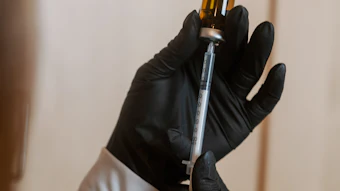
In terms of non-surgical options, the two most common minimally invasive treatments, in my opinion, are injectable volumizing agents and muscle stimulation. In our office, we use Sculptra and Emsculpt frequently, often in conjunction with each other.
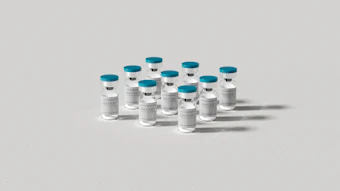
Sculptra’s active ingredient is poly-L-lactic acid (PLLA), and it biostimulates by
stimulating fibroblasts deep in the subcutaneous tissue to produce new collagen over time. Over a period of several weeks to a few months, we see gradual volume enhancement, improved skin thickness/quality, and some softening of contour irregularities. Depending on how much improvement is desired, multiple treatments may be needed.
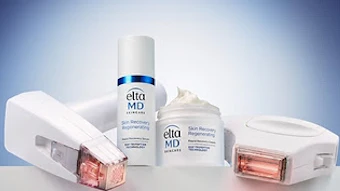
Emsculpt is a non-invasive treatment that provides muscle stimulation, with a recommended 4–6 treatments once weekly for best results. The technology uses paddles that deliver high-intensity focused electromagnetic energy (HIFEM) to trigger thousands of contractions of the gluteal muscles. Essentially, it’s like doing thousands of squats. As the muscles hypertrophy, they become firmer and larger, and the entire buttock becomes rounder, tighter, and more elevated.
How do you determine whether a patient is better suited for filler/biostimulation, an energy-based treatment, a combination approach or surgery?
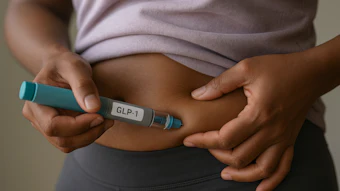
Every treatment plan is centered upon listening carefully to what a patient wants, assessing their anatomy, and then discussing the best ways to achieve a desired result while setting realistic expectations. I will say that most of the patients we are now seeing who come in desiring a “butt lift” have lost significant weight (via GLP-1s) and don’t have enough fat elsewhere on their body to do a BBL. These patients obviously are candidates for the less invasive treatments we have been discussing; however, many of them also have so much loose skin that a lower body lift (360-degree skin removal) enters the conversation.
As for candidates for a BBL, it’s important to discuss in depth the recovery and potential for complications. BBL recovery is demanding, and most patients need a couple of weeks before they are comfortable enough to return to normal activity, and they need to sleep on their stomach for several weeks to maximize fat-grafting survival. Also, the BBL has a higher complication rate than most other plastic surgery procedures, including seroma, infection, contour irregularities, fat necrosis, wound problems, and pulmonary fat embolism.
Patient selection seems particularly important with buttock enhancement. What anatomical or physiological factors make someone a strong candidate for a non-surgical approach, and who is likely to be disappointed by the results?
The strongest candidates are healthy non-smokers at a stable weight, realistic about their expectations, and comfortable with a result that may require upkeep. Good skin quality always helps. A localized hollow, mild asymmetry, early laxity, or a limited contour concern may be reasonable to address with non-surgical approaches. It’s critical for patients to be educated and to understand the number of sessions, cost, cumulative time, and potentially temporary nature of a result. One of the most common phrases used with plastic surgery lifting procedures in any situation is that “we can’t stop aging or gravity.” Disappointment is more likely with substantial sagging, heavy excess skin, severe deflation, major weight-loss changes, or an expectation of surgical projection.
Myth or fact: More product equals more projection. What are the limitations and safety considerations around trying to create significant volume non-surgically?
Myth. More injectable product is not a good strategy. The buttock is a large area, so chasing dramatic projection with injectables can require a very large amount and can be excessively costly. Rather than advising more product, a better strategy is to combine muscle stimulation with targeted biostimulation.
How much of the “lift” patients see from non-surgical treatments is actually increased volume versus skin tightening, tissue remodeling or improved muscle tone?
It absolutely depends on the treatment, and there are multiple factors that go into the buttock lift equation. In my opinion, it really comes down to physics and anatomy. For example, by increasing the size and mass of the gluteal muscle, with the potentially added biostimulation from Sculptra, the loose skin of the lower buttock will lift upward to a degree dependent on the increase in volume. The amount of lift the patient sees will be directly proportional to the improvement in total volume.
What should practitioners consider when treating different concerns such as loss of volume, skin laxity, cellulite, asymmetry, or lack of projection? Can one modality realistically address all of these?
No single modality reliably treats all of them: volume loss, loose skin, cellulite, asymmetry, and poor projection are all different diagnoses. Cellulite usually involves releasing fibrous bands tethering the skin, so simply filling the area may soften a shadow without correcting the cause. Asymmetry can come from fat distribution, muscle, the pelvis, the spine, or suboptimal prior treatments. Mild laxity may improve with skin-tightening injections or microneedling/radiofrequency, while substantial laxity requires an honest surgical discussion.
There’s understandably a lot of attention around gluteal injectables. What are the most important anatomical and safety considerations practitioners need to understand before treating this area?
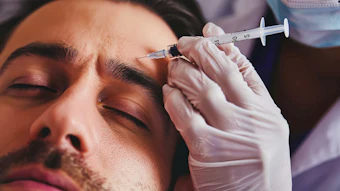
Gluteal injections are a serious medical procedure. The area contains large vessels, nerves, and muscles. A practitioner needs the correct three-dimensional anatomical knowledge, a clear understanding of injectable dynamics, strict sterile technique, and proper communication regarding aftercare and follow-up. Liquid silicone, oils, unknown materials, or products from an unverified source have no place here. With a known history of many fat embolism complications, surgical fat grafting is typically done with subcutaneous placement above the fascia using real-time ultrasound. Training and technique cannot be improvised.
What are some of the biggest red flags you see in the way non-surgical butt lifts are marketed to consumers?
The biggest red flags are things like the unethical marketing of a “surgical BBL without surgery,” dramatic same-day projection, and permanent results. I would also be concerned when a practitioner is vague about the product, calls it “organic” or “medical-grade” without naming it, or will not discuss whether the use is FDA-approved. Bargain packages built around several vials are another warning.
Myth or fact: Because a treatment is “non-surgical,” it is inherently low-risk. What risks or complications should practitioners discuss during informed consent?
Fact. In my opinion, “non-surgical” options for buttock treatments have a much lower risk of complications than a BBL. For example, Emsculpt, which is an external treatment, has a very minimal risk of adverse reactions. Biostimulator injections like Sculptra and Radiesse have an inherently low risk when performed correctly by a skilled clinician. Skin-tightening devices like Morpheus also carry low risk. With injectables, I do discuss during the informed consent process bruising, swelling, and pain as more common potential issues, and infection, asymmetry, nodules, granulomas, migration, inflammatory reactions, and tissue loss as very rare complications.
How should providers counsel patients about maintenance? Are these results generally temporary, and what determines how long they last?
Non-surgical buttock treatment results should not be presented as permanent. Although fillers and biostimulators can sometimes lead to some permanence, most are gradually broken down over time. Skin tightening fades as aging, weight change, and gravity continue. Muscle-based results require continued exercise and often yearly maintenance treatments. Longevity depends on multiple factors, including tissue quality, metabolism, weight stability, activity level, and treatment schedule. Because gluteal filler is not FDA-approved for body contouring and is considered “off-label,” practitioners should be careful about making claims borrowed from facial indications. I always discuss the possibility of additional treatments before the first treatment, not after the result begins to fade.
What does a responsible treatment plan look like when a patient wants a dramatic transformation but their anatomy or treatment options won’t realistically support it?
The key is an open, honest, transparent discussion with a review of realistic expectations. Once you perform a treatment on a patient, you essentially enter a medicolegal clinician-patient contract. So, if a patient’s anatomy does not support the result being requested, a responsible clinician shouldn’t perform the incorrect
procedure. In the medical field, “the customer is always right” doesn’t apply. For example, if I have a weight-loss patient who comes in wanting a BBL and doesn’t have any significant fat to harvest, I will recommend other options like Sculptra, Emsculpt, or even a lower body lift in certain situations. Sometimes, the responsible plan is no treatment.
Are there cases where you would tell a patient, “A non-surgical approach isn’t the right tool for this job”? What are the signs that surgery should be part of the conversation?
Absolutely. Significant skin excess, a low or distorted infragluteal fold, major deflation after weight loss, or a request for substantial projection are signs that surgery belongs in the conversation. I do find that a series of Emsculpt treatments usually helps with some projection and lift in most cases. Appropriate surgical candidacy still depends on health status, donor fat and tissue quality, smoking status, willingness to accept scars, and tolerance for recovery. If a patient isn’t a good surgical candidate, that doesn’t make a non-surgical substitute equally effective in terms of achieving a good result.
Finally, what do you think aesthetic providers most need to understand about the non-surgical butt lift as the category continues to evolve?
There’s an old saying, “When all you have is a hammer, everything looks like a nail.” When we apply this to non-surgical buttock lifting, it’s important to have several tools in the tool chest to address different issues. If someone is promoting these treatments, it’s worth having skill in multiple modalities, including biostimulators, muscle stimulation, and skin tightening, to address several diagnoses that drive patients to an aesthetic office. Also, from personal experience, with more than 25 years in cosmetic surgery, I’ve learned that restraint is also a technical skill. Just because you can do something doesn’t mean you should.
Myth Questions
Myth: “Non-surgical means no downtime and no real risk.” What’s wrong with that statement?
There is never “no downtime” and “no real risk” with almost anything. Although non-surgical buttock lift techniques have much less downtime and risk than a BBL, there are still some inherent risks/complications and some downtime. All injection procedures have normal aftereffects like swelling, soreness, and bruising, which can lead to some downtime. Also, there is some inherent risk with injectables and energy devices that we have discussed previously.
Myth: “You can build a surgical-level buttock with enough filler.” What does a provider need to understand about the limits of injectable volume?
No. The buttock is a large anatomic unit. Creating surgical-level projection (300+ cc) would require a very large and unrealistic amount of injectable volume, with rising costs and increasing exposure to infection, nodules, inflammation, migration, pressure-related problems, asymmetry, and vascular injury. In our office, we will combine muscle stimulation with injectable biostimulators, which in some cases can approach surgical levels of overall volume as the muscle significantly hypertrophies.
Myth: “Every patient asking for a butt lift needs more volume.” How often is the actual issue skin laxity, cellulite, proportions or something else?
Very often. “I need a butt lift” may mean a patient dislikes several issues, including unflattering shadows, a hip dip, widespread cellulite, loose or crepey skin, stretch marks, a heavy lower fold or gluteal crease, or the transition from waist to hip. More volume may help one or more of those concerns and worsen another. The key is to examine the patient standing from several angles, then look at skin, fat, muscle, and skeletal proportion. Sometimes the right answer is targeted cellulite work, a skin-tightening treatment, injectable biostimulation, muscle stimulation, contouring around the buttock, an operation, or no procedure. If the diagnosis is wrong, more volume simply gives the wrong problem a larger outline.