Create a free MedEsthetics account to continue reading
Advanced Extracellular Matrix Technology & Cell-Derived Biomolecules Are Rewriting the Rules on Post-Treatment Regeneration
Dec 2nd, 2025
Jordan R. Plews, PhD, Co-Founder of ELEVAI Labs and FactorFive Skincare
True regenerative aesthetics combines cellular signals and structural scaffolds—like the extracellular matrix—to mimic the body’s natural healing and achieve faster, more effective tissue repair.
Courtesy of sarah at Adobe Stock
A Shift from Single-Molecule Thinking
For decades, aesthetic science has chased regeneration through isolated interventions—one growth factor, one peptide, one active ingredient at a time. These molecules can nudge collagen production or calm inflammation, but they cannot replicate the complexity of a living healing response.
Healthy human stem cells— arguably the master architects of repair—express thousands of biomolecules simultaneously. In a 2025 publication by Combe et al., researchers quantified more than 13,000 distinct proteins within stem-cell-derived extracellular vesicles (EVs) and secretomes, illustrating just how intricate true regeneration really is [1]. Every stage of healing—cell migration, angiogenesis, ECM deposition, remodeling—requires the interplay of structural proteins, cytokines, RNAs and growth factors.
Toward a Broader Biological Blueprint
To drive real regeneration, clinicians need access to a broader array of biomolecules that reflect the body’s natural signaling diversity. Only living cells can generate this complexity, properly folding proteins, pairing them with co-factors and packaging RNA “blueprints” for new protein synthesis.
Yet, biologics are notoriously delicate. Secretomes and exosomes are prone to degradation during isolation and formulation, and proper long term storage is equally tricky. Proteins unfold, RNAs fragment and vesicles rupture—leaving most formulations with diminished potency by the time they reach the skin.
However, newer exosome-preserving technologies have improved isolation and stability, maintaining vesicle membranes and microenvironment. When made well, exosome and secretome products can deliver truly stunning results. One such example is LevEllis’ Provoque serum, which contains the secretome of a stem cell derived skin progenitor cell line, developed by stem cell researcher Hans Keirstead, PhD. Provoque is also backed by a third party blinded clinical study which, unlike many topical cosmetic studies, includes impressive histological data [2].
Still, it should be noted that secretomes and exosomes primarily deliver instructions, like blueprints, for cells to construct new proteins—a process that takes time as cells convert the instructions into functional proteins, including extracellular matrix (ECM) proteins and growth factors (GFs). Arguably, delivering complete, functional ECM where and when needed would reduce workload for the cells at the wound bed, shorten recovery time, and decrease pain, redness and discomfort.Traditional single-molecule cosmetic approaches cannot replicate the complexity of natural tissue regeneration, which relies on thousands of interacting biomolecules produced by stem cells.Courtesy of pinkeyes at Adobe Stock
Signaling vs. Supplying
Following surgery or an energy-based procedure, the skin enters a state of controlled injury. Exosomes provide the molecular instructions for repair, but the cells receiving these molecular directions must still execute on those instructions: translating RNA, synthesizing proteins and assembling the extracellular matrix (ECM). Meanwhile, patients endure redness, swelling, pain and downtime.
Advanced ECM technology approaches the same problem from the opposite end. Instead of telling the body what to build, it provides fully formed, functional biomolecules that cells can immediately use.
The ECM: Nature’s Regenerative Framework
The ECM is more than just scaffolding—it’s the biological command center for tissue organization. Composed of collagen, elastin, laminin, fibronectin and glycosaminoglycans, it anchors cells and directs migration, differentiation and communication. When the ECM is disrupted, regeneration slows or becomes disordered.
Traditional ECM products used in wound care are largely single-tissue derived and collagen-dominant, offering mechanical support but limited biochemical signaling.
The Multi-Tissue Platform: An Evolution in ECM Science
Multi-Tissue Platform (MTP) Extracellular Matrixrepresents a new class of ECM technology. By integrating ECM derived from multiple tissues, MTP ECM creates a matrix far richer in structure and signaling.
Unlike conventional ECMs that are often >90% collagen, MTP ECM naturally contains:
Collagen, elastin, laminin, fibronectin and fibrillin
Hyaluronic acid (HA) and glycosaminoglycans (GAGs) for hydration and signaling
Hundreds of peptides, billions of extracellular vesicles, and >1000 growth factors
This diversity mirrors the biochemical environment of youthful, healthy tissue. Crucially, MTP is sterilized through methods that preserve the native structure of proteins—avoiding the denaturation that has limited previous ECM products.
Healthy stem cells coordinate thousands of biomolecules to drive true healing, showing that real regeneration depends on the interplay of proteins, RNAs, growth factors and extracellular matrix components—not just isolated ingredients.Courtesy of Marevgenna at Adobe StockFrom Critical Care to Cosmetic Care
The foundational science behind MTP ECM was validated in wound management [3].
XCelliStem (MTP powder) – FDA-cleared in 2018 for complex wounds, widely used in hospitals and burn centers.
ReyaGel (MTP liquid) – FDA-cleared in 2024, formulated for topical use in dermatology and aesthetics.
ReyaGel’s solubilized ECM can easily be integrated into existing procedural workflows. Following fractional laser, RF microneedling, chemical peels or hair restoration, clinicians can apply it topically to:
Support re-epithelialization
Lessen pain, erythema and downtime
Improve texture and final cosmetic outcome
Enhance patient satisfaction
MTP ECM is sterile, shelf-stable at room temperature for two years, and ready to use—no mixing, refrigeration or reconstitution required. MTP ECM operates on two synergistic levels:
Structural Regenerative Support: providing an intact, three-dimensional scaffold that supports cell adhesion and migration.
Biochemical Orchestration: delivers growth factors, peptides and vesicles that support angiogenesis, modulate inflammation and recruit progenitor cells.
Compared to exosome-only formulations, MTP ECM offers the hardware (the physical matrix) and the software (the molecular instructions). This dual approach improves healing time while minimizing discomfort and fibrosis.
Regulatory Considerations
While exosome or secretome products can be legally marketed as topical cosmetic products, it’s important to note that utilizing these products outside of topical cosmetic applications can have serious consequences. Many practitioners are impressed by the results achieved and the scientific backstory that they choose to use these products outside of their intended use, where they are currently only legally allowed as topical cosmetic products. Unfortunately, injection or use in open wounds is not simply ‘off label’ use because there is not any ‘on label’ coverage for exosome or secretome products at this time.
Conversely, MTP ECM technology has been approved by the FDA for use on burns and wounds, including surgical wounds, making it a safe choice for those that want to provide their patients with regenerative support beyond the limitations of a cosmetic topical.
The Next Frontier: Uniting Cellular Signals with Structural Matrix
The leap from single-factor formulas to complex, cell-derived biologics marks a new era for aesthetic medicine. Exosomes and secretomes have taught us how cells communicate; the extracellular matrix teaches us how they build.
By combining structure and signal, solutions like Multi-Tissue Platform Extracellular Matrix technology bridge the divide between biotechnology and aesthetics—offering faster healing, improved outcomes and a fundamentally regenerative approach to beauty and recovery. Ultimately, regeneration is not about adding more ingredients—it’s about mimicking nature’s design.
References
1. Combe, M., Isaac, K.S., Plews, J.R. et al. Quantifying extracellular vesicle heterogeneity: the effect of process conditions on protein cargo for skin therapy. Stem Cell Res Ther16, 224 (2025). https://doi.org/10.1186/s13287-025-04279-5
2. Nistor G, Poole AJ, Draelos Z, Lupo M, Tzikas T, Liu JH, Keirstead HS. Human Stem Cell-Derived Skin Progenitors Produce Alpha 2-HS Glycoprotein (Fetuin): A Revolutionary Cosmetic Ingredient. J Drugs Dermatol. 2016 May 1;15(5):583-98. PMID: 27168267.
3. Case Reports of Clinical and Histologic Wound Healing Response with Multi-Tissue Extracellular Matrix with Cost Analysis Compared to Negative Pressure Wound Therapy. Diaz-Valadez, F.D., Griffin, K., Sasse, K.C. Clinical Case Representatives Journal. 2023;4(2):1–7.
About the Author
Jordan R. Plews, PhD is a molecular biologist, stem cell researcher, and biotech entrepreneur specializing in regenerative aesthetics. He previously co-founded ELEVAI Labs and FactorFive Skincare after working in biotech product development for many years at companies including Pfizer, Becton Dickinson, Velos, and Natera. Dr. Plews currently leads JP BioConsulting, advising companies at the intersection of biotechnology, medical aesthetics, biomanufacturing, and regulatory compliance.
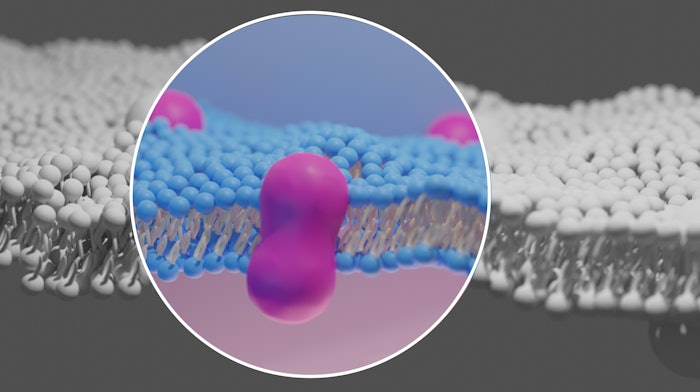
 Traditional single-molecule cosmetic approaches cannot replicate the complexity of natural tissue regeneration, which relies on thousands of interacting biomolecules produced by stem cells.Courtesy of pinkeyes at Adobe Stock
 Healthy stem cells coordinate thousands of biomolecules to drive true healing, showing that real regeneration depends on the interplay of proteins, RNAs, growth factors and extracellular matrix components—not just isolated ingredients.Courtesy of Marevgenna at Adobe Stock
 Healthy stem cells coordinate thousands of biomolecules to drive true healing, showing that real regeneration depends on the interplay of proteins, RNAs, growth factors and extracellular matrix components—not just isolated ingredients.Courtesy of Marevgenna at Adobe Stock