The device that differentiates an aesthetic practice today may eventually become the price of admission tomorrow.
Technology has transformed medical aesthetics. Energy-based platforms, injectables and increasingly sophisticated treatment modalities have expanded what practitioners can address without surgery, and they will remain fundamental to the field.
Related: 5 Tips To Determine the Right Mix of Treatment Modalities to Offer Patients
But technological capability and competitive differentiation are not the same thing.
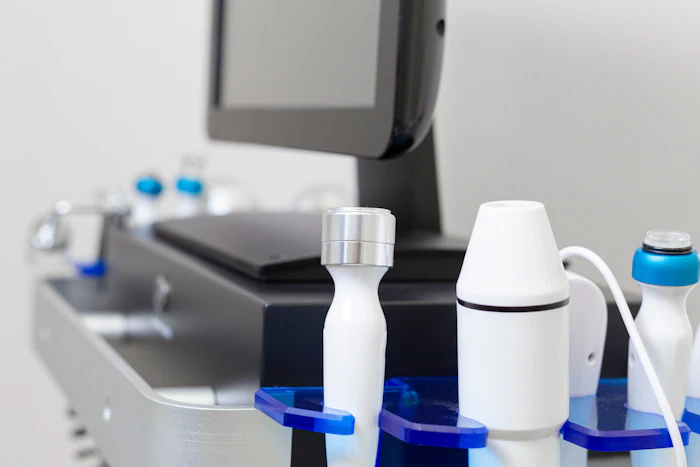
A practice may invest in an advanced platform and gain a genuine clinical capability. If comparable capabilities later become available across multiple practices in the same market, however, access to that technology becomes less distinctive. The device has not become less valuable clinically; it has become less exclusive strategically.
This distinction matters because aesthetic practices can easily enter an investment cycle in which differentiation is expected to come from the next platform, modality or upgrade. Yet as the treatment landscape becomes more sophisticated, durable competitive advantage may increasingly lie somewhere technology alone cannot provide: in how a practice selects, integrates, explains and builds around the capabilities it already has.
The next competitive advantage may therefore be less about what a clinic owns and more about what the clinic knows how to do with it.
When Capability Stops Being the Differentiator
Aesthetic devices are not interchangeable commodities. Technologies differ in their mechanisms of action, indications, safety profiles, supporting evidence and suitability for different patients. Reviews of energy-based devices illustrate how treatment effects and risks vary according to modality, tissue interaction and treatment parameters, while literature focused on skin of color further demonstrates the importance of patient characteristics in device selection and use.¹ ²
The strategic argument is not that those differences are disappearing. It is that as comparable treatment capabilities become more widely available, ownership alone tells patients less about why they should choose one practice over another.
Related: Drive Revenue with Energy-Based Devices
This shifts attention toward something more difficult to purchase: professional judgment.
Judgment determines whether a technology belongs in the treatment plan at all. It includes recognizing when a patient is not an appropriate candidate for a requested procedure, when another modality may be more suitable and when the better decision is not to intervene.
The literature reinforces the importance of this layer. Guidance on energy-based devices emphasizes individualized assessment, appropriate treatment parameters, safety protocols and practitioner oversight rather than treating possession of the technology as sufficient for effective use.³
Technology creates capability; judgment determines how appropriately that capability is used.
From Treatment Inventory to Treatment Architecture
As aesthetic medicine becomes increasingly multimodal, another layer emerges. Practices must consider not only the individual procedures they offer, but also how different capabilities relate to one another.
A systematic review of treatments combining biostimulators with botulinum toxin, fillers and energy-based devices found potential benefits across a range of combinations, but also substantial heterogeneity, small study populations and inconsistent protocols that limit definitive recommendations.⁴ That evidence is useful precisely because it resists the simplistic conclusion that more modalities automatically produce better care.
The differentiator is not complexity. It is coherence.
A practice with fewer technologies but a clear rationale for patient selection, sequencing and longterm planning may offer something more distinctive than a practice with a larger device portfolio but no equally clear philosophy connecting those capabilities.
This is the difference between treatment inventory and treatment architecture.
Inventory describes what a practice has. Architecture describes how professional judgment organizes those capabilities around the patient.
This distinction also makes a practice less dependent on any single technology as the source of its identity. Devices evolve, new modalities enter the market, and some technologies eventually settle into narrower roles than initially expected. A practice whose distinction rests primarily on possessing the newest platform may have to continually repurchase that distinction.
A practice whose differentiation rests on how intelligently it evaluates and integrates technology has something more transferable.
Patient Experience Is Also About Comprehension
The usual discussion of “patient experience” can be too narrow.
In aesthetics, patient experience is often associated with hospitality: efficient booking, an attractive environment, attentive staff and a comfortable visit. Those elements matter, but they do not tell us whether the patient understands the care being proposed.
A practice can provide impeccable service while leaving a patient unclear about why one intervention was selected over another, what a procedure can reasonably accomplish, or how an individual treatment fits into a broader plan.
In medical aesthetics, comprehension is part of the experience.
Shared decision-making literature in cosmetic medicine and aesthetic surgery emphasizes bidirectional communication that brings together available evidence, potential benefits and harms, patient characteristics and patient preferences.⁵ This is particularly relevant in an elective field, where the desired outcome cannot be separated entirely from what the patient values.
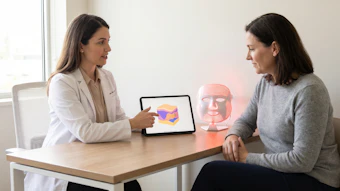
A sophisticated consultation therefore does more than convert interest into a procedure. It makes professional judgment visible.
Two practices may own comparable technology, but the practice that can explain why it is recommending one intervention, declining another and considering a different approach later is demonstrating something the device cannot provide on its own: a coherent rationale for care.
As treatment menus expand and patients encounter more information before entering a clinic, that ability may become increasingly valuable.
The System Around the Technology
Judgment determines individual decisions, while treatment architecture connects those decisions. Neither, however, can create consistent differentiation if the rest of the practice operates as a series of disconnected encounters.
This is where operational coherence becomes important.
Consultation, expectation-setting, informed decision-making, treatment execution, recovery guidance, home care where relevant, follow-up and future treatment decisions all influence whether the practice’s clinical thinking remains recognizable across the patient journey.
This does not mean every procedure needs an elaborate surrounding protocol, nor can operational sophistication compensate for inappropriate technology or poor technique. The point is simpler: technology functions within a professional system.
A clinic’s competitive advantage may increasingly emerge from the interaction between technical capability, professional judgment and the consistency with which that judgment is carried through the patient journey.
Unlike equipment, much of that system cannot simply be ordered. It has to be developed.
Rethinking the Next Investment
This leads to a more difficult strategic question for practice owners: when capital becomes available for growth, where does the next marginal dollar create the greatest value?
Sometimes the answer will absolutely be another device. A new platform may introduce a capability the practice genuinely lacks, address unmet patient demand or materially improve the options available to clinicians.
But another device should not be the automatic answer simply because technology is visible and therefore easy to associate with progress.
Other investments are less tangible: practitioner education, consultation quality, protocol development, patient communication, outcome measurement, staff consistency and systems that connect one treatment decision to the next.
These investments rarely produce the immediate marketing asset of a new machine. There is no new treatment name to announce and no obvious addition to the service menu. Their value appears instead in the quality and consistency of the decisions a practice makes, which also makes them easier to overlook.
This raises a useful question for capital allocation. Does a new technology add a capability the practice genuinely cannot provide today, or might greater differentiation come from strengthening how existing capabilities are selected, connected and delivered?
The answer will vary by practice. The question should not.
When Technology Becomes the Foundation, Not the Identity
None of this diminishes the importance of technological innovation. Medical aesthetics would not have developed into its current form without it, and future advances will continue to expand what practitioners can safely and effectively offer.
The strategic shift is subtler.
As sophisticated capabilities become more widely available, technology increasingly establishes what a practice can do. Professional judgment determines when and why it should be done. Treatment architecture connects individual interventions into a coherent plan, while operational coherence allows that thinking to remain consistent across the patient journey.
Those layers do not replace technology. They make more of it.
The strongest practices may therefore be those that resist defining themselves primarily by their equipment inventory. Their identity instead comes from a recognizable way of thinking: how they assess, choose, integrate, communicate and follow through, including when they decide not to treat.
Competitors can purchase comparable equipment and adopt similar treatment menus, but replicating a well-developed system of judgment is considerably harder.
The next competitive advantage in aesthetics may not arrive in a crate, require installation or come with a launch campaign. It may already exist around the technology a practice owns, waiting to be developed more deliberately.
References:
- Jia X, Feng Y. Energy-Based Skin Rejuvenation: A Review of Mechanisms and Thermal Effects. Journal of Cosmetic Dermatology. 2025;24(2):e16657. doi:10.1111/jocd.16657.
- Sanyal RD, Fabi SG. Energy-Based Devices for the Treatment of Facial Skin Conditions in Skin of Color. Journal of Clinical and Aesthetic Dermatology. 2024;17(6):22–32. PMID: 38912197.
- Mysore V, Deepthi M, Chandrashekar BS, Shah SD, Gold MH, Shivani SR, Kanumuru P, Anirudh P. Standard operating protocol for utilizing energy-based devices in aesthetic practice. Journal of Cosmetic Dermatology.2024;23(12):3809–3820. doi:10.1111/jocd.16510.
- Tam E, Choo JPS, Rao P, Webb WR, Carruthers JDA, Rahman E. A Systematic Review on the Effectiveness and Safety of Combining Biostimulators with Botulinum Toxin, Dermal Fillers, and Energy-Based Devices. Aesthetic Plastic Surgery. 2025;49(10):2809– 2833. doi:10.1007/s00266-024-04627-5.
- Ubbink DT, Santema TB, Lapid O. Shared Decision-Making in Cosmetic Medicine and Aesthetic Surgery. Aesthetic Surgery Journal. 2016;36(1):NP14–NP19. doi:10.1093/asj/sjv107.