For years, consumers seeking cutting-edge regenerative beauty treatments traveled abroad to places like Mexico to access advanced stem cell therapies unavailable in the U.S.
That all changed when MuseCell Innovations, the exclusive global licensor of Dezawa MuseCells, officially entered the U.S. market. on July 1, 2026.
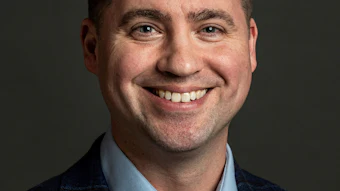
To better understand what this development means for clinicians, consumers and the broader aesthetics industry, MedEsthetics spoke with Dr. Dominik Duscher, MD, PhD, President and CEO of MuseCell Innovations. Dr. Duscher has authored more than 160 scientific publications and brings both clinical and research expertise to the evolving field of regenerative medicine.
In the following Q&A, Duscher discusses the science behind MuseCells, how they differ from other regenerative modalities, the potential applications for skin and hair health and what aesthetic practices should consider as cellular technologies become increasingly integrated into clinical practice.
For years, patients seeking regenerative cell therapies have traveled overseas for treatment. What's changed — scientifically, commercially or regulatorily—that makes the U.S. market ready for Dezawa Aesthetics now?
The U.S. market has reached an important inflection point. Scientifically, regenerative medicine has progressed from broad enthusiasm around “stem cells” to a more sophisticated understanding of extracellular vesicles, cell-to-cell signaling, and the importance of source characterization, purity, potency, manufacturing controls, and reproducibility. This has created greater demand for well-characterized products that can be integrated responsibly into professional practices.
Commercially, physicians and consumers are increasingly seeking credible regenerative technologies from transparent, accountable U.S. partners rather than traveling abroad for procedures that may offer limited oversight, product traceability, follow-up, or quality documentation.
The regulatory environment has also evolved. At the federal level, the FDA has increased enforcement against companies marketing unapproved stem-cell and exosome products with disease-treatment claims. At the state level, several jurisdictions such as Florida, Tennessee. Utah and Georgia have begun adopting more specific frameworks addressing regenerative and stem-cell practices. These state laws do not replace or override federal FDA requirements, but they demonstrate growing legislative recognition of regenerative medicine and a movement toward clearer standards for physicians, manufacturers, suppliers, and patients. The opportunity is not that regulation has disappeared or that regenerative products are broadly approved. It is that the science, commercial infrastructure, professional sophistication, and regulatory expectations have matured enough for the market to recognize the difference between credible regenerative aesthetics and unsubstantiated “stem-cell” or therapeutic marketing.
Regenerative aesthetics has become one of the industry's biggest buzzwords. How do Dezawa MuseCells differ from other regenerative offerings such as PRP, exosomes and polynucleotide-based treatments, and where do you see them fitting into clinical practice?
These modalities are frequently grouped together under the term “regenerative aesthetics,” but they are not biologically equivalent. PRP is an autologous concentrate of a patient’s own platelets and associated growth factors, and its composition can vary considerably depending on the patient and the preparation system. Polynucleotides are acellular, DNA-derived biopolymers used primarily as biostimulatory materials. Exosomes are extracellular vesicles, and their biological content depends heavily on the producer cell, culture conditions, purification method, characterization, storage and final formulation. The word “exosome” by itself is therefore not a quality standard.
Dezawa MuseCells are a defined, SSEA-3-positive population of naturally occurring, stress-enduring adult stem cells. Research indicates that Muse cells can respond to injury-associated sphingosine-1-phosphate signals, migrate toward damaged tissue and contribute through a combination of paracrine signaling, immune modulation and tissue-directed differentiation. Within the aesthetics platform, it is important to distinguish the living-cell technology from Dezawa MuseExosomes®, which are cell-derived messengers produced from authenticated Muse cells. The differentiator is therefore not simply a higher exosome count, but a characterized producer cell, controlled manufacturing process and traceable biological lineage.
Clinically, we do not see regenerative products replacing neuromodulators, fillers, energy-based devices or surgery. Those treatments address movement, volume, structure and controlled tissue remodeling. Regenerative systems are intended to address a different dimension: the quality, resilience and recovery of the skin or scalp. Their most appropriate role is as part of a multimodal, longitudinal treatment plan, including procedure-adjacent protocols such as microneedling and post-procedure care, with the formulation, route, applicable law and individual patient goals determining how they are used.
Providers are becoming increasingly cautious about claims surrounding stem cell-based therapies. What evidence supports Dezawa MuseCells, and what should clinicians understand about their mechanism of action, safety profile and appropriate patient selection?
The evidence must be described precisely and matched to the actual product and route of administration. Muse-cell biology has been investigated for more than 15 years through basic, translational and human research. Published clinical studies have evaluated an allogeneic Dezawa MuseCell product in areas including acute myocardial infarction, dystrophic epidermolysis bullosa, subacute ischemic stroke, amyotrophic lateral sclerosis, cervical spinal cord injury and neonatal hypoxic-ischemic encephalopathy. One of those studies was randomized and placebo-controlled, while others were open-label Phase 1 or Phase 2 studies. Collectively, they provide an encouraging tolerability signal, including administration without HLA matching or routine immunosuppression and no reported treatment-related teratoma signal. That means Dezawa MuseCells are safe to use and effective in several tested indications.
Mechanistically, Muse cells are endogenous, SSEA-3-positive cells selected for their ability to survive significant cellular stress. Preclinical studies indicate that they recognize sphingosine-1-phosphate released by injured tissue through the S1PR2 pathway, migrate toward the injury environment and support repair through paracrine and immunomodulatory activity.
For clinicians, appropriate patient selection begins with a clearly defined aesthetic indication, a complete medical history, realistic expectations and an accurate diagnosis—particularly when treating hair loss. Patients with an active infection, untreated inflammatory or scarring dermatosis, unexplained shedding or an unstable medical condition should be deferred or referred for appropriate evaluation. Product provenance is equally important: physicians should require authenticated sourcing, lot-level traceability, a Certificate of Analysis and documentation of identity, purity, potency, sterility and proper handling.
Beyond facial rejuvenation, your platform also targets scalp and hair health. Which patient indications are showing the most promising results today, and are there opportunities to combine these treatments with existing aesthetic procedures?
At this stage, the strongest early clinical interest is in men and women with early-to-moderate androgenetic alopecia or other forms of non-scarring patterned thinning, where the follicles are still present but are becoming progressively miniaturized. These patients offer a more biologically plausible opportunity than individuals with long-standing complete baldness or advanced scarring alopecia, where follicular structures may already have been permanently destroyed. We are also interested in supporting overall scalp quality and in procedure-adjacent use around hair restoration.
The broader clinical literature on extracellular vesicles and exosomes in hair restoration has reported encouraging early changes in measures such as hair density and shaft caliber. Dezawa Muse-specific controlled hair studies are still developing. We therefore use the term “promising” deliberately: it describes an early signal and a strong scientific rationale.
Combination treatment is likely to be particularly important because hair loss is rarely driven by a single pathway. A regenerative scalp protocol may complement established medical management, including minoxidil and antiandrogen therapy when clinically appropriate, as well as PRP, low-level light therapy, microneedling and hair transplantation. The objective should not be to replace evidence-based treatment, but to address different components of the condition: androgen signaling, follicular miniaturization, the scalp environment, inflammation, vascular support and recovery after a procedure. The Dezawa Aesthetics™ system is designed for integration into professional scalp protocols, including use alongside microneedling and post-procedure applications, but the sequencing and combination strategy should be diagnosis-led, documented and performed within the clinician’s scope of practice.
Looking ahead, what does the arrival of technologies like Dezawa MuseCells signal about the future of regenerative aesthetics in the U.S., and how should med spas and aesthetic practices prepare for this next wave of innovation?
The arrival of technologies such as Dezawa MuseCells signals that regenerative aesthetics is entering a more accountable phase. The category has historically been defined by broad terms such as “stem cells,” “growth factors” or “exosomes.” In the future, those labels will not be sufficient. Clinicians and patients will increasingly expect to know the identity and origin of the producer cell, how the material was manufactured and characterized, which release and potency criteria were used, how it was stored, whether the lot is traceable and what evidence supports the intended application.
Regenerative aesthetics is also likely to become a complementary pillar of aesthetic medicine. Neuromodulators alter muscular activity, fillers restore volume and devices induce controlled remodeling. Regenerative platforms are intended to focus more directly on tissue quality, resilience, recovery and the biological environment of the skin and scalp. That creates significant potential, but it also raises the standard of clinical responsibility.
Med spas and aesthetic practices should not prepare by simply adding another vial to the treatment menu. They need physician-led medical governance, rigorous supplier due diligence, an authorized and traceable supply chain, Certificates of Analysis, written treatment and handling protocols, staff education, appropriate patient selection and transparent informed consent. They also need systems for standardized outcome measurement, adverse-event documentation and reporting, and review of all patient-facing claims. Every member of the practice should be able to explain whether a product contains living cells, a secretome, extracellular vesicles, PRP or polynucleotides—and should communicate its FDA status accurately.
The practices that will lead this field will not necessarily be those that adopt every new technology first. They will be the practices that can verify what they are using, select patients appropriately, measure results, report complications and decline treatment when the indication is not sound. The U.S. market is ready for meaningful innovation, but it is not ready for lower clinical or scientific standards. Responsible adoption is what will ultimately establish regenerative aesthetics as a credible clinical discipline rather than another temporary industry trend.