A few years ago, patients came in and described what bothered them. Now they come in with a picture. Sometimes it's an influencer. Sometimes it's a filtered selfie of their own face, smoothed and reshaped by an app into someone who doesn't quite exist. Lately it's an AI-generated portrait of an "ideal" version of themselves that no anatomy could actually produce. The request has quietly shifted from "here's what bothers me" to "make me look like this." That shift is why I think our field needs to talk about ethics directly and out loud, rather than assuming it comes bundled with good work.
We tend to treat ethics as the quiet backdrop behind technical skill. However, technical skill has never been the vulnerable point. You can execute a flawless procedure the patient should never have had. The vulnerable point is the conversation before it. That conversation has gotten harder because the person across from me now arrives with expectations built somewhere I wasn't in the room: a feed, a filter, a friend's result, a cup size chosen from a photo. That's as true for a breast augmentation as it is for a facelift. The procedure on the table almost doesn't matter. The ethical work is the same, and it happens at the very start of the encounter.
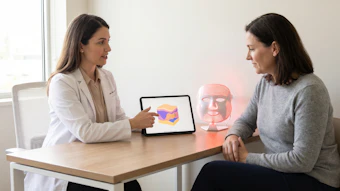
So let me say what an ethical consultation actually looks like on my end, because we often describe it too abstractly. When a patient sits down, I'm listening for the why underneath the what. A patient can ask me for a breast augmentation, but my job is not to quote a price and book a date. My job is to understand what they believe that operation will do for them, because sometimes the honest answer is that it will do very little for the thing actually bothering them. I'm listening for whether the expectation is achievable, whether the request suits the human in front of me, and whether they're driven by something they've long wanted or something they absorbed last week. Also, there are definitely things I'm NOT doing. I'm not steering someone toward a bigger procedure than they need because it's a bigger case. I'm not adding the second procedure that happens to pad the invoice. I'm not letting the fact that I could do something become the reason I should.
Related: Consultation Support
Part of my job is setting expectations honestly, but I won't do it by shaming the patient. Someone who walks in wanting to look like a filtered image has not failed morally. They've been swimming in a distorted standard for years, on every screen they own, and it would be strange if it hadn't shaped them. Meeting that with condescension, or an eye-roll at the influencer photo, is both cruel and useless. You may say, "What?! Who does that?!" Believe me, there are surgeons in my field who behave this way. Every patient should be approached with respect: to say, gently and clearly, "Here's what's real, here's what I can actually do, and here's what that picture is hiding from you." That's true for the patient wanting one modest change and equally true for the one set on a major operation. Nobody should leave my consultation feeling foolish for what they walked in believing. They should leave understanding more than they did before.
Let me give one example. A young woman came to me set on a very large breast augmentation. She'd researched it thoroughly, chosen a size from images she'd saved, and arrived having essentially prescribed the operation for herself. But the size she wanted didn't suit her frame, and it carried real long-term consequences she hadn't considered, the kind that lead to more surgery down the road. The easy thing, the profitable thing, was to agree and book it. Instead I told her I didn't think that size was right for her, and walked her through why: what her body could carry well, a more proportionate approach that would still give her the change she wanted, and the honest downside of going bigger than her frame supported. She was frustrated in the room. She'd come in with a plan and I'd taken it apart. She left to think. I accept that maybe I wasn't the surgeon for her, but my job is to educate my patients so we can be a team. She came back a few weeks later, and we did the more conservative version, and she's elated with her results.
Related: Saying "No"
That example really concerns informed consent, which is far larger than the signature we collect. The form documents the consent; it doesn't create it. Real informed consent means the patient understands what they're signing up for: what recovery genuinely feels like, what the realistic result is rather than the best-case photo, what the procedure will not fix, and what happens if they later want it undone. It also means grasping the gravity of the thing itself. We've let people approach surgery with a casualness it never earns, booking an operation the way they'd book a blowout. I find myself saying it plainly, often: this is an operation, not a haircut. If someone can consent to going under anesthesia without truly absorbing that, we collected a signature and skipped the consent.
Because before I am anything else in that room, I am a physician. I took an oath to do no harm, and I hold to it, which means a real part of my work is protecting patients, even from themselves. That is where I think too much of this industry, on the surgical side and the injectable side alike, has lost the thread: it runs on sales. The recurring pattern is the recommendation shaped by what's profitable rather than what's right. Overpromising results we can't reliably deliver. Pressuring people with urgency and packages. Running the same one-size template across every body. Letting the financial upside quietly author the plan. I'm not pointing at any one clinic. I'm naming a structural pull, because our advice and our revenue come out of the same mouth, and pretending we don't feel that pull is exactly how it wins.
So what I'd most want to change is how our field talks about ethics, which is to say that we barely do. Many surgeons don't trade techniques freely because they want to preserve "competition" and stay oddly quiet on the even harder questions: when not to operate, how to price without pressure, how to handle the patient we could help but probably shouldn't. We've let a strange divide harden, where some surgeons practice with tunnel vision instead of learning from each other. Why wouldn't we all want to be better, and help each other do so? Medicine is always changing and improving. It also all carries risk, and it all deserves the same honesty. That's a conversation I want to have with my peers, not just with patients.
So if I could leave a patient with one thing to look for, in any office, for any procedure, it's this: find the provider willing to talk you out of something. The one who asks why before quoting what, who offers you the smaller option, who is visibly willing to lose your business rather than sell you a result you don't need. A provider comfortable telling you no is showing you the one thing marketing can't fake, that your safety and your outcome matter to them more than your appointment does. Everything ethical in this field starts there.