The conversation around buttock enhancement has changed considerably over the past decade. What was once largely associated with surgical Brazilian Butt Lifts and significant volume enhancement has evolved into a much broader discussion about contour, proportion, symmetry and how to achieve results that look appropriate for the individual patient.
This is where I believe non-surgical buttock enhancement has an important role to play.
Related: Non-Surgical Butt Lift Myths: What Providers Need to Know About Volume, Results and Safety
However, I would argue that we need to change the way we think about the “non-surgical butt lift”. The objective should not simply be to create a bigger buttock. It should be to create a better-balanced silhouette, while also considering the patient's lifestyle and how much disruption they are prepared to accept as part of their treatment.
Bigger does not necessarily mean better
Patients rarely arrive with exactly the same anatomy or exactly the same objective. Some want more projection. Others are concerned about a lack of definition, asymmetry, changes following weight loss or irregularities following previous procedures. Some simply want a subtle change that makes their proportions feel more harmonious.
Treating all of these concerns by adding volume indiscriminately is not good aesthetic medicine.
Related: Florida Medical Board's Action on Brazilian Butt Lifts
The buttocks are three-dimensional structures, and treatment needs to take into account the relationship between the buttocks, hips, waist, thighs and lower back. A result that looks impressive in isolation may not necessarily look natural when considered in relation to the rest of the body.
This is why I believe the future of non-surgical buttock enhancement is less about chasing volume and more about precision.
Non-surgical does not mean non-medical
There is also an important misconception surrounding the term “non-surgical”. Because a procedure does not involve an operation, it can sometimes be perceived as inherently simple or risk-free. It is neither.
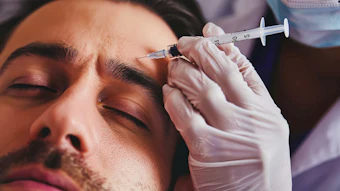
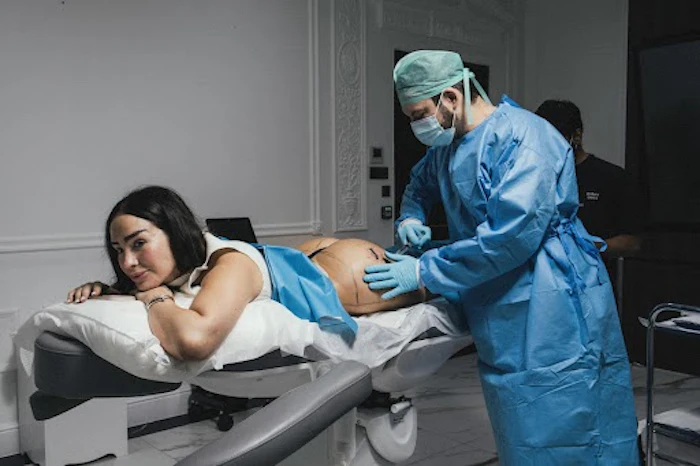
Injectable buttock enhancement is still a medical procedure. It requires a proper understanding of anatomy, appropriate patient selection, sterile technique, product knowledge and the ability to recognise and manage complications.
Patients should be assessed individually before treatment. Medical history, previous procedures, skin and tissue quality, anatomy and the patient's expectations all matter. Not everyone is an appropriate candidate, and sometimes the safest clinical decision is not to treat.
This is particularly important as demand for these procedures grows and more providers enter the market. The popularity of a treatment should never be allowed to replace proper clinical judgement.
A more personalised approach
One of the biggest developments in aesthetic medicine has been the move away from standardised treatment towards personalised treatment plans.
We already see this in facial aesthetics. A good practitioner does not inject every patient's lips, cheeks or jaw in exactly the same way. They assess the individual face and determine what will create balance.
The same principle should apply to the body.
When I developed the DBL™ (Ducu Butt Lift), my intention was to approach buttock enhancement from this perspective. DBL™ is an injectable buttock contouring technique using dermal filler, with treatment planned according to the patient's anatomy, goals and clinical suitability.
The aim is not to impose one particular shape on every patient. It is to understand what is already there and determine where carefully considered enhancement may improve proportion, contour or symmetry.
For one patient, that might mean focusing on projection. For another, it may be about addressing a particular contour or asymmetry. In some cases, the desired result may be relatively subtle. The treatment plan should follow the patient — not the other way around.
The appeal of avoiding surgery — and the downtime that comes with it
For many patients, the biggest appeal of a non-surgical approach is not simply avoiding an operation. It is avoiding the disruption that can come with surgery.
Surgical buttock enhancement can involve a significant recovery period. Patients may need to modify their normal activities, manage discomfort and follow specific post-operative instructions while the body heals. As with any surgical procedure, there are also potential complications associated with surgery that need to be discussed carefully during the consultation.
For the right patient, one of the most significant advantages of an injectable approach is therefore downtime.
With DBL™, the objective is to provide buttock enhancement without the recovery period associated with a surgical procedure. While every patient responds differently and aftercare advice should always be followed, many patients are able to return to their normal daily activities very quickly following treatment.
That can make a significant difference to someone's lifestyle.
A patient may be able to schedule treatment around work rather than taking an extended period away from their professional commitments. They may be able to return to their normal routine shortly afterwards, rather than planning their life around a prolonged surgical recovery. For some patients, the ability to continue with their day, potentially even meeting friends for dinner or returning to work is one of the most compelling aspects of a non-surgical approach.
This does not mean that non-surgical treatment should be presented as a risk-free alternative to surgery. It is still a medical procedure and can involve swelling, tenderness, bruising or other side effects. Appropriate patient selection, clinical assessment and aftercare remain essential.
But when comparing the two approaches, I believe recovery deserves to be part of the conversation from the very beginning.
Patients are not only asking, “What result can I achieve?” They are also asking, “How much of my life will I have to put on hold to achieve it?”
For the appropriate candidate, that is where non-surgical buttock enhancement can offer a particularly compelling proposition: the ability to pursue a change in shape and proportion while minimising the interruption to everyday life.
The importance of restraint
Perhaps the most underrated skill in aesthetic medicine is knowing when to stop.
There is a temptation in body enhancement to equate a more dramatic result with a better result. Social media can reinforce this, particularly when highly edited images and extreme proportions become the reference point.
But aesthetic medicine should not be about reproducing an image from Instagram.
A successful result should work with the patient's existing anatomy.
This is why I believe proportion is going to become increasingly important in the next generation of body-contouring treatments. Patients are becoming more informed and, increasingly, they are asking for results that look natural rather than obviously treated.
That does not mean that every patient wants a subtle result. Some patients want significant enhancement, and that is a legitimate aesthetic goal. The responsibility of the practitioner is to establish whether that goal is realistic and clinically appropriate.
Where the category goes next
I expect non-surgical buttock enhancement to continue evolving as technology, injectable products and our understanding of body contouring develop.
But the future should not simply be about finding ways to inject more product. It should be about becoming better at assessing anatomy, selecting appropriate patients and using treatment strategically.
The phrase “non-surgical butt lift” makes the procedure sound like a single treatment. In reality, it represents a category of approaches with different techniques, products, indications and limitations.
For patients, this means doing more research rather than simply choosing the practitioner offering the biggest transformation or the lowest price.
For practitioners, it means recognising that treating the body requires the same level of anatomical understanding and aesthetic judgement that we apply to the face.
Ultimately, the decision between surgical and non-surgical enhancement should be based on the patient's anatomy, goals, expectations and clinical suitability but recovery should also be considered.
For many patients, achieving a meaningful aesthetic change without putting their normal life on hold is not a secondary benefit. It is the reason they choose a non-surgical approach in the first place.
The goal of buttock enhancement should not be to make everyone look the same. It should be to make the individual look more balanced, proportionate and confident in their own body.
Shape matters. Proportion matters. And increasingly, so does the time it takes to get back to living your life.