The aesthetics industry is currently experiencing a foundational shift defined not only by groundbreaking clinical advancements and state-of-the-art technology, but a changing patient mindset: Male acceptance. Thanks to changing social trends and social media influence, men's quest for aesthetic wellness has brought forth a new terrain for the industry altogether, as male patients now account for a a growing percentage of minimally invasive cosmetic procedures.[1] This surge has brought a undeniable shift in the industry, not only with the influx of new male-focused products to the market but in the types of patients and the motivations behind their requests. 
While, historically, female patients have been more exposed to aesthetic content and beauty trends, allowing then to arrive with more specific visual references, clinics today are witnessing male patients entering the category[2], often with clearer outcome-driven goals and increasing familiarity with aesthetic terminology, driven by the destigmatizing of male aesthetic discourse.
Related: The Rise of 'Brotox' and Why More Men Are Embracing Aesthetics
In this evolving landscape, medspas, practitioners and physicians alike are observing whether patients responding to algorithm-driven ideals, or entering care earlier as part of a broader wellness and longevity mindset.
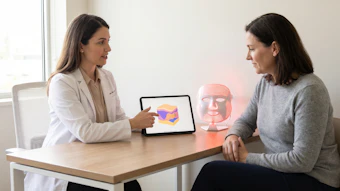
In this Spotlight, Dr. Karan Lal of the Aerolase Advisory Board breaks down how male patients are reshaping consultation dynamics, treatment expectations, and the role of technology in modern aesthetic care.
THE NEW MALE AESTHETIC PATIENT
MedEsthetics: Have you seen an increase in younger male patients seeking laser-based treatments influenced by online aesthetics or “looksmaxxing” culture?
Dr. Lal: "Males are heavily seeking treatment for rejuvenation. The main concerns are acne, rosacea, hair loss, and periocular wrinkling. Many men are also seeking treatment for neck laxity. Part of this may be due to social media, but I think it's mostly due to concerns about longevity and not wanting to look tired."
MedEsthetics: Are these patients coming in earlier—as part of a preventative or optimization-focused mindset?
Dr. Lal: "Not all men come when it's too late—though some do, and then it becomes a surgical issue. Most men are wanting preventative treatment."
MedEsthetics: How are patients describing their goals? Are they using clinical language or referencing visual trends?
Dr. Lal: "Women often come in asking to look like celebrities, but men usually ask what they can do to look more youthful."
MedEsthetics: Why do you think this optimization mindset is resonating so strongly with young men?
Dr. Lal: "Men want to look younger just like women. We are all living longer and stronger, and if that doesn’t show in the face and skin, it doesn’t feel believable."
Social Media, Expectations & Misinformation
MedEsthetics: Do you think advanced technologies are helping correct misinformation from online spaces—or enabling more casual intervention?
Dr. Lal: "Misinformation will continue to spread given the many different sources providing information. Clinicians unfortunately are not regarded as highly online, with patients often favoring non-clinical voices."
MedEsthetics: Are patients expecting immediate, dramatic results similar to what they see online?
Dr. Lal: "Some do, but we have to be honest and not provide false expectations. Healthy skin is like building muscle—it takes time."
MedEsthetics: How do you reset expectations for patients used to algorithm-driven before-and-after content?
Dr. Lal: "I explain that images can be edited to show outcomes that didn’t occur. I also walk through differences in treatments and safety considerations."
MedEsthetics: What does a realistic treatment journey look like compared to what’s promoted online?
Dr. Lal: "It depends on the laser. Ablative treatments, for example, require about a 10-day healing period. That needs to be emphasized so patients are prepared for the commitment."
Technology, Access & Inclusivity
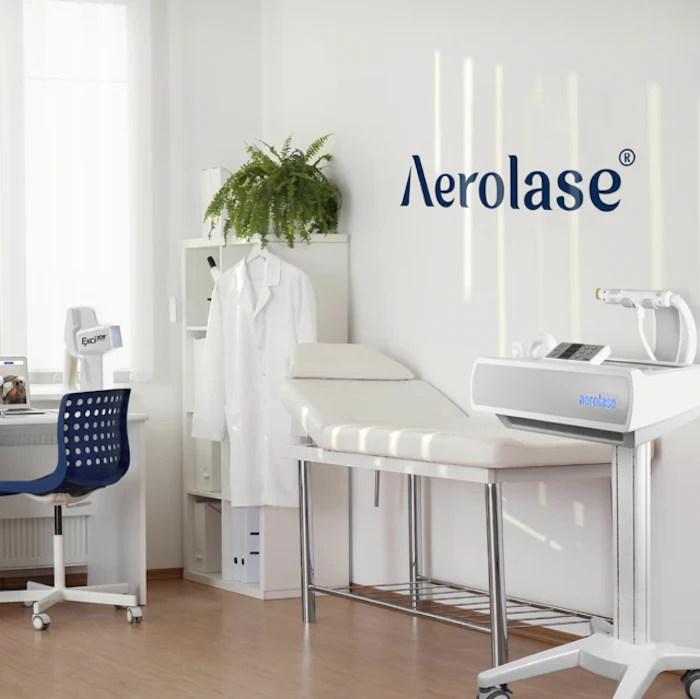
MedEsthetics: Devices like Aerolase are marketed for minimal downtime and broad skin-type safety. How is that changing patient behavior?
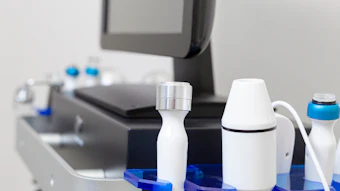
Dr. Lal: "People don’t want downtime and want faster results. Treatments like the Aerolase NeoDerm allow for that. As an Nd:YAG laser, it targets redness, brown spots, and stimulates collagen—you leave the clinic with an immediate glow that continues improving."
MedEsthetics: Aerolase emphasizes safety across all Fitzpatrick skin types. How important is that in today’s patient population?
Dr. Lal: "It’s very important. Inclusivity allows us to offer the same treatments for all patients."
MedEsthetics: Are you seeing more patients with darker skin tones entering laser treatments?
Dr. Lal: "Yes. There is greater visibility of skin-of-color patients in energy-based treatments, which is encouraging more people to seek care."
MedEsthetics: How do you integrate devices like Aerolase with injectables or other treatments?
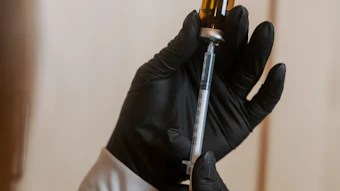
Dr. Lal: "The beauty of Nd:YAG devices like Aerolase is that they can be combined with all other treatment options, including injectables and microneedling."
Beyond Correction: Skin Quality & Treatment Philosophy
MedEsthetics: How do you position laser treatments—as corrective, preventative, or part of a broader strategy?
Dr. Lal: "It depends on the treatment. Some are all of the above, while others are more preventative. Aerolase NeoDerm is a combination, while other devices are more corrective."
MedEsthetics: Do you think skin quality—not just structure—is becoming the primary focus of male aesthetics?
Dr. Lal: "I think men want it all—they just can’t always articulate it. Some are hyperfocused on one thing, but most are open to global optimization."
MedEsthetics: If a patient influenced by looksmaxxing came in, what’s the first thing you’d want them to understand?
Dr. Lal: "Rome wasn’t built in a day—and neither is your skin or jawline. The goal is enhancement, not perfection."
Gatekeeping, Practice Reality & the Future
MedEsthetics: Has social media reduced the role of dermatologists as gatekeepers of aesthetic knowledge?
Dr. Lal: "Yes—we aren’t gatekeepers anymore. I don’t believe in gatekeeping. True skincare advice should come from a cohesive team of physicians, PAs, NPs, and aestheticians. The challenge is that messaging isn’t always aligned."
MedEsthetics: Have you had to turn patients away based on trend-driven expectations?
Dr. Lal: "All the time. I say no more than I say yes. If patients come in with rigid expectations from images, they’re often not the right fit."
Resources:
- https://pubmed.ncbi.nlm.nih.gov/29320584/
- https://www.medestheticsmag.com/treatments/article/22937211/the-rise-of-brotox-and-why-more-men-are-embracing-aesthetics
- https://www.sprsi.com/blog/top-procedures-for-men/
- https://www.accessnewswire.com/newsroom/en/healthcare-and-pharmaceutical/whats-shaping-aesthetic-surgery-in-2026-board-certified-plastic-surge-1125937
- https://www.incredible.plus/articles/marketing-to-male-aesthetic-patients
- https://www.incredible.plus/articles/marketing-to-male-aesthetic-patients