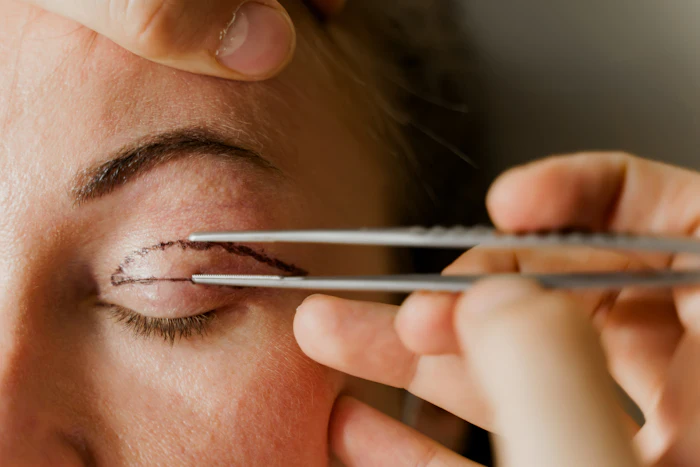
The beauty industry’s growing interest in holistic care has not only been evidenced by client investment in more meaningful wellness practices — like incorporating diet and nutrition into a skin regime, hormones regulation or even stress and cortisol management, to name a few — but in how treatments are approached: Nationwide facial procedures have risen with request for less invasive procedures.
According to the American Academy of Facial Plastic and Reconstructive Surgery (AAFRPS) there's an almost 20% increase in patients that are seeking facial surgeries, facial rejuvenation procedures. The study also found that non-invasive treatments accounted for 80% of all procedures. From laser facials and sculpting RF sessions, to neurotoxins and fillers, and neuromodulators, clients are booking treatments that have less skin disruption, downtime, and recovery. It’s a shift from corrective interventions to preventative, minimally invasive maintenance or “tweakments” as they’ve been called.
The AAFRPS reports that “tweakments” are trending among the Gen Z populations, with 75% of facial plastic surgeons reporting an increase in demand from clients under 30-years-old. The report goes on to suggest that these, minimally invasive treatments can provide lower health risks post-operation, resulting in shorter recovery times and a boost in a patient's mental health, as opposed to traditional cosmetic surgeries which often lead to extended hospital stays. This not only heightens postoperative risks but boosts patients’ mental health. Similarly, board-certified dermatologist, Dr. Roberta Del Campo says her clients at Skin Laundry are investing in these frequent non-invasive treatments that target collagen stimulation and strengthen the skin barrier. According to Dr. Campo there's been an uptick in preventative neuromodulators, like microdosing “SkinTox” regimes for pore refinement and glass skin glow and the use of peptides, exosomes, and PDRN boosters layered into maintenance treatments.
MedEsthetics talked to expert plastic surgeons and med spa professionals across the country to give more insight to this shift for insight on how they’re confronting the industry change.
Rise of Preventative Aesthetics
Dr. Eleonora Fedonenko of Laser Skin Care in Los Angeles has been in medicine for nearly thirty years and practiced internal medicine before specializing in cosmetic dermatology. She says the biggest change she's seen are in patients who no longer walk in with the deadline of an event.
"They schedule standing appointments each month the same way they would schedule a dental cleaning. Low-downtime laser resurfacing and RF sculpting rebuild the collagen slowly and it's this slow accumulation that helps keep skin firm rather than one aggressive session that leaves you hiding at home for a week," she says.
Doctors on the east coast are witnessing a change in patient behavior. “Most patients I see in Morristown are not chasing perfection. They’re chasing familiarity and confidence," says Dr. Joni Jefferson.
Dr. Joni is a medical director and owner of the Jersey-based med spa Zen Aesthetics. "Subtle, well-planned aesthetic treatments respect a person’s natural structure and expressions. That preserves the sense of self, which is critical for emotional well-being. Overly aggressive or dramatic changes can create a disconnect — patients may look better on paper but feel less like themselves,” Dr. Joni says.
Shawna Chrisman, who is a nurse practitioner and the founder of Destination Aesthetics Medical Spa, has also been seeing an uptick in preventative treatment.
“The services we’re able to offer patients from a non-invasive, non surgical option, has just really, truly evolved within a five year period,” Shawna says. She goes on to say that, in the past, the industry was hyper focused on things like baby botox, noting that the term prejuvenation was buzzing. Today, she's noticed that the term has been largely abandoned because people are just more proactive.
"Now it's just preventative wellness and healthcare medicine, meaning we're focusing more on the inside. So treatments that might be defined as getting hormone replacement therapy, and it could just be with one hormone, versus what people would maybe say just an external feature that they like to tweak. So now it's like almost an internal tweak, because we know more about gut health. We know there's an integration of peptides, which is really hot right now. So the word tweakments has really evolved in internal and external treatments, whereas before, it just used to be external treatments,” Chrisman continues.
Science Behind the Glow – Collagen, Peptides, Exosomes, Microdosing Neuromodulators
Peptides are fundamental building blocks in the make-up of crucial body proteins, like collagen and elastin. These short chain amino acids play important roles in cellular signaling, hormone regulation and tissue repair. Found in foods and produced naturally by our bodies, they've become popular in the beauty industry to boost skin firmness and in medicine for muscle growth and metabolism.
Masha Amelina is the founder of Visage Sculpture — a cosmetic clinic in Boston focusing on non-surgical face shaping. She also the inventor of MesoLyft — a line of clean, concentrated serums paired with a gentle micro-needling applicator that allows the products, like peptides, to penetrate faster and deeper.
Amelina tells MedEsthetics peptides have "been around forever" and work by penetrating the skin. She also compares the effect of peptides on the skin to how a hair conditioner works on hair, saying they instantly make the skin "supple," "silky smooth," and "hydrated".
“I'm excited about peptides, I think it's such an interesting area," Marsha says. "There are peptides that heal you from the inside. There are peptides that make you young forever. There are peptides that help you deal with hormonal changes like epitalon. And the coolest thing I'm excited about is patches. Nobody likes injections. And it's so hard to sustain. You know, It's hard to go to a spa and let someone inject you once a week. I personally wouldn't want to. I don't even want to inject myself once a week. I don't see this happening for the rest of my very long happy life. But a patch, I would I would put a patch somewhere on my neck or somewhere on my body. So those teeny tiny needles that Mesolyft has in its applicator, they're incorporated into some patches and once they're on your skin, they help transdermal delivery of the drug or peptide,"Marsha explains
Exosomes are tiny vesicles that facilitate cell communication and transport various molecules, including growth factors and proteins. NYC Board-Certified Dermatologist Dr. Michele Green says that, like peptides, they're vital in skin rejuvenation as they promote cellular repair, reduce inflammation, and enhancing overall skin texture. "By delivering these beneficial compounds directly to skin cells, exosomes can significantly accelerate healing and improve skin tone," Dr. Green said.
Similarly, Polydeoxyribonucleotide (PDRN), which is a a DNA-based regenerative compound derived from salmon sperm, promotes tissue regeneration and hydration. It does this by stimulating the production of collagen and elastin, which are essential for maintaining skin structure and firmness. This treatment not only aids in healing damaged skin but also helps maintain moisture levels, resulting in a plumper, more hydrated look.
Dr. Green warns, however, that not all supplements are the same. "While these treatments are gaining popularity, it is important to note that certain peptides are FDA-approved, whereas exosomes and PDRN are not FDA-approved. When seeking skin care treatments, it is best to consult a board-certified dermatologist to ensure safety and efficacy," she says.
"More clients are stepping away from obvious volume and choosing softer, more refined results, even if that means dissolving previous work. It’s no longer about looking ‘enhanced,’ but about looking like yourself on your best day," Dr. Green says.
"This shift shows that true aesthetics is not about how much we can add, but how subtly we can enhance. Sometimes that starts with taking a step back," Anastasia Korchacha, an aesthetician at Fam Beauty London and Fresha partner, added.
Device-Driven Maintenance – Nanofractional RF, Multi-Polar RF + PEMF sculpting, comparative efficacy
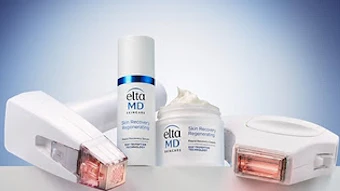
Much like Marsha's Mesolyft, technologies are more organic based and barrier-friendly as post-procedure recovery becomes a point of emphasis for the med spa industry.
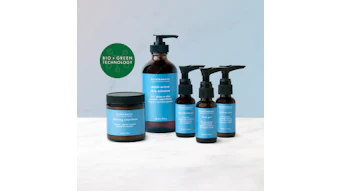
"I’m seeing a growing shift toward cleaner, barrier-friendly formulations that prioritize calming ingredients, microbiome support and skin barrier repair, " Marlee Bruno, MMS, PA-C, of Mind Body & Soul Medical, tells MedEsthetics. "When the skin is recovering from an advanced treatment, the goal is to minimize unnecessary irritation while optimizing healing and results. Bio-derived and physiologically compatible topicals are becoming a much larger part of post-treatment protocols because they help the skin recover faster, maintain its integrity and ultimately enhance the overall outcome of the procedure."
"Yeah, devices will always be a foundational platform to in the field of esthetics, there are more and more devices that are coming out that create amazing outcomes with less downtime than before," Chrisman notes in agreement. "We all kind of grew up with the big CO two lasers — I mean, 24/7 vinegar soaks and all of these things. Well, now we have technology that can give really similar outcomes with much less downtime."
"It's very important to understand the science behind it," Marsha adds. There are devices like NuFace that use microcurrent that stimulate muscle contraction and they train your face to be contracted and lifted. Does work? Again, I've seen some of my clients do it, so clinically I've seen it work, but you have to use it every day. There are devices that heat your skin and there's many ways of doing it: There's home lasers and then there's some lasers in the office where you pay a lot more money, but it's a bit more painful and you get a little bit more redness but faster results that uses heat and it's different type of wavelength. There's infrared; there's a near infrared and there's red light -- It's it's a lot of information," she says.
"Tik-Tok has been a huge influence, especially to the younger generation. I would say," Chrisman says says. "They're coming into our office specifically asking for services and retail products by brand name based on what they've seen influencers use, or what they've seen advertised, and kind of what's in their algorithm."
Dr. Joni has hers broken down to a science, telling MedEsthetics she starts with anatomy and priorities, not with the device. During a consultation at she looks at:
- Nanofractional RF: I use this for patients who need texture improvement, mild tightening, and pore refinement, especially if I want to avoid the risks and downtime ofmore aggressive lasers. It’s great for acne scarring, crepiness, and early to moderate collagen loss.
- Multi-polar RF + PEMF sculpting: I reach for this when the main concern is mild to moderate laxity, contour softening, or early jowling. Multi-polar RF heats the tissue to stimulate collagen, while PEMF (pulsed electromagnetic fields) helps with circulation and cellular activity. It’s ideal for patients who want firming and contour support without surgery.
- Laser resurfacing: I consider lasers when there is a strong component of sun damage, pigment, fine lines, or more pronounced texture issues—especially around the eyes and mouth. I choose the specific laser and intensity based on skin tone and how much downtime a patient can realistically tolerate. Often the “right” choice is a sequence or combination over time rather than one device trying to do everything
Social-Driven Subtlety
While the demand for delicate refined and nuanced procedures, in many ways, is a response to the excessive, overdone practices in the past, there has also been a cultural shift socially that has played a part as well. Patients today are navigating a real-time juxtaposition: they want improvement, only unnoticeable. The appeal is a result of a growing emphasis on moderation — an aesthetic adherence not only shaped by medical guidance but by the powerful influence of social media.
“Social media is a double-edged sword. On one hand, it can create unrealistic expectations—filters, editing, and angles can make results look smoother, tighter, or more dramatic than what’s possible or healthy in real life. On the other hand, it has also opened up honest conversations about subtle, maintenance-focused aesthetics," Dr. Joni said.
"More patients now come in understanding terms like “preventative Botox,” “skin cycling, ”or “collagen banking.” They’ve seen before-and-after's and are familiar with the idea of small, incremental changes over time. They’re also more aware of what not to do—overfilled lips, frozen foreheads, and trend-driven procedures. In my consultations, I spend time helping patients sort through what they’ve seen online, clarifying what’s realistic for their anatomy and age, explaining which treatments are appropriate and which are simply trends, and reframing the goal from “Instagram face” to healthy, natural, and sustainable results. When used thoughtfully, social media can be a helpful educational tool. The key is grounding those expectations in medical reality and ethical practice, ”Dr. Joni continued.
"Beauty standards are not fixed; they constantly change, heavily influenced by social media and celebrity culture," Dr Green says. "Currently, there is a major shift toward embracing natural beauty, with a focus on a fresh, polished look rather than heavily sculpted or overly artificial enhancements. People are increasingly seeking beauty routines that highlight their natural features rather than hide them. The rise of influencers and celebrities who celebrate their imperfections has driven this change, encouraging a more relatable, genuine approach to beauty. Additionally, the focus on wellness and self-care is a key part of this trend. Many now see beauty as a holistic sense of health that includes mental, emotional, and physical well-being, further valuing understated elegance over more theatrical corrections."
Integrating Tweakments:
Today, professional, device-based treatments and daily, home-based topical skincare are not mutually exclusive. The next phase of preventative aesthetics is expected to focus on non-invasive, transdermal delivery systems, such as patches, to make the administration of peptides more sustainable and convenient for long-term use. Marsha's MesoLyft is a good example.
"I think MesoLyft is a maintenance tool. So maybe you see a provider for botox twice a year. Maybe you see your laser provider once a year to remove the sunspots and tighten the neck and in between MesoLyft," Marsha says. "But it doesn't substitute those skin tightening procedures. It doesn't substitute those Morpheus and laser procedures at a med spa. And it certainly doesn't substitute Botox. It can delay the necessity for Botox and lasers but I think one goes hand in hand with the other," Marsha continues. "Practices are already becoming more intentional about what they stock and recommend. In the next decade, I think we’re going to see more high-performance aesthetics paired with smarter, cleaner recovery protocols. We’re heading towards an era of regeneration, where the goal is to support the skin’s ecosystem rather than freezing it in time."