Most people who book their first laser hair removal appointment don’t tell anyone. Not because they’re embarrassed, but because they’ve been quietly living with something for years, and they’ve finally decided to stop.
That’s where the real story starts. Not in the before-and-after photo. Not in the session count or the technology spec. In the decision itself.
While the aesthetics industry has been busy telling an incomplete story, consumers moved the conversation somewhere else entirely.
Related: Laser Hair Removal Emerges as a Cost-Conscious Grooming Strategy
The aesthetics industry has a storytelling problem. For years, it has led with before-and-after photos, session counts, and technology specs. None of it captures what actually happens when someone decides to invest in themselves, permanently. And while the industry has been busy telling that incomplete story, consumers moved the conversation somewhere else entirely.

They moved it into wellness. Not because anyone in aesthetics declared it, but because they experienced it and drew their own conclusions. The wellness economy runs on a simple premise: investing in how you feel day-to-day is worth prioritizing, not as a luxury indulgence, but as a legitimate allocation of time, money, and attention toward quality of life. The ROI is lived, not clinical.
Consumers already apply that logic to their sleep, their nutrition, and their mental and physical fitness. Laser hair removal belongs there structurally because of what it actually delivers.
What laser hair removal delivers is the permanent elimination of a recurring friction. Every other solution in the category manages the problem. Laser hair removal ends it. That distinction matters more than the industry has been willing to acknowledge, because ending something produces a fundamentally different response than managing it ever could.
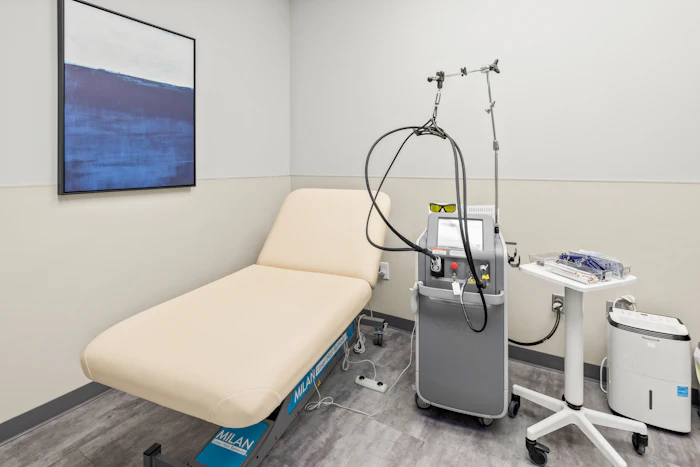
The technology that makes that possible, dual-wavelength systems like the Candela GentleMax Pro, designed to safely and effectively treat every skin tone and hair type, means the permanent outcome isn’t a promise reserved for a narrow slice of the population. It’s available to everyone, and it’s why we use it in every Milan Laser clinic.
Related: Energy-Based Treatment Surge Fuels Category Leadership for SkinSpirit
What clients describe on the other side isn't a result. It's a shift in how they move through their days. The morning they stopped calculating whether they’d shaved close enough before a workout. The trip they booked without scheduling around a waxing appointment. The moment they caught themselves reaching for an anxiety that no longer existed, and noticed its absence.
The outcome clients describe most consistently isn’t smoother skin. It’s confidence. Not the kind that comes from a compliment or a good photo. The kind that comes from no longer negotiating with something that used to take up space every single day. Most people don’t realize how much mental space hair removal consumes until it’s gone, the planning, the self-consciousness, the routine that never actually resolves.
What I keep coming back to, after watching this play out across hundreds of thousands of clients in our 400+ clinics, is how consistently people describe not just feeling better, but reclaiming something. Time. Mental space. The freedom to show up in their lives without thinking twice. When more than 150,000 of those clients put it into words unprompted, they aren’t simply writing about smooth skin. They’re writing about something that changed. That pattern, at that scale, stops being anecdotal. It becomes a signal the industry should be taking seriously.
The gap between what someone came in for and what they walked away with is exactly where the category-level opportunity lives. And most of the industry is missing it. Not because the outcomes aren’t real, but because the business models aren’t built to deliver them. The session-based model the industry runs on has a structural problem: it makes money when the problem persists. The risk lands entirely on the client. The financial incentive points toward extending the timeline, not ending it. That isn’t a wellness model. It’s a maintenance model, and in a category whose consumers have graduated to expecting permanent solutions, that misalignment is becoming harder to ignore.

The operators who will define the next chapter of this category are the ones who understand that client outcomes and business outcomes don’t have to pull against each other. They can be the same thing. That’s the bet Milan Laser’s founders made when they built the Unlimited Package™. The Unlimited Package™ means one price, unlimited treatments, and a lifetime guarantee, because a solution that can’t account for hormonal and age-related changes isn’t actually solving the problem. It was built around a simple belief: getting a client to a permanent result as efficiently as possible is better for them, and it turns out it’s better for the business too.
A client who reaches the outcome they came for doesn’t just leave satisfied. They become the most credible, lowest-cost, highest-converting marketing a brand has. That flywheel doesn’t exist in a session-based model. The incentive structure won’t allow it. What I’ve seen, at the scale we operate, is that building around permanent outcomes rather than managed maintenance isn’t a tradeoff between doing right by the client and running a healthy business. It’s the same decision.

The broader implication for the category is significant. Most operators in aesthetics built models where client success and business success exist in tension. The wellness economy, more than any other consumer market, punishes that misalignment.
Consumers in this space have developed a sharp instinct for distinguishing between brands genuinely invested in their outcome and brands invested in their continued spend. Permanent results are credible in a way managed maintenance never quite is. And credibility, at scale, is what turns clients into advocates and advocates into the kind of growth that compounds.
The shift is already underway. Aesthetics has been earning its place in the wellness economy not because the industry positioned it there, but because clients decided it belonged there and acted accordingly. The more interesting question now isn’t whether laser hair removal belongs in wellness. It’s whether the industry is willing to build like it does.
The operators who figure that out earliest won’t just be better positioned; they’ll be the ones who define what this category becomes next. That standard already exists. The category has already moved. The only thing left is to decide which side of that line you're on.