A patient calls her medspa to book her quarterly tox appointment, and the line rings to voicemail twice before she gives up and sends an email; a reply comes the next afternoon offering a different time than the one she asked for, and she takes it. When she walks in the morning of her appointment, the front desk asks for her name twice and then asks if it’s her first visit, even though she has been coming for two years; the injector enters ten minutes later, scans the chart for a beat, and asks what brought her in today. A week later, an email lands in her inbox with the subject line “Ready for your first Botox treatment?”
She knows every one of these moments individually, and she also knows, in the quiet way patients always do, that the practice does not know her. She does not articulate it as a data problem; she articulates it by booking somewhere else next quarter.
Related: Financing Medical Spas Across Every Stage of Growth
None of that is hypothetical. Every one of those moments lives in a real Yelp or Google review, sitting on the same platforms your prospective patients consult before they book, which means patient experience is reputation management whether anyone designed it that way or not.
The Patient Lives One Relationship. Your Stack Lives Eight
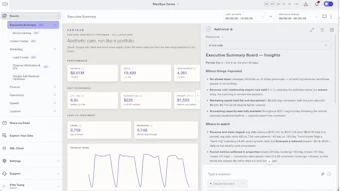
The patient has one experience of your practice, and your practice has eight tools competing to define what that experience is: the EMR holds the clinical record, the booking platform owns the schedule, marketing automation owns email and SMS, the lead form lives in a CRM the front desk has never logged into, the review platform talks to nobody, the e-commerce site sells the products, the membership module tracks the recurring revenue, and the social DMs sit unread in someone’s phone. Each tool was bought to solve a specific problem, and most of them do, in isolation, exactly what they were sold to do.
The problem is that the patient does not live in isolation. She moves from lead to consult to injection to post-care to product purchase to review request to renewal, and at every step she expects the practice to remember the previous one; the systems do not pass that context to each other, and when she experiences the disconnect, it does not feel like a software issue so much as a practice that does not care.
Coverwell, writing for AmSpa earlier this year, named this exact pattern as the leading hidden cost in aesthetic practice operations, where fragmentation quietly drains profit before anyone identifies the cause.
Related: Face & Body and AmSpa Partner for Medspa Summit
AI Doesn’t Fix Disconnection. It Exposes It.
Every practice management vendor is now pitching AI as the answer: AI chatbots that respond to leads, AI imaging that previews outcomes, AI marketing that sends the right message at the right time, AI receptionists that book the appointment, send the reminder, and follow up after the visit. Many of these tools are real, and some of them are very good, but none of them can compensate for a stack that does not know its own patient.
MIT’s Project NANDA studied 300 generative AI deployments across organizations in 2025 and found that 95% of them produced zero measurable return on the investment, because the technology was capable but the data underneath it was not. Gartner had projected the same outcome earlier, estimating that through 2026 organizations would abandon 60% of AI projects on the grounds that the data they were built on was not AI-ready, and the pattern repeats across every industry that has tried to layer AI on top of fragmented systems, which makes aesthetics, one of the most fragmented industries there is, especially exposed.
The chatbot pulling from your marketing platform does not know what the EMR knows about contraindications; the AI sending the post-care SMS does not know that the patient just left a one-star review; the booking AI offering the first-time Botox discount does not know the patient has been getting Botox here for two years. Each tool does exactly what it was built to do with the information it was given, but the information it was given is a slice, and the patient is whole.
“Patient experience is reputation management, whether anyone designed it that way or not.”
The Vitality Shift Makes This Urgent
The industry is moving, and where the medspa of 2018 sold treatments, the medspa of 2026 sells outcomes that compound over time, with wellness, hormones, longevity, weight management, and skin health converging under one practice umbrella under a single name: vitality. AmSpa puts the U.S. medical spa industry above $17 billion, growing by more than $1 billion a year, with 85% of practices now offering memberships and the average returning client spending 67% more than a new one, which means the economics have already moved from transaction to relationship even though the technology stack underneath most practices has not.
A vitality positioning makes a structural promise to the patient, namely that we know you, and we will keep knowing you, across modalities and across years; that promise is easy to make in the brand book and almost impossible to keep with the typical platform setup, because every new modality the practice adds is a new vendor, a new database, and a new place the patient’s history gets re-fragmented. The brand promise is longitudinal, and the data architecture is transactional, which is to say the two are working against each other.
The practices figuring this out moved on the data problem before they sold the longer story, and the ones that didn’t are now finding out you cannot bolt continuity onto a stack built to forget.
What the Practices Getting This Right Are Doing
The fix is not a new vendor, but a short series of decisions almost nobody has made in writing.
The first is deciding what your platforms mean by the same word: what is a patient, when does a lead become one, when does a patient become inactive, and what does a complete visit include? In most practices, every platform has its own answer, and most of those answers have never been documented, which means nothing the AI does on top of them will be consistent until the definitions are.
The second is deciding what data is canonical and what is a copy. If three platforms hold a version of the patient’s phone number and disagree, which one wins; and when the front desk updates an address in the EMR, does it propagate to the marketing platform, or do those systems stay out of sync for six months? Canonical sources have to be named, and the rest of the stack has to point back to them.
The third is deciding what AI is actually for. McKinsey’s 2025 research found that organizations capturing significant returns on AI were more than three times more likely to be redesigning workflows to integrate it than to be layering it onto the systems they already had, and working across the aesthetics ecosystem with brands including Hydrafacial, Lumenis, Revance, Orangetwist, and Jeisys, the pattern holds: the AI tools that deliver are the ones aimed first at the data reconciliation work and only then at the patient experience. Backwards, it does not work.
Start With One Patient.
You do not need a three-year technology roadmap; you need one patient.
Pick a real patient who has been with the practice for at least a year, and walk her file across every system that has touched her: the lead form, the booking platform, the EMR, the marketing platform, the review platform, the e-commerce site, and the social DM thread the front desk forgot existed. Look at what each system knows and what it doesn’t, and look at where you would have to reintroduce her to your own practice.
Those gaps are the work, and they will not be solved by the next AI tool you buy; they will be solved by deciding the patient deserves one practice that remembers her, and then connecting the systems that already exist around that promise.